







Shepherd’s purse is a plant that started in Europe and western Asia and has been introduced nearly worldwide. Like the common dandelion, it has several adaptations that make it a successful colonizer of disturbed soil. Most people probably view it as a weed.
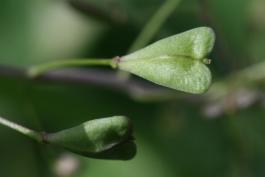
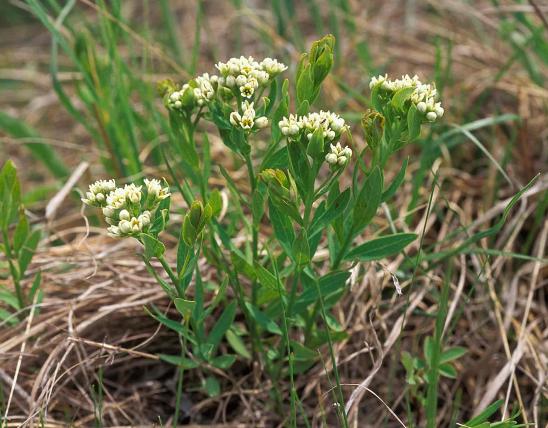
Shepherd's purse is a many-stemmed annual with heart-shaped or triangular seed pods.
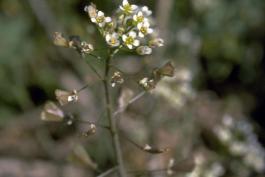
The flowers are many, along the upper part of the stems and their branches, minute, with 4 white, rounded petals.
Blooms March–November.
The basal leaves form a rosette and are deeply lobed, similar to dandelion but much smaller, to 4 inches long. The stem leaves are small and lance-shaped.
The fruits are 2-lobed, heart-shaped or triangular, forming and maturing lower on the stem while flowering continues above.
Similar species: Missouri has many species of plants in the mustard family that are weedy and have small, white, four-petaled flowers. Shepherd's purse is very common. The heart-shaped or triangular seed pods are distinctive.
Height: to 2 feet.

Statewide.
Habitat and Conservation
This European native occurs in waste places, roadsides, pastures, gardens, lawns, and almost any open or disturbed habitat.
Like the common dandelion, this plant traveled with European explorers and settlers throughout the world.
Status
Nonnative, introduced plant, usually considered a weed. Native to Eurasia.
Human Connections
Today, you would have to look hard to find a sheep herder who uses a triangular bag shaped like the fruit of this plant. The name goes back to medieval fashions.
The young leaves and fruits are rich in vitamin C and are esteemed in salads. Poultry relish this plant, too. Many medicinal uses have been recorded for shepherd's purse, as well, and some herbalists value it today.
This species is one of many nonnative annual weeds that have been in North America for a very long time. Because they are annual and don't grow very tall or have extensive root systems, they are usually not considered serious crop weeds.
The common name, shepherd's purse, translates the genus and species names: bursa-pastoris means "purse (or sack) of a shepherd," and Capsella means "small case," which applies to the fruits of other members of this genus as well.
Ecosystem Connections
Shepherd’s purse has many adaptations that make it a successful "weed," a quick colonizer of disturbed soils: The flowers can self-fertilize, and the plant keeps blooming all year. A single plant can produce 90,000 seeds in its year of life. The seeds are tiny and sticky, which aids in their dispersal.
Because it usually does not invade healthy native ecosystems and outcompete native species, it is not usually considered a troublesome invasive plant.
This is the only species in its genus, worldwide.