









Be BearWise
By taking the necessary steps, humans and bears can enjoy the outdoors without conflict
As the weather warms and the many wonders of nature awaken in spring, MDC reminds people to be BearWise.
Missouri’s estimated 1,100 black bears are waking up and are focused on fattening up after a long winter’s sleep. Unsecured food sources around homes and outbuildings could attract the attention of a hungry bear.
MDC Black Bear/Furbearer Biologist Nate Bowersock said it is important that people remove or secure bear attractants from their property, such as bird feeders, trash, barbecue grills, pet food, and food waste.
“Black bears are super-focused on finding food in the spring,” said Bowersock. “The quest for calories keeps bears active. When the eating is good, a bear can put on 2 to 3 pounds a day.”
Bowersock added that keeping areas free of food attractants and letting bears find natural foods is in everyone’s best interest.
“If you see a bear, let the animal be and enjoy the sighting, but be sure not to offer it any food,” he said.
Intentionally feeding bears can be dangerous because it makes them comfortable around people and can lead bears to cause significant damage to property while searching for food.
Here are some tips to avoid attracting black bears to possible food sources:
- Store garbage, recyclables, and compost inside secure buildings or in bear-proof containers.
- Keep grills and smokers clean and store them inside.
- Don’t leave pet food outside. Feed pets and remove empty containers.
- Refrain from using bird feeders in bear country from April through November. If in use, hang them at least 10 feet high and 4 feet away from any structure. Keep in mind that even if a bear cannot get to the birdseed, the scent could still attract it to the area.
- Use electric fencing to keep bears away from beehives, chicken coops, vegetable gardens, orchards, and other potential food sources.
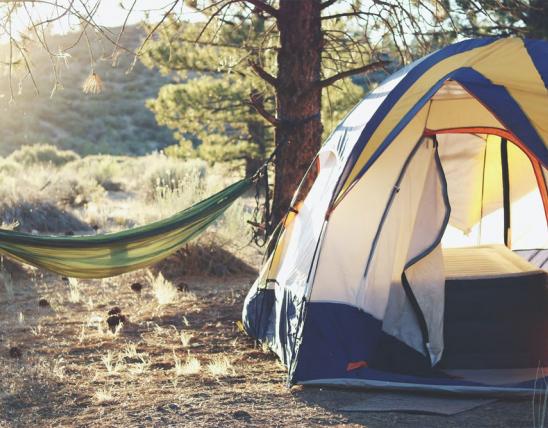
- Keep campsites clean and store all food, toiletries, and trash in a secure vehicle or strung high between two trees. Do not keep food or toiletries in a tent, and do not burn or bury garbage or food waste.
Black bears are generally a shy, nonaggressive species. Follow these tips when outdoors in bear country to avoid unwanted encounters:
- Make noise, such as clapping, singing, or talking loudly, while hiking to prevent surprising a bear.
- Travel in a group if possible.
- Keep dogs leashed.
- Be aware of the surroundings. If there is evidence of a bear, such as tracks or scat, avoid the area.
- Leave bears alone! Do not approach them, and make sure they have an escape route.
“When bears lose their fear of humans, they could approach people in search of food or may become defensive of the food sources they find near people, which could lead to conflict,” Bowersock said. “When this happens, the bear cannot be relocated and has to be destroyed. A fed bear is a dead bear.”
For more information on how to be BearWise or to report a bear sighting, visit mdc.mo.gov/bearwise.
Apply for Elk and Bear Hunting Permits
Missourians interested in hunting black bear and/or elk in the state this fall need to apply for a limited number of hunting permits for each starting in May.
Black Bear Hunt
MDC will offer 2,000 permits to harvest up to a maximum of 60 black bears across three MDC black bear management zones in the southern part of the state during the 2026 Missouri black bear hunting season, Oct. 17–30. MDC increased the number of available permits from 600 to 2,000 and increased the harvest quota limit from 40 to 60 bears to expand hunting opportunities. Missouri has an estimated population of about 1,100 bears.
“After reviewing results from the past five hunting seasons and considering the continued growth of Missouri’s bear population of about 9 percent per year, we determined that the harvest quota could be increased and more permits could be offered to provide additional hunting opportunities, while still having a limited impact on the bear population,” said MDC Black Bear/Furbearer Biologist Nate Bowersock.
"These changes will also inform future management recommendations as we evaluate how an increase in hunters might impact harvest rates,” Bowersock added. “As the black bear population continues to grow and expand, the hunting season will be used as the primary population management tool.”
Missouri hunters harvested nine black bears during the 2025 season, with two being females and seven being males.
To apply for the black bear hunt starting in May, visit short.mdc.mo.gov/ZrK.
Elk Hunt
MDC will again offer five permits to hunt bull elk in Missouri this fall — at least one permit designated for a qualifying landowner who owns property in Carter, Reynolds, or Shannon counties and the remaining four permits for qualifying residents. The 2026 elk archery portion will run Oct. 17–25 and the elk firearms portion will run Dec. 12–20.
Missouri has an estimated 325 free-ranging elk under MDC’s elk restoration and management program. Missouri hunters harvested three bull elk during the 2025 season.
To apply for the elk hunt starting in May, visitshort.mdc.mo.gov/Ztb.
Migratory Game Bird and Waterfowl Seasons
The Missouri Conservation Commission approved recommendations at its March meeting for the upcoming 2026 migratory game bird hunting seasons and 2026–2027 waterfowl hunting seasons.
2026 Migratory Game Bird Hunting
Mourning Doves, Eurasian Collared Doves, and White-Winged Doves
- Season: Sept. 1–Nov. 29
- Limits: 15 daily and 45 in possession combined total for all three species
- Hours: One-half hour before sunrise to sunset
Sora and Virginia Rails
- Season: Sept. 1–Nov. 9
- Limits: 25 daily and 75 in possession combined for both species
- Hours: One-half hour before sunrise to sunset
Wilson’s (Common) Snipe
- Season: Sept. 1–Dec. 16
- Limits: 8 daily and 24 in possession
- Hours: One-half hour before sunrise to sunset
American Woodcock
- Season: Oct. 18–Dec. 1
- Limits: 3 daily and 9 in possession
- Hours: One-half hour before sunrise to sunset
Coots
- Season: Same as duck season dates in the respective zones (See dates under Waterfowl Hunting for Ducks)
- Limits: 15 daily and 45 in possession
- Hours: One-half hour before sunrise to sunset
2026–2027 Waterfowl Hunting
Teal
- Season: Sept. 12–20
- Limits: 6 daily and 18 in possession
- Hours: Sunrise to sunset
Ducks
Season:
- North Zone: Oct. 31–Dec. 29
- Middle Zone: Nov. 7–Dec. 13, 2026 and Dec. 19, 2026–Jan. 10, 2027
- South Zone: Nov. 26–29 and Dec. 7, 2026–Jan. 31, 2027
Bag Limit: 6 ducks daily with species restrictions of:
- 4 mallards (no more than 2 females)
- 3 wood ducks
- 3 northern pintails
- 2 redheads
- 2 canvasbacks
- 2 American black ducks
- 2 scaup for first 45 days and 1 scaup for last 15 days
- 1 mottled duck
Possession Limit: Three times the daily bag or 18 total, varies by species
Hours: One-half hour before sunrise to sunset
Snow Geese (White and Blue Phases) and Ross’s Geese
- Season: Nov. 11, 2026–Feb. 6, 2027
- Limits: 20 blue, snow, or Ross’s geese daily with no possession limit
- Hours: One-half hour before sunrise to sunset
White-Fronted Geese
- Season: Nov. 11, 2026–Feb. 6, 2027
- Limits: 2 daily and 6 in possession
- Hours: One-half hour before sunrise to sunset
Canada Geese and Brant
- Season: Oct. 3–11 and Nov. 11, 2026–Feb. 6, 2027
- Limits: 3 Canada geese and Brant in aggregate daily, 9 in possession
- Hours: One-half hour before sunrise to sunset
Light Goose Conservation Order
- Season: Feb. 7–April 30, 2027
- Limits: No daily or possession limits
- Hours: One-half hour before sunrise to one-half hour after sunset
- Methods: For the taking of blue, snow, and Ross’s geese, hunters may use shotguns capable of holding more than three shells and recorded or electronically amplified bird calls or sounds or imitations of bird calls or sounds.
2026 Youth Hunting Days
North Zone: Oct. 24–25
Middle Zone: Oct. 31–Nov. 1
South Zone: Nov. 21–22
Limits: Same as during regular waterfowl season
Hours: Same as during regular waterfowl season
Requirements: Any person 15 years of age or younger may participate in youth waterfowl hunting days without a permit provided they are in the immediate presence of an adult 18 or older. If the youth hunter is not certified in hunter education, the adult must have the required permits and have in his or her possession proof of hunter education, unless exempt. The adult may not hunt ducks but may participate in other seasons that are open on youth hunting days.
2026−2027 Falconry Seasons
Falconry Season for Doves
- Season: Sept. 1–Dec. 16
- Limits: 3 daily and 9 in possession, singly, or in the aggregate (any ducks, coots, or mergansers taken by falconers must be included in these limits)
- Hours: One-half hour before sunrise to sunset
Falconry Season for Ducks, Coots, and Mergansers
- Season: Open during waterfowl seasons (teal, youth, duck) in each respective zone and Feb. 11 through March 10, 2027
- Limits: 3 daily and 9 in possession, singly, or in the aggregate during the regular duck hunting seasons (including teal and youth seasons) and extended falconry seasons (any doves taken by falconers must be included in these limits)
- Hours: Sunrise to sunset during the September teal season, one-half hour before sunrise to sunset during the remaining seasons
Hunting Zones
Waterfowl hunting in Missouri is divided into three zones: North, Middle, and South. For a map and more information, visit MDC online at short.mdc.mo.gov/oSN or refer to MDC’s 2026-2027 Migratory Bird and Waterfowl Hunting Digest, available beginning in July where hunting permits are sold.
Nontoxic Shot Requirements
Shells possessed or used while hunting waterfowl and coots statewide, and for other species as designated by posting on public areas, must be loaded with material approved as nontoxic by the U.S. Fish and Wildlife Service. Get more information on nontoxic-shot requirements, allowed types, and conservation areas requiring use at short.mdc.mo.gov/Z9b.
Change to Federal Duck Stamp
Per the Federal Duck Stamp Modernization Act of 2023, the Federal Duck Stamp has been converted to a digital version and hunters are no longer required to carry a paper copy. Hunters must have a digital version in their possession.
Kirtland’s Snake
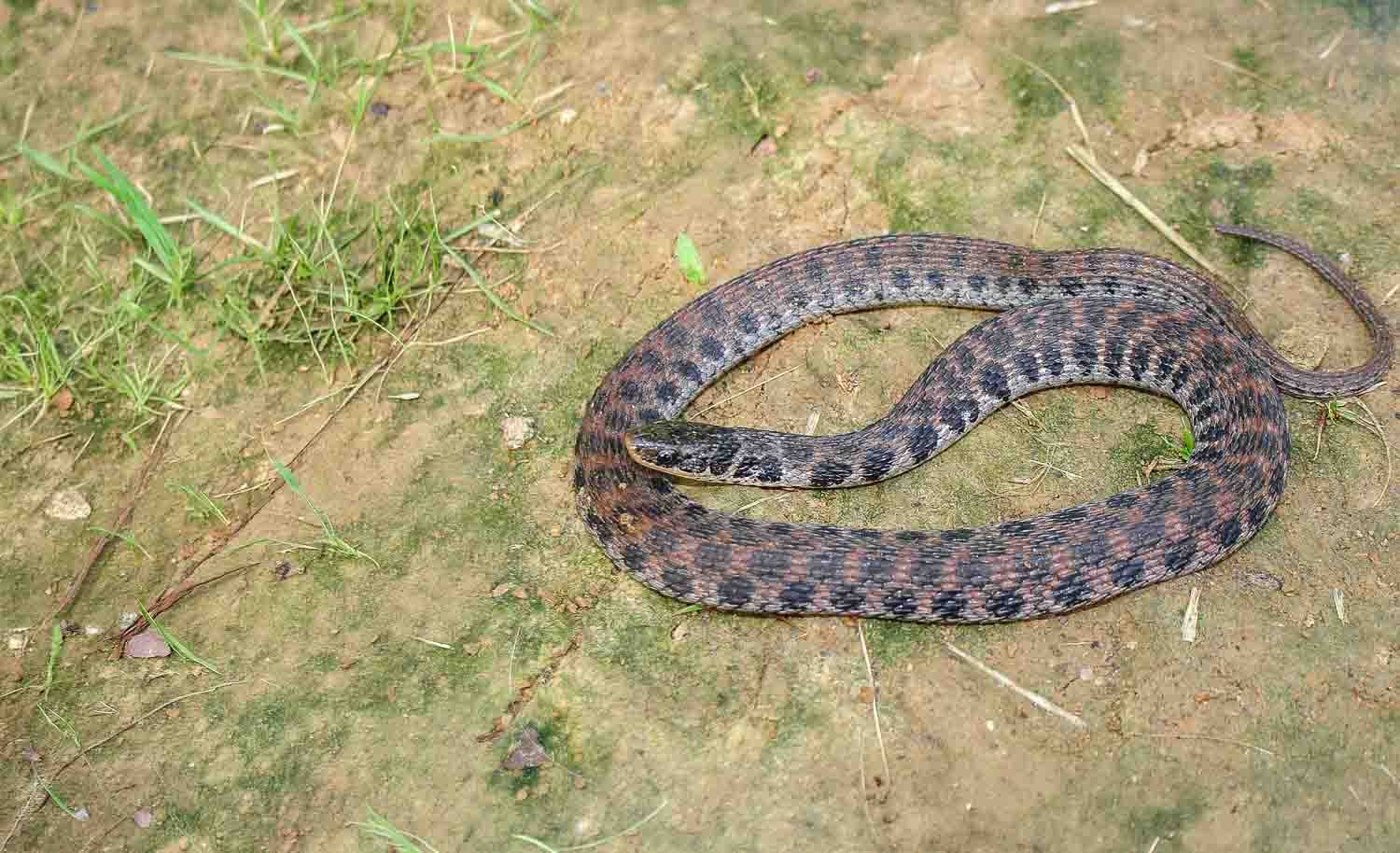
The Kirtland’s snake (Clonophis kirtlandii) is a critically imperiled species in Missouri and is being considered for federal listing. Once considered extirpated from the state due to only a single individual collected in 1964, the species was rediscovered in 2006. Since that time, 14 individuals have been documented in Missouri.
Their range spans nine states, from western Pennsylvania to northeastern Missouri. Within Missouri, the species is restricted to a few counties along the Mississippi River in the northeast region.
Kirtland’s snakes are small- to medium-sized, typically measuring 14–18 inches in length. They are reddish-brown to gray-brown, with four alternating round spots extending along the back. One of the species’ most recognizable features is the distinct pink to red belly, marked with dark stippling along each side.
This secretive species prefers open grasslands with damp soils, often near streams or wetlands. An abundance of crayfish burrows is an important habitat feature, as these burrows provide essential shelter.
Why It’s Imperiled
This species has likely declined because of extensive habitat loss, particularly the loss of bottomland prairie habitat and associated wetlands that are essential for shelter, foraging, and reproduction. Today, most remaining habitats consist of small, fragmented grassland patches located along highway rights-of-way and stream edges.
MDC Restoration Efforts
Efforts to maintain the few remaining bottomland prairie habitats and restoring degraded areas are vital to ensure the persistence of this species. MDC works closely with partners, particularly the Missouri Department of Transportation, as many of the existing reports for the species occur along roadsides. In addition, work with law enforcement is important to protect the small existing populations from illegal collection and trafficking.
What Can You Do?
This species is rarely seen, and most individuals are found alive or dead on or along roads. Occasionally, they may also be discovered under objects used as a cover in residential yards with abundant crayfish burrows. If you do encounter this small, harmless snake, please take a photograph and send it to Missouri State Herpetologist Jeff Briggler at Jeff.Briggler@mdc.mo.gov. Your help can provide valuable information in determining the distribution and conservation status of this rare species in Missouri.


Title
Answer
Peregrine Falcon Chick
A species of conservation concern in Missouri, the peregrine falcon is being restored using nest boxes on skyscrapers. These tall buildings mimic the cliffs that falcons used to depend on for nesting. Typically, three to four eggs are laid in nests from April through June, and incubation lasts up to 32 days. The hatched chicks are covered in white down, with large black eyes and disproportionally large feet and talons.
And More...
This Issue's Staff
Editor – Angie Daly Morfeld
Associate Editor – Larry Archer
Photography Editor – Ben Nickelson
Staff Writer – Kristie Hilgedick
Staff Writer – Joe Jerek
Staff Writer – Dianne Van Dien
Designer – Marci Porter
Designer – Kate Morrow
Photographer – Noppadol Paothong
Photographer – David Stonner
Circulation – Marcia Hale