












It’s January. The hustle and bustle of the festive holiday season has come to a close and now you’re left with just one chilly guest — old man winter. And he’s not checking out for at least a couple months. Before you carve out a place on the couch, throw a blanket over your head, and await the spring thaw, MDC has a challenge for you. Get outside and rediscover the wonders of nature in winter.
Winter Weather Weary?
Just because the temperature dips below freezing doesn’t mean you have to put your hiking shoes on ice. With a little forethought and planning, hiking can be a year-round activity. Here’s some tips to set you on your way despite the chill:
Dress in layers. You may feel chilled at first, but after 15 minutes of brisk movement, you may be surprised at how warm you feel. It’s good to have options to regulate your body temperature. Three layers are generally recommended — a base layer, a mid-layer, and an outer layer.
Cotton isn’t the fabric of your life. Well, at least not for hiking in the winter. Cotton, once wet, will not keep you warm. Wool is a good alternative. It will wick away moisture, keeping you warm even when wet. Synthetic fabrics, like nylon, polyester, or a blend, will act in the same way and are especially good as a base layer.
Pack a bag. Bring a pack with appropriate safety gear. It’s always a good idea to have a trail map, first-aid kit, compass, multitool, hand-warming packets, and a headlamp. Remember, some areas don’t have good cell service, so don’t be reliant on Wi-Fi dependent navigation systems.
Be weather aware. Pay attention to the weather and be prepared to turn back if conditions aren’t favorable.
Hit the bottle. Carry a water bottle and stay hydrated. Remember, even though it’s cold, dehydration can still set in before you know it.
Winter Really is for the Birds
Winter birds, like sparrows, finches, and chickadees, just to name a few, add pops of color and whirls of activity to an otherwise dreary winter landscape. You will often find large groups of these birds foraging for food, particularly at feeders. But just as often, you may hear the ruckus of activity as you walk through the woods or your neighborhood, yet you may not spot the foraging flock. If this happens while you’re out walking, hiss through your teeth to make a loud pish-pish-pish sound. This noise mimics the alarm call of a wren, and curious birds will fly closer to investigate.
White-breasted nuthatches are also fun birds to watch in the winter. These little birds are often called upside-down birds because they climb head-first down the trunks of trees. This unusual, acrobatic behavior allows nuthatches to find food other insectivores leave behind.
Woodpeckers are usually easy to spot, even for novice birdwatchers. In fact, you may hear them before you see them! These head-banging birds create a drumbeat of sound as they tap trees, the sides of houses, or other wooden surfaces. Their hammering serves an important purpose, helping them find insects to eat, make nesting holes, and tap out messages to fellow woodpeckers.
Learn to listen to the sounds of your surroundings as you walk. When birds spot you, many will call out to warn others of danger. Some examples include black-capped chickadees (chicka-dee-dee-dee), northern cardinals (chip, chip), tufted titmice (tsee-day-day-day), and blue jays (thief, thief, thief).
If your hike takes you into the twilight hours, it’s worth your time to listen for owls as they call one another. Owls have separate and distinct calls. For example, eastern screech-owls have a high-pitched, horselike whinny while great horned owls sound like hoo, huh-HOO, hooo, hooo. Barred owls let out a series of hoots that sound like, “Who cooks for you? Who cooks for you all?”
It's a Bird … It’s a Plane … It’s a Butterfly?
Birds aren’t the only creatures taking flight during the winter. On warm winter days, you might just see something fluttering by that looks familiar, albeit a little out of place. It’s a butterfly! Certain species, like eastern comma and mourning cloak butterflies, venture out on these temperate days. Enjoy them when you can. They deliver little signs of spring with each visit.
Making Tracks
Most mammals prowl around at night, searching for food and water. So, you’re not likely to see a whole lot of animals in the winter during daytime walks, but what you will find is their tracks. A fun activity — especially if you have kids to entertain — is identifying animal tracks.
The best time to do this is right after a hard rain or snow. Tracks are easy to spot in the snow, but they’re also easily seen in fresh mud. If you don’t see tracks, look for other animal signs like scat or rub marks on trees. Explore the edges of ponds and streams where you might see tracks of muskrats, raccoons, or even otters.
Bring along an animal tracks guidebook or take a photo of the tracks you see. Make it a game and see who can find the most footprints. When you head back inside, use the photos to figure out what left the tracks.
Deer Antlers
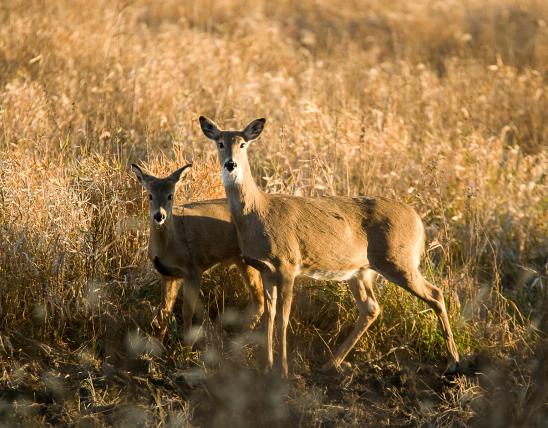
White-tailed deer are a welcome sight on Missouri’s landscape, enjoyed by hunters and wildlife watchers alike. Mature males, also known as bucks, form antlers each year that are shed by late January into March. Hunting for shed antlers is a fun wintertime activity that can be incorporated into your daily hike. This added adventure can increase the steps of your hike and heighten your observational skills.
The key is knowing where to look. If you see deer tracks, follow them. You never know what you might find on the path they are traveling. Deer often bed down during the cold winter months so look around matted-down patches of grass and cover. But you don’t have to be in the woods to find antlers. You might find them anywhere you have seen deer, including backyards, roadsides, parks, and greenways.
Tree Treasures
As you are out walking, take a moment and look around trees. You may find a treasure trove that you’ve never noticed before.
With the tree branches bare, it is much easier to spot abandoned nests high in the treetop. But not just nests left behind by birds. Also look for empty bald-faced hornets’ nests. These nests are large, gray, and have a papery appearance. In the 1940s, Ozark folklorist Vance Randoph wrote that nearly every old-time mountain cabin had an empty hornets’ nest hung up in the loft for good luck. He further explained that people even tied them up in newly built homes that were not yet occupied.
Once your search of the treetop is over, look around the base of the tree. If you spot what appears to be a hairy, gray pellet, you may have discovered an owl’s roosting spot. Owls feast on rodents, and the soft, meaty portions are quickly digested. The bones, fur, and teeth are harder to swallow, so they are regurgitated into these hairy pellets onto the forest floor. They are fun for kids to examine.
Mushrooms are another natural treasure that are found on and around trees. Oyster mushrooms and turkey tail mushrooms are two edible mushrooms that grow year-round. Most mushrooms you find this time of year will be dead, but they still serve an important purpose. They break down dead and decaying materials and turn them into nutrients that other living things use to grow.
Ready to Walk in a Winter Wonderland
Bing Crosby was really on to something when he crooned about the joys of walking through a winter wonderland. Few things are more serene and peaceful than nature in the winter, yet there’s so much activity to observe. And while we cannot guarantee sleigh bells ringing, birds singing love songs, or talking snowmen, we can guarantee a beautiful sight! ▲
Angie Daly Morfeld is the editor of the Missouri Conservationist. She much prefers hiking in the winter’s cold versus the summer’s heat. And her Labrador retriever, Dollie, loves finding deer antlers!
Parts of this story were taken from A Walk in the Winter Woods (January/February 2022 Xplor) and Missouri’s Winter Wonderland (February 2016 Missouri Conservationist).


Also In This Issue

SERVING NATURE AND YOU
Fiscal Year July 1, 2024–June 30, 2025
And More...
This Issue's Staff
Editor – Angie Daly Morfeld
Associate Editor – Larry Archer
Photography Editor – Ben Nickelson
Staff Writer – Kristie Hilgedick
Staff Writer – Joe Jerek
Staff Writer – Dianne Van Dien
Designer – Marci Porter
Designer – Kate Morrow
Photographer – Noppadol Paothong
Photographer – David Stonner
Circulation – Marcia Hale