







Goal 1: MDC Takes Care of Nature
Protecting Our Shared Resources: Wildlife and Well-Being
Conservation agents are ready to answer the call when emergencies happen in Missouri’s wild places. Agents patrol rural and remote locations and often respond to flooding and other weather-related emergencies, lost or missing outdoor recreationists, and provide emergency medical assistance. They are trained first responders and receive basic water rescue training. Additionally, 69 conservation agents throughout the state are trained in swift water rescue, or advanced boat operations, and are issued specialized equipment to respond to these emergencies.
Conservation Agent Mark Henry responded to one such emergency last May in Douglas County. He launched his boat and assisted with the rescue of a woman clinging to a tree branch in rising turbulent flood waters. Another incident occurred in St. Charles County on a cold, rainy night in early spring when agents Taylor Stutzman and Christine Boyd responded to a call of a lost mushroom hunter. The individual had been reported missing on a 2,500-acre conservation area. At about 3 a.m., after four hours of searching, they found the mushroom hunter cold, wet, and dehydrated from exposure to the elements for over 15 hours.
Feral Hog Elimination
The Missouri Feral Hog Partnership, which includes MDC and over 15 federal and state agencies and agriculture and conservation non-governmental organizations, removed 5,105 hogs from the landscape in 2024. The partnership also assisted 609 landowners with feral hog problems and scouted nearly 4 million acres for signs of hogs. Since 2016, the partnership has eliminated feral hogs from 85 percent of the watersheds in the state.
In addition to on-the-ground operations, the partnership placed equipment at Soil and Water Conservation District offices for landowners to use in areas with high feral hog activity and conducted landowner and community outreach activities throughout the southern portion of the state.
In 2020, the partnership established a unified incident command system to manage feral hog elimination efforts, with the goal of ridding Missouri’s public and private lands of feral hogs.
A social group of 10 hogs can destroy 10-20 acres overnight, including crops, causing financial burdens on Missouri’s landowners and agriculture producers. They are also known to carry diseases that could be devastating to the agricultural industry. Feral hogs root and wallow, which contribute to soil erosion, a reduction in water quality, damaged crops and hay fields, and the destruction of sensitive natural areas, such as glades, fens, and springs. They also compete directly with native wildlife by eating acorns, a major fall food source for deer, turkey, and black bear.
MDC Works with Private Landowners
Missouri has a tremendous diversity of natural communities ranging from wetlands and prairies to glades and woodland habitats. Private landowners account for 93 percent of Missouri’s land and 82 percent of Missouri’s forest land, making them key in creating and maintaining good wildlife habitat.
Recognizing the importance of working with private landowners, MDC prioritizes private land technical assistance. In FY25, MDC private land staff provided 17,925 technical assistance contacts, made 7,098 site visits covering 226,440 acres, developed 2,780 plans covering 153,138 acres, and provided $3.75 million in cost share to landowners to assist with implementing conservation practices on their properties.
From Poult to Population: Habitat’s Role in Turkey Growth
The Turkey Habitat Initiative began a little over two years ago, and as part of the initiative, MDC has developed a habitat appraisal guide to help landowners and land managers identify areas of need on the properties they manage and a habitat management guide that addresses specific issues. Combined, the two resources can help a land manager determine how to improve their property for the betterment of the turkey population. MDC also developed a four-part video series outlining the importance of habitat management and reiterating steps available to improve turkey populations. These resources are a good place to start for anyone who would like to have more turkeys on the landscape, and they can all be found at mdc.mo.gov/MOTurkeys.
George O. White State Forest Nursery: Where Forests Begin
The George O. White State Forest Nursery, which raises trees for forestry projects on public and private lands, has placed millions of trees on the state’s landscape since it began in 1934. In the beginning, the focus was forest restoration, but now Missouri’s citizens have much broader needs. The nursery listens to their customers and tries to meet those needs.
MDC allocates approximately 2 million seedlings grown at the 100-acre nursery to public and private requests around Missouri and elsewhere. Many of these seedlings go to Missouri landowners who want to improve habitat on their land. The nursery also supports Missouri’s Arbor Day by supplying fourth graders with trees to plant. Last year, over 75,000 seedlings were sent to participating schools.
MDC’s annual tree seedling sales are open from Sept. 1–April 15, with a shipping and pickup season that runs from mid-February to mid-May. Last year, nursery office staff answered over 8,000 customer phone calls, including calls concerning information on trees, habitat work, and seedling availability. This popular program allows landowners to purchase bundles of seedling trees ranging from 10 to 100 plants, depending on the purpose of the planting. The nursery also collects and buys thousands of pounds of seed each year — much of which is purchased from the public.
Revitalizing Our Lakes: MDC’s Habitat Restoration Program
MDC and the U.S. Army Corps of Engineers (USACE), working with private-sector volunteers, placed 93 cedar brush piles in Truman Lake in the spring of 2025 as the first phase of a project aimed at improving fish habitat.
The goal of the Harry S. Truman Lake Habitat Project is to enhance aquatic habitat throughout the lake by placing 450 fish habitat structures constructed of cedar trees on the lakebed. Cedar trees are sourced from public land surrounding the lake and anchored with concrete blocks to improve fish habitat quality, and subsequently, angler catch rates.
A $75,000 grant from Bass Pro Shops Outdoor Fund, administered and passed through the Reservoir National Fish Habitat Partnership, formed the nucleus of the project. MDC also contributed, and the project officially began in January 2025.
Crews deployed the habitat using a barge equipped with a hydraulic lift. The first phase was completed in April 2025, and field operations resumed in the fall.
The locations of the new and existing structures can be found on the MDC website and through MDC’s free MO Fishing app. Downloadable GPX files are also available on the MDC website for transfer into a GPS device.
In addition to MDC and USACE, Osage Bluff Marina contributed with staging, prepping, and loading cedar trees; the Finey Homeowners Association cut trees and provided the area around their boat ramp for staging; and students from the University of Central Missouri volunteered their time.
Goal 2: MDC Connects People with Nature
Missouri’s First-Ever Birding Challenge
Missouri launched its first-ever Missouri Birding Challenge last May with a mission of engaging new birders and getting people of all ages excited about birding in Missouri — even right in your own backyard. The virtual challenge, which was held May 1–15, gave birders a two-week timeframe to log birds through the citizen science app eBird and compete with other birders and birding teams. Teams that completed the challenge requirements were eligible for prize drawings while at the same time providing valuable citizen science data about birds across Missouri.
“We weren’t sure what to expect with it being our first year for the challenge, but we were hopeful people would get as excited about birds as we are,” said Missouri State Ornithologist Kristen Heath-Acre. “We were blown away.
Not only were they up for the challenge, but they showed us how passionate Missourians are about wildlife watching, especially birds.”
More than 630 individuals and 441 teams participated in the virtual challenge, logging 160,600 birds of more than 300 bird species in 95 counties in Missouri during the two-week challenge. There were also five webinars leading up to the challenge with close to 500 attendees tuning in to learn more about the benefits of birds, eBird, birding habitat, migratory birds, and bird declines.
The challenge was a collaboration between MDC, Missouri Conservation Heritage Foundation, U.S. Fish and Wildlife Service, Missouri River Bird Observatory, Missouri Birding Society, and the Columbia Audubon Society. The birding challenge raised $13,379, and the Missouri Conservation Heritage Foundation, with longtime partner SELVA, is using the proceeds to protect key migratory bird winter habitat in Costa Rica.
The Missouri Birding Challenge scheduled for May 2026 will include improvements from participant feedback.
Building Conservation Volunteers and Citizen Scientists
Volunteers at MDC’s nature centers, outdoor education centers, and staffed shooting ranges contributed more than 40,300 hours of service to conservation in the past year. These volunteers assisted with special events, school and public programs, visitor relations, animal care, and area maintenance. Volunteers work with department staff to make the visitors’ experience at these facilities educational, enjoyable, and memorable. Volunteer hunting and fishing education instructors contributed more than 4,600 hours to connect Missourians to the outdoor pursuits of hunting and fishing. In addition to teaching people new skills, these volunteers help instill a conservation ethic and an understanding of natural resource management in their students.
Participants who are part of MDC-affiliated volunteer programs with partner organizations have an opportunity to work on a variety of citizen science projects with communities around the state, including programs such as Missouri Stream Team, Missouri Master Naturalist, and the Missouri Forestkeepers Network.
Do you have a passion for the outdoors?
MDC would love your help! MDC offers flexible volunteer opportunities for Missourians who want to educate others about the state’s fish, forest, and wildlife resources.
Learn more at short.mdc.mo.gov/4tL.
Missouri Stream Team
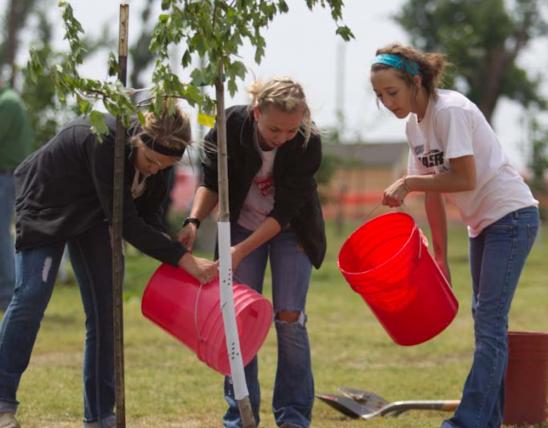
This past year, Missouri Stream Team members dedicated over 95,000 service hours to a variety of activities, including 70 habitat improvement projects, the planting of 1,303 trees for water-quality improvement, 398 water-quality monitoring trips, and the removal of 504 tons of trash from watersheds.
The Missouri Stream Team program educates Missourians on the nature and quality of the state’s streams and how to take care of them through outreach, stewardship, and advocacy. Stream Team volunteers serve as stewards for Missouri’s 110,000 miles of flowing water. They do hands-on projects, such as litter pickups, water-quality monitoring, storm drain stenciling, and streamside tree planting. The program is a partnership between MDC, the Conservation Federation of Missouri, and the Missouri Department of Natural Resources.
Missouri Master Naturalist Program
This past year, 880 volunteers in 12 Missouri Master Naturalist chapters partnered with 135 local organizations and provided over 75,000 hours of volunteer community service aimed at enhancing fish, forest, and wildlife management on public and private lands. Chapters dedicated 33 percent of their time to natural resource stewardship projects, 27 percent to educating the public, 22 percent to supporting their chapters through continuing education and administrative service, and 18 percent to citizen science projects for MDC and non-profit partners.
The Master Naturalist program is committed to growing and sustaining local learning and working environments to engage Missourians in the stewardship of our state’s natural resources through science-based education and volunteer community service. Popular service projects include activities such as guided nature hikes, native plant seed collection, maintaining native gardens for MDC and partners, and a variety of citizen science projects. The Missouri Master Naturalist program is sponsored and jointly administered by MDC and University of Missouri Extension.
Rebuilding Canopy and Capacity: MDC and Partners Lead Missouri’s Urban Forestry Recovery
After natural disasters, communities across Missouri rely on an alliance of organizations committed to restoring tree canopy and environmental resilience. At the center of this effort is MDC, which offers critical support through technical expertise, cost-share funds, and access to native seedlings. In fact, MDC’s commitment is evident in the more than $1 million the agency spent on community forestry cost-share. MDC also maintains cooperative agreements with Forest ReLeaf of Missouri and Heartland Tree Alliance, two non-profits dedicated to community-based tree planting and urban forestry. These partnerships allow MDC to expand its reach and impact in both rural and metropolitan areas.
Forest ReLeaf of Missouri operates one of the state’s largest community nurseries, distributing more than 10,000 free trees annually through programs like Project CommuniTree. Its Priority ReLeaf initiative targets areas affected by natural disasters or economic hardship, providing larger trees and hands-on planting support. In events such as the 2011 Joplin tornado, Forest ReLeaf played a key role in long-term recovery, mobilizing volunteers and dramatically increasing nursery production to meet local needs.
Meanwhile, Heartland Tree Alliance (HTA) focuses on urban tree restoration in the Kansas City area. The organization leads tree planting efforts in neighborhoods facing tree loss due to storms, invasive pests, or urban development, planting over 1,000 trees annually. HTA strengthens recovery by training local volunteers through workshops and pre-apprenticeship programs, creating a sustainable community tree care model. Its events foster civic pride and build resilience against future climate impacts, particularly in low-income communities.
Together, MDC, Forest ReLeaf, and Heartland Tree Alliance form a dynamic ecosystem of support, helping Missouri communities recover both environmentally and emotionally. These coordinated efforts don’t just replace trees — they restore shade, biodiversity, and a sense of place.
Engaging Student Learning: MDC’s Conservation Education Reaches 43 Percent of Missouri’s Schools
MDC continues to strengthen its partnership with public and private schools across the state, now reaching more than 2,700 classrooms in 1,377 schools — approximately 43 percent of all Missouri schools. Through this partnership, MDC provides nature-based curricula, teaching supplies, and transportation grants, empowering schools to connect students with nature while meeting academic standards.
The recently revised Discover Nature Schools (DNS) kindergarten, first grade, and second grade curriculum aligns with state and national standards in physical, earth and space, life, and engineering sciences, and integrates Missouri-specific conservation topics. More than 450 classrooms have already adopted the updated K–2 curriculum.
The Missouri National Archery in the Schools program (MoNASP) is active in approximately 600 schools. The 2025 state tournament drew nearly 5,000 student archers from over 200 schools. MoNASP not only teaches students the fundamentals of archery but also builds confidence and personal achievement. In the past year, 12 Missouri archers were awarded $30,000 in scholarships through the Missouri Conservation Heritage Foundation and MoNASP. Several of these students advanced to national competitions, and multiple seniors are being recruited for collegiate archery programs that are either established or under development.
In the past year, more than 7,700 students earned hunter education certification through courses delivered in 264 schools. The curriculum emphasizes safe and responsible hunting practices and introduces students to the fundamentals of wildlife management.
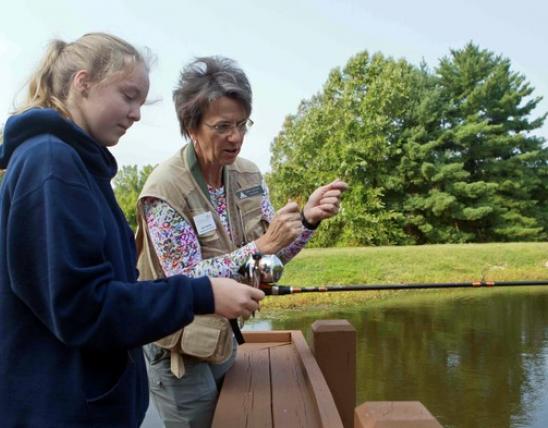
The Discover Nature Fishing (DNF) program equips participating schools with curriculum, supplies, and transportation grants. Over 200 schools currently use the DNF curriculum. The program aims to foster lifelong outdoor engagement by teaching students the joy and skill of fishing.
Fin-Tastic Education: A Trout Hatchery Experience
December 2024 marked the grand opening of the newly renovated Shepherd of the Hills Conservation Education Center in Branson.
Since its doors first opened in 1980, the center has served as a cornerstone of conservation education in southwest Missouri. Located adjacent to the Shepherd of the Hills Hatchery along the banks of Lake Taneycomo, the center connects thousands of visitors each year to the natural wonders of the Ozarks.
What began as a modest visitor center has since grown into a vibrant space for learning and exploration. From hatchery tours and guided hikes to school field trips and special events, the center offers engaging hands-on programs for all ages.
On Dec. 19, 2024, MDC celebrated this exciting new chapter with an open house and ribbon cutting. MDC commissioners, staff, volunteers, partners, elected officials, and members of the public gathered for the grand opening of the newly renovated $7 million facility. Now 2.5 times larger than the original, the expanded center features a 7,500-gallon indoor aquarium, a flexible multi-purpose room with classroom space, interactive exhibits on Missouri’s natural resources, a larger lobby, improved restrooms, and added staff offices.
Designed to better serve the community and support growing demand, the renovation reflects MDC’s strong commitment to conservation education and accessibility. The center welcomed more than 58,000 visitors in its first six months of reopening.
From Engineering Labs to Campfires: MDC Sparks Outdoor Passion in Young Adults
Becoming a young adult is a pivotal time of life, which is why MDC recently shifted some of its efforts to connect more fully with this age group. Although staff has done a lot of great work over the year, below are a few highlights from recent outreach initiatives aimed at engaging young adults between the ages of 18–34.
Floating Wetlands and Engineering Class Collaboration
MDC staff Frank Nelson and Kara Tvedt partnered with the City of Springfield Utilities and a senior mechanical engineering class to collaborate on improving the plastic-free design of floating treatment wetlands for placement on a local lake. As part of their class curriculum, the engineering students were tasked with improving the floating wetland design by evaluating its current model and working through possible improvement solutions until finally building out their idea at the end of the project.
Finalized improvements included an upgraded version of the plastic-free floating wetland model and an elevated prairie plant component in the center with the wetland plants spaced around the perimeter. Throughout the course of the semester, Nelson and Tvedt served as project advisors for the class and worked to engage the students in this project and conservation efforts more broadly. Floating wetlands provide many benefits to the natural community including improved water quality, weed control, increased aquatic habitat, and carbon sequestering. Camp Hellbender: No Newts Allowed!
Everybody grows up eventually, but being an adult doesn’t mean a person can’t still be a kid, at least at heart. For three years running, MDC staff has invited participants from across the St. Louis area to enjoy an adults-only summer day camp experience. This series of seven events occurs at different locations across the region and features an array of outdoors-themed activities tailored to each new session. Participants are encouraged to enjoy activities such as kayaking, archery, outdoor cooking, tree climbing, geocaching, and stream exploration. At the last session, participants gather around a campfire and enjoy s’mores to share their new camp memories and grow in their appreciation of the outdoors.
Goal 3: MDC Maintains Public Trust
MDC contracted with DJ Case & Associates to implement quarterly Conservation Monitor Surveys to collect key opinions and attitudes regarding nature, conservation, and views on the department overall. According to the Conservation Monitor, over the past five years Missourians consistently rate MDC as a name they can trust.
I am confident MDC uses funds wisely to benefit people and nature.
61% Agree
26% Neither agree nor disagree
5% Disagree
8% No opinion
MDC consistently does a good job fulfilling its mission.
72% Agree
17% Neither agree nor disagree
3% Disagree
8% No opinion
MDC is a name I can trust.
67% Agree
20% Neither agree nor disagree
4% Disagree
9% No opinion
Annually, MDC reviews and approves its Design for the Future Strategic Plan and has further defined strategic priorities and initiatives that align with the goals and outcomes.
MDC invests in its team and remains an employer of choice with an annual employee retention rate of better than 95 percent. This rate exceeded our direct competitors for talent by more than 15 percent.
State of Missouri Operating Budget
Total for fiscal year 2025: $50,467,678,830
MDC represents less than 1 percent of the total state budget and receives no state general revenue.
Conservation: 0.4%
Natural & Economic Resources: 6.3%
Transportation: 9.3%
Health & Senior Services: 12.9%
Education: 20.2%
Government Services: 50.8%
Operating Budget Source: Missouri Office of Administration
MDC FY25 Actual Receipts
MDC gets the majority of its funding through the conservation sales tax. For every $8 spent on taxable items, one penny goes to conservation.
Other Sources: $3,308,641
Interest : $4,858,051
Sales & Rentals: $8,217,392
Permit Sales: $45,822,638
Federal Reimbursements: $45,833,026
Conservation Sales Tax: $174,811,348
MDC FY25 Actual Disbursements
Funds are distributed throughout MDC to accomplish the state's top conservation priorities.
County Assistance Payments: $3,027,328
Conservation Business Services: $7,507,056
Land Conservation & Partnerships: $10,548,330
Education & Communication: $29,011,538
Recreation Management: $35,414,086
Habitat Management: $49,942,954
Fish & Wildlife Management: $51,540,936
Capital Improvements: $54,335,867
Staff Development & Benefits: $75,187,367
NOTE: Disbursements include all operating, other agency, and capital improvements from the Conservation Commission Fund. Other Agency disbursements are appropriated outside the Department of Conservation operating budget. Fuel, benefits, and other disbursements were allocated to the appropriate program.


Also In This Issue

Cold-weather treks have much to offer the prepared hiker
And More...
This Issue's Staff
Editor – Angie Daly Morfeld
Associate Editor – Larry Archer
Photography Editor – Ben Nickelson
Staff Writer – Kristie Hilgedick
Staff Writer – Joe Jerek
Staff Writer – Dianne Van Dien
Designer – Marci Porter
Designer – Kate Morrow
Photographer – Noppadol Paothong
Photographer – David Stonner
Circulation – Marcia Hale