


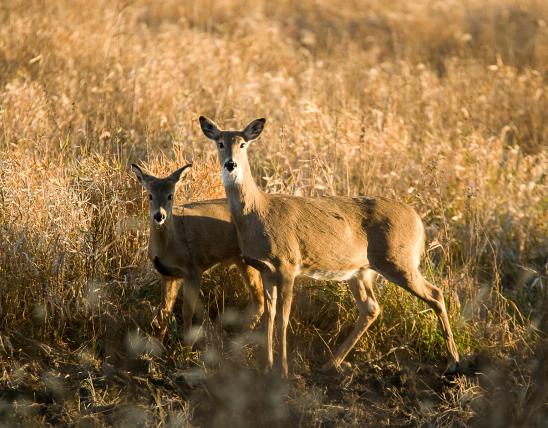


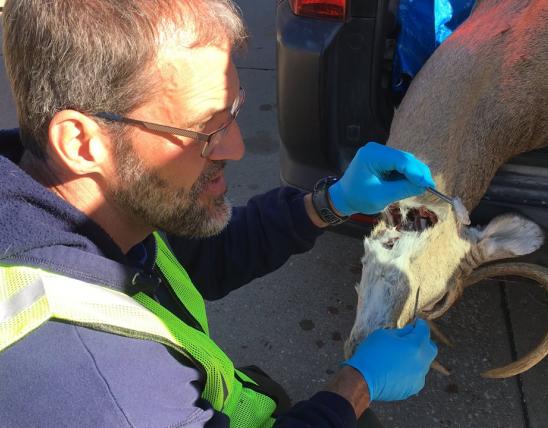




As a group of high school freshmen gather around a freshly harvested doe in a metal shop building, Sophia Redman takes a knife into her hand, and with a determined look on her face, makes the first cut, surprised at the strength needed to slice into the flesh. Her classmates gather close, a mixture of interest and disgust, as their teacher, Brandi Ellis, points out the anatomical structure of the deer’s muscles.
“There are a lot of kids that that’s their first time holding a knife and cutting something like that and they get nervous,” Ellis says. “I’ve had kids be almost shaky, but I make every single kid cut some part of it. And I think that’s good for them because it forces them out of their comfort zone a little bit. And I tell them, I’ll stand right beside them and say, ‘Just cut right along this line.’ And then once they do it, they can see how the muscles all laid together, and they can understand what I mean by the fat. And also, it’s really just basic anatomy.”
She calls out instructions, passing out latex gloves to others and asking students to fetch aluminum pans. Soon, the 70-minute class is over, and students are washing hands, grabbing backpacks, and headed off to subjects like math or English, while the next batch of students arrive to take over the next steps of processing. While memorable, it’s not a particularly out-of-the-norm day at Maysville Jr./Sr. High School.
Fascination and Revulsion
Ellis has been teaching agriculture classes in Maysville, a rural town of just over 1,000 in northwest Missouri, for 11 years. She grew up in the town and is also the FFA advisor. She remembers processing harvested deer when she went to Maysville High, but, together with Amy Kanak, who teaches family and consumer sciences (FACS), they’re taking it a step further, bringing a true nose-to-tail operation to the school where there are multiple lessons involving animals that have been harvested through hunting, farming, or fishing.
“I’ve always done deer — we did it whenever I was in high school here, and I thought it was really cool,” says Ellis. “I just think it’s good for these kids to see it. A lot of it is because it’s a rural community, but there’s just so many kids that either like to go hunting or need the meat. There’s a lot of families that honestly do rely on deer meat to get them through the winter.”
On this particular November day, two does that were harvested before school by senior Garrett Bray provide multiple lessons across the school. After the initial processing by the freshman agriculture class, a student delivers some of the does’ organs to an eighth grade science class. The middle schoolers gather around as their teacher, Cindy Eggleston, points out parts of the heart and lungs. Again, the students’ faces reflect a mixture of fascination and revulsion. Some happily pull on their gloves and dig in, reveling in the hands-on learning. Others stand back, overwhelmed by the smell and covering their noses.
Clean Plates
As the day goes on, Ellis’ agriculture classes cycle through, passing the baton on the processing. Eventually, the meat ends up in Kanak’s family and consumer sciences classroom, where the foods classes continue butchering and eventually cooking with the deer meat. Today, it’s country fried deer steak with green beans, scalloped potatoes, and gravy.
“They lick these plates clean,” Kanak says. “There’s never a scrap left and there’s people waiting at the door for it.”
Kanak’s day can begin with talking to students about childbirth and end with carving into a deer roast. It’s truly full circle.
“It’s life skills,” she says. “It’s super important and the kids look forward to it. You have to have math, you have to be able to read, but you also have to be able to do laundry and plan and budget and cook safely and take care of your children.”
Kanak has even fielded phone calls outside of school hours from students who have gone fishing and need help being walked through the fileting process. The teachers at Maysville have taken the deer processing they remember doing as students themselves and drawn more lessons out of the wildlife, creating cross-curriculum lessons that range from anatomy to math to economics.
“I just knew there were ways that we could take this all the way,” explains Kanak. “That’s what we should be doing. We should be working together every opportunity we have.”
Meat-based Lessons
STEM (a focus on science, technology, engineering, and math) is a mission in many schools, but Maysville is putting its own nature-based spin on the subject. Additionally, the agriculture and hunting-based lessons are deeply rooted in the town’s rural location.
“Some of these kids will never have anything to do with ag as a job and that’s fine,” says Ellis. “But they’re still going to be a consumer, you know, and that’s why I like the processing stuff so much because it doesn’t matter if we process deer, or if we process pork or chickens or lamb or whatever, they’re still going to go to the store and see it. And then in 15 years, they’ll go to the store and still remember where that came from.”
Ellis and Kanak understand the importance of these lessons from a consumer standpoint. While not every student will take these lessons into their careers, every student will use these lessons in their home when they’re feeding themselves or their family.
“One of my favorite units to do is any sort of meat unit because then they actually pay attention to stuff when they are buying it,” says Ellis. “A lot of kids are surprised at the taste — to see it, touch it, smell it, taste it.”
Maysville is especially resourceful about these meat-based lessons. They use community ties to create these experiences for these students. Sometimes, students farm, hunt, or fish the wildlife that are part of the lessons here, but sometimes, community members bring in deer to be processed, whether they need assistance having the animals butchered or enjoy hunting as a sport and want to donate the animal to the school for education. Ellis and Kanak also apply for grants to help with this curriculum.
“I’m surprised that more people don’t do it,” Ellis says of other teachers incorporating hunting into the classroom. “I mean, somebody else shoots. Whether the kid shoots the deer or somebody else shoots the deer, it’s free. Meat is expensive at the grocery store and everybody’s on a budget. All education is on a budget. I don’t know why you wouldn’t do these things. You can get it for free and give them an experience. I think it’s good, especially in rural America. There’s no reason why you shouldn’t be doing some form of wildlife. I’ve actually mentored some ag teachers that are younger than me and I’ve convinced them to try it.”
As teachers in a rural town, the faculty at Maysville know their school is the cornerstone of the community. Many rural places lack spaces to gather or feel that togetherness, but schools are a common place to rally around — a representation of the community’s values. As a Maysville native, Ellis takes this personally.
“The school is the heart of the town and without it, the town’s gonna die,” she says. “We’ve seen that over and over and over again, so I’ve said this to multiple people in my community — the school’s got to be on the same page, or it’s just bad for everybody.”
Free Experiences
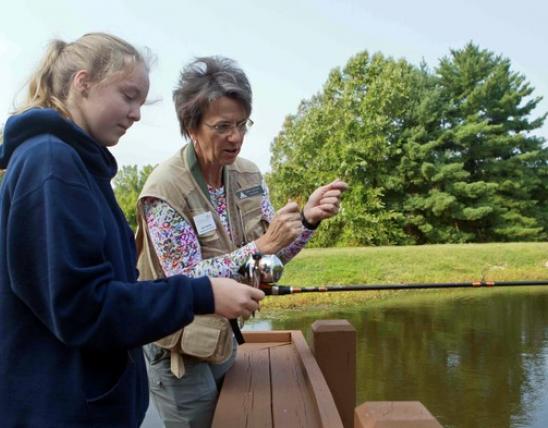
On a perfect spring day in May, Ellis takes an eighth-grade class on a field trip to Smithville Lake about an hour south of Maysville. The students spend the day canoeing and fishing with the assistance of MDC agents. It is one of those days where the kids are having an amazing time, jumping into the lake from their canoes, their hair damp from swimming, bare feet caked in mud, and not a cell phone in sight.
Though the MDC agents catch a few fish to show off to the kids, none of the students have reeled in anything on their own lines yet until the last few minutes of the day. The teenagers all clamor around the successful angler, and Ellis comes over to see, grabbing a filet knife to show the kids how to properly process the fish.
After giving verbal instructions, she hands the knife over to the students as they take turns trying to deftly slice through the scales and get a clean filet. As always in her classroom during these lessons, there are squeals of delight and disgust but always rapt attention.
“I loved high school, but I don’t remember every single day what I did in each class,” she says. “I remember the big things, you know. I remember cutting up deer. I remember welding for the first time. I remember doing skits for certain classes. It’s those experiences that kids will remember — it’s not the, ‘here’s a worksheet’ or ‘watch this video.’ So, I like experiences — especially if they’re free.”
As the students trudge back to the bus with their fishing poles and half-dried clothing after fileting the fish, one of the students bounces over to Ellis.
“Thanks for teaching me that!” she says excitedly.
It’s about the best day you can hope for — whether you’re a teacher or a student.
Katie Currid is a freelance photojournalist who lives in Weston with her husband and three children. She loves exploring Missouri’s many outdoor spaces and learning to identify plants and wildlife with her family.


Also In This Issue

Preserving the nighttime darkness for the health of wildlifeDark

Autumn offers a front-row seat to nature’s beauty
And More...
This Issue's Staff
Editor - Angie Daly Morfeld
Associate Editor – Larry Archer
Photography Editor – Ben Nickelson
Staff Writer – Kristie Hilgedick
Staff Writer – Joe Jerek
Staff Writer – Dianne Van Dien
Designer – Marci Porter
Designer – Kate Morrow
Photographer – Noppadol Paothong
Photographer – David Stonner
Circulation – Marcia Hale