


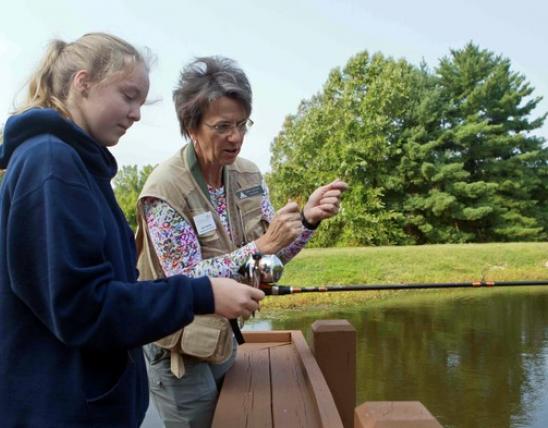
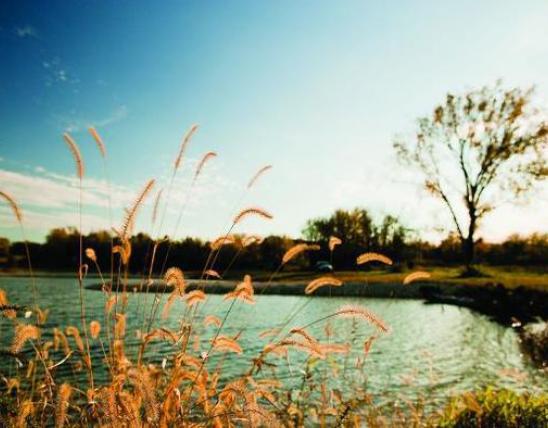










Gayoso Bend Conservation Area is located in Pemiscot County north of Caruthersville. It encompasses 968 acres of forestland, including 125 acres of wooded sloughs.
Media

Scientific Name
Heterotheca camporum (syn. Chrysopsis villosa var. camporum)
Family
Asteraceae (daisies, sunflowers)
Description
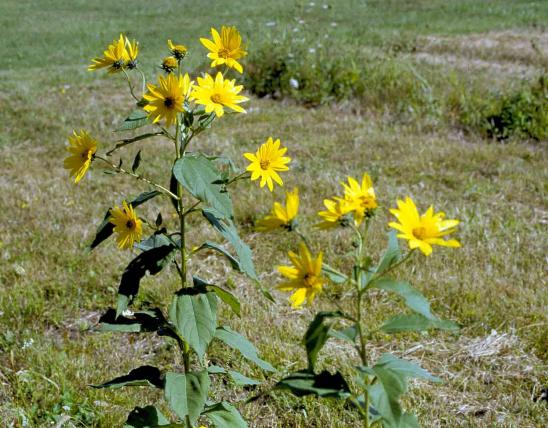
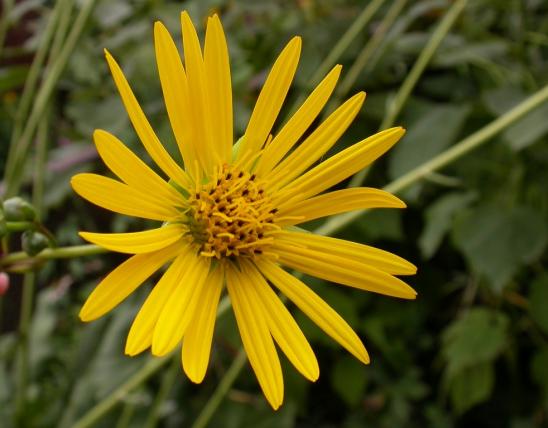
Prairie golden aster can cover entire valleys with its bright yellow flowers. It blooms June through October and is scattered mostly south of the Missouri River.
Prairie golden aster is a coarse, hairy, upright, much-branched perennial.
The flowerheads are bright yellow, to 1½ inches wide. The bracts at the base of the flowerhead are often purple-tipped. The petal-like ray florets are about ½ to ⅜ inch long.
Blooms June–October.
The leaves are hairy, alternate, sessile (stalkless), often with a few fine, sharp teeth, to 3 inches long, elliptical to lanceolate, with pointed tips.
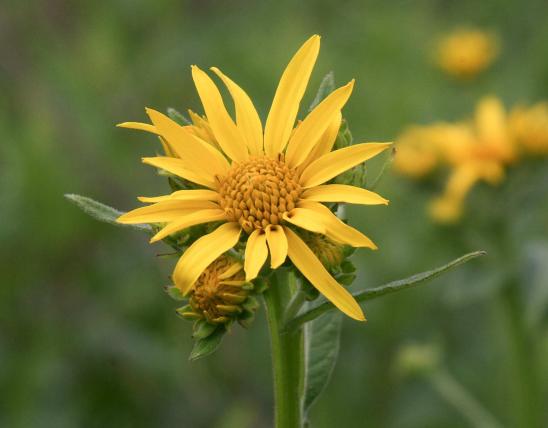
Similar species: Two other species in genus Heterotheca have been recorded in Missouri, but only camphorweed, Heterotheca subaxillaris, is likely to be encountered. It occurs mostly in the Bootheel and along the Missouri and Mississippi rivers. Its ray florets are shorter, about ¼ to ⅜ inch long.
Soft goldenaster (Bradburia pilosa) is closely related. It is a hairy annual, rarely more than 2 feet tall, has flowerheads less than 1 inch wide, and is found in the southern third of Missouri.
Other Common Names
Hairy Golden Aster
Goldenaster
Lemonyellow False Goldenaster
Camphorweed
Size
Height: 15–55 inches.
Where To Find

Scattered mostly south of the Missouri River.
Habitat and Conservation
Sand prairies, glades, ledges and tops of bluffs, openings of dry upland forests, banks of streams and rivers, bottomland forests, and swamps; also pastures, old fields, fallow fields, levees, railroads, roadsides, and open disturbed areas, often in sandy soils.
Status
Native Missouri wildflower.
Human Connections
Prairie golden aster tolerates drought and is a good native plant for midsized borders and native, prairie, or naturalized areas.
This species was once considered a subspecies of hairy golden aster (Heterotheca villosa), so it is sometimes still called hairy golden aster.
Ecosystem Connections
A variety of bees, wasps, flies, and butterflies visit the flowers for both pollen and nectar. Many other types of insects feed on the leaves, stems, sap, flowers, roots, and seeds. Insects, of course, are important foods for birds, especially during nesting season.
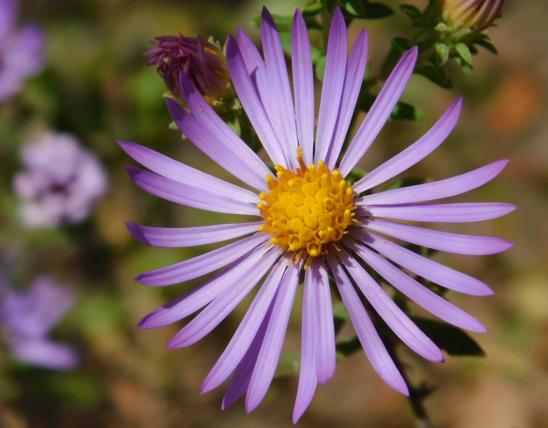
There are several plants in Missouri called “golden aster.”
- Although several native Missouri wildflowers used to be considered true asters (in the genus Aster), all have now been completely separated from that Old World genus. New World asters (genus Symphyotrichum) are an example.
- Meanwhile, botanists, using DNA evidence and peering closely at details of achene (seed) shape, continue to debate the limits of the genus Heterotheca.
- As one of the state’s preeminent botanists put it, the situation is “sufficient to cause temporary lightheadedness.”
Title
Media Gallery
Image

Caption
Prairie golden aster can cover entire valleys with its bright yellow flowers. It blooms June through October and is scattered mostly south of the Missouri River.
Credit
Jim Rathert
Right to Use
Photo by Jim Rathert, courtesy Missouri Department of Conservation
Image

Title
Similar Species
Similar Species
Media

Media

Media
Media

Where to See Species
About Wildflowers, Grasses and Other Nonwoody Plants in Missouri
A very simple way of thinking about the green world is to divide the vascular plants into two groups: woody and nonwoody (or herbaceous). But this is an artificial division; many plant families include some species that are woody and some that are not. The diversity of nonwoody vascular plants is staggering! Think of all the ferns, grasses, sedges, lilies, peas, sunflowers, nightshades, milkweeds, mustards, mints, and mallows — weeds and wildflowers — and many more!