








Dense blazing star is one of nine Liatris species that grow in Missouri. In Missouri’s wild habitats, dense blazing star is rare, but it is the one most people cultivate, because it’s readily available in garden centers. It can escape from cultivation.
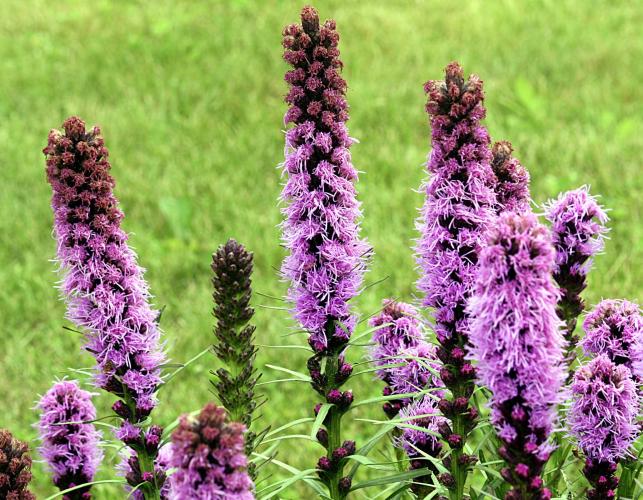
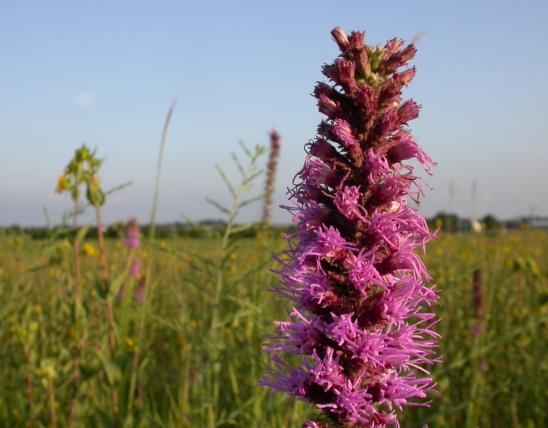
Among Missouri’s Liatris species, dense blazing star is most similar to prairie blazing star (L. pycnostachya). Both typically have unbranching, upright stems, topped with a showy spike of densely packed magenta-pink flowerheads.
Key characters:
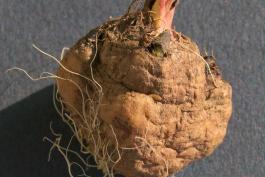
- The stems are hairless and smooth (in Missouri); the rootstock is a globe-shaped corm.
- The leaves are quite narrow (linear) and very numerous, the lower ones to 16 inches long and about ½ inch wide, becoming much shorter higher up; in Missouri, they are glabrous (smooth, lacking hairs); the basal and stem leaves have 3 or 5 main veins.
- Blooms July–October.
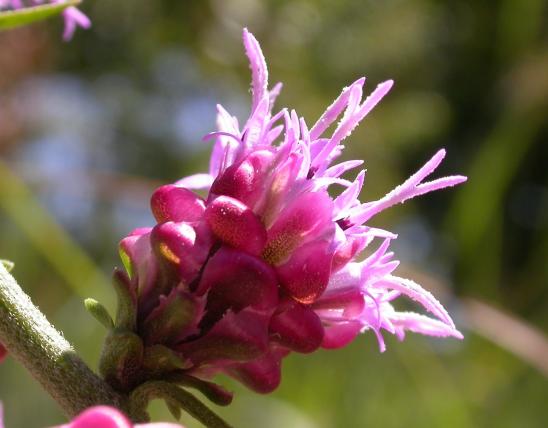
- The flowerheads are densely crowded into an elongated spike at the top portion of the plant stalk; the stalk is usually not visible between the heads; each flowerhead has only 4–8 florets (sometimes up to 14).
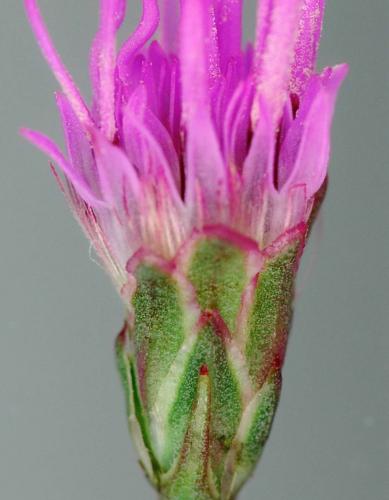
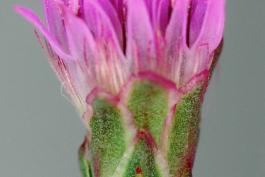
- The involucre (at the base of each flowerhead) is narrowly cup-shaped to nearly cylindrical.
- The tips of the involucral bracts (leafy or scaly structures on the involucre) are appressed (pressed flat against the involucre) and often bluntly rounded.
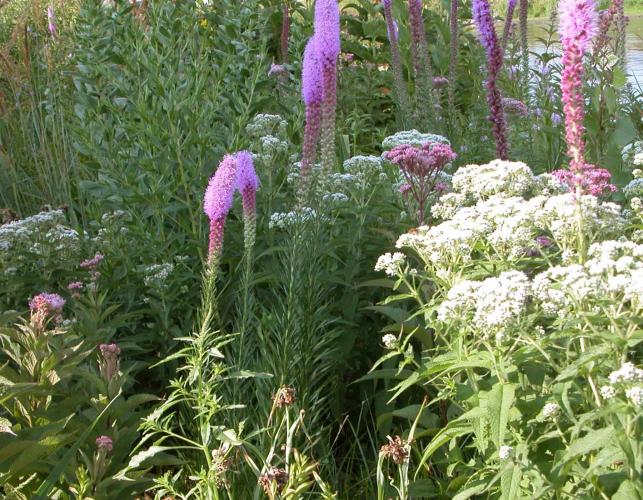
- Habitat is a key: dense blazing star is considered extirpated from its original habitat in Missouri. Don’t expect to see it in native habitats. You will almost always see it only in gardens or other plantings, or in places where it has escaped from such plantings.
- Some cultivated varieties may have white flowers, compact growth habit, extra-long or extra-strong stalks (good for the florist trade), or other unusual characters.
Liatris hybrids: Where they grow near one another, different Liatris species may interbreed and create hybrids. The hybrid offspring plants are often fertile and can make a colony. Dense blazing star has been known to hybridize with prairie blazing star.
Similar species: Missouri has nine species of blazing stars (genus Liatris). Dense blazing star is most similar to the much more common and widespread prairie blazing star, which grows nearly statewide in native prairies and similar habitats.
- In prairie blazing star, the involucral bracts taper to long, sharply pointed tips that are spreading or curved backward (instead of rounded or broadly angled to a bluntly pointed tip that is appressed to the involucral cup).
- Prairie blazing star is typically a hairy plant, which dense blazing star (in Missouri) is not.
For more information about Missouri’s blazing stars (Liatris), see their group page.
Height: usually about 1–5 feet; cultivated varieties may be shorter or taller.
Formerly occurred natively in Oregon County, near the Arkansas border, but that population is considered extirpated.
Cultivated widely statewide, and it can escape into nearby habitats.
The overall range is nearly throughout the eastern United States and Canada.
Habitat and Conservation
As a native, dense blazing star (Liatris spicata) might be gone from our state.
The only known Missouri native site for this species was at an upland prairie in Oregon County, near the town of Bardley (close to the border with Arkansas).
- Although a population of this species lived there in the 1930s, prairie blazing star (L. pycnostachya) has since become common at the site, and the two have hybridized extensively.
- At this point, pure L. spicata apparently no longer exists there — so as a Missouri species of conservation concern, dense blazing star is listed as extirpated.
Meanwhile, dense blazing star is common elsewhere in the eastern United States, and it is often cultivated by gardeners. It can escape from cultivation into natural habitats.
This is the Liatris species most commonly available at garden centers. See Human Connections for a discussion of cultivated varieties (nativars) of this native species.
Status
Native Missouri perennial wildflower. A Missouri species of conservation concern; listed as extirpated from the state. See Habitat and Conservation for more information.
Human Connections
Blazing stars are among the showier plants to grace native wildflower gardens as well as formal landscape plantings. Several species are in cultivation.
- Dense blazing star is very popular and is often available at garden centers and plant nurseries; it often appears at florist shops as a cut flower.
- Blazing stars are also used in dried flower arrangements.
- In gardens, blazing stars are a magnet for pollinators such as butterflies and bees.
- Birds feed on the seeds, so blazing stars in your garden are like easy bird feeders.
- The sweet, thickened rootstocks, however, are attractive to voles and other herbivorous mammals.
Spicata means “spicate” and refers to the unbranching spikes of stalkless flowers.
Many of the dense blazing stars you’ll see for sale at garden centers are “nativars”: cultivated varieties of native plants. Their fancy characteristics didn’t develop naturally through the selective pressures of nature. Their presence may have unintended negative consequences for nature.
- In many cases, it is unknown if nativars offer the same nutritional value to bees, butterflies, and other insects as the “straight” native species.
- Unusual flower colors can confuse insect pollinators.
- Cultivars with unnatural genetics can interbreed with native populations and produce plants that are less fit for the local environment.
- If you are interested in native wildflower gardening, learn about the pros and cons of nativars. When in doubt, get native plants from an ethical native wildflower nursery.
Various Native American tribes used some blazing star species medicinally to treat a wide range of ailments.
- The common name “snakeroot,” applied to certain blazing stars, apparently comes from a belief that they could be used for treating snakebites.
Ecosystem Connections
Many types of insects visit blazing stars for food.
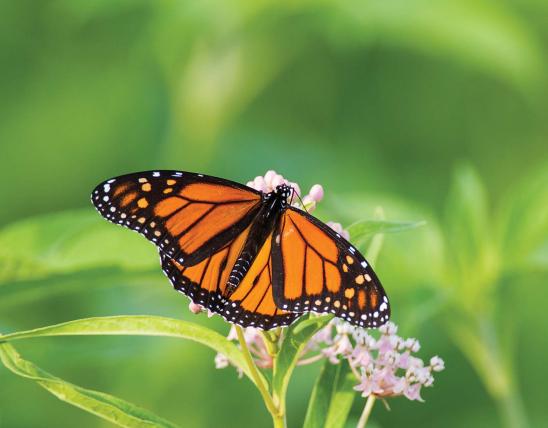
- Monarch butterflies are a famous example, but a wide variety of other butterflies, skippers, bees, beetles, flies, and other insects collect pollen or nectar.
- Aphids and other sap-suckers drink the plant juices with their strawlike bills.
- Many herbivorous insects chew on or bore into the leaves, flowers, stems, rootstocks, or other plant parts. Some are specialized to eat only blazing stars.
The caterpillars of some species of flower moths (a subgroup of noctuid moths) feed on the flower buds and developing seeds of blazing stars. The females deposit eggs onto the host plants. One species is the beautifully pink bleeding flower moth (Schinia sanguinea), which is limited to Liatris species and can survive on nothing else.
- The caterpillars are rosy pink to camouflage them against their pink-flowering larval food plants.
- The adults are also rosy pink to camouflage them against the flowers as they rest and deposit eggs on these flowers.
In addition to the many insects that feed on the plants, other animals are attracted to blazing stars in order to hunt the herbivores (and each other).
- Ladybugs, robber flies, mantises, assassin bugs, crab spiders, are among the arthropods that hunt insects among the flowerheads.
- Birds come to eat nearly any of the insects and spiders they can find.
Birds eat the fruits of blazing stars, which are like tiny sunflower seeds. Goldfinches are notable consumers of blazing stars, coneflowers, thistles, sunflowers, and sunflower-family seeds that develop in late summer as they nest late in the season. The fuzzy tufts of blazing star seeds are also used to line nests.
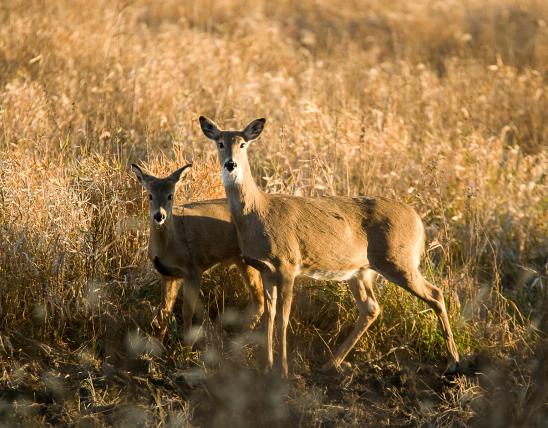
Mammals that eat blazing stars include rabbits, woodchuck, and deer, which graze on the aboveground parts of the plant, and voles, which gnaw on the corms or other thickened rootstocks.