








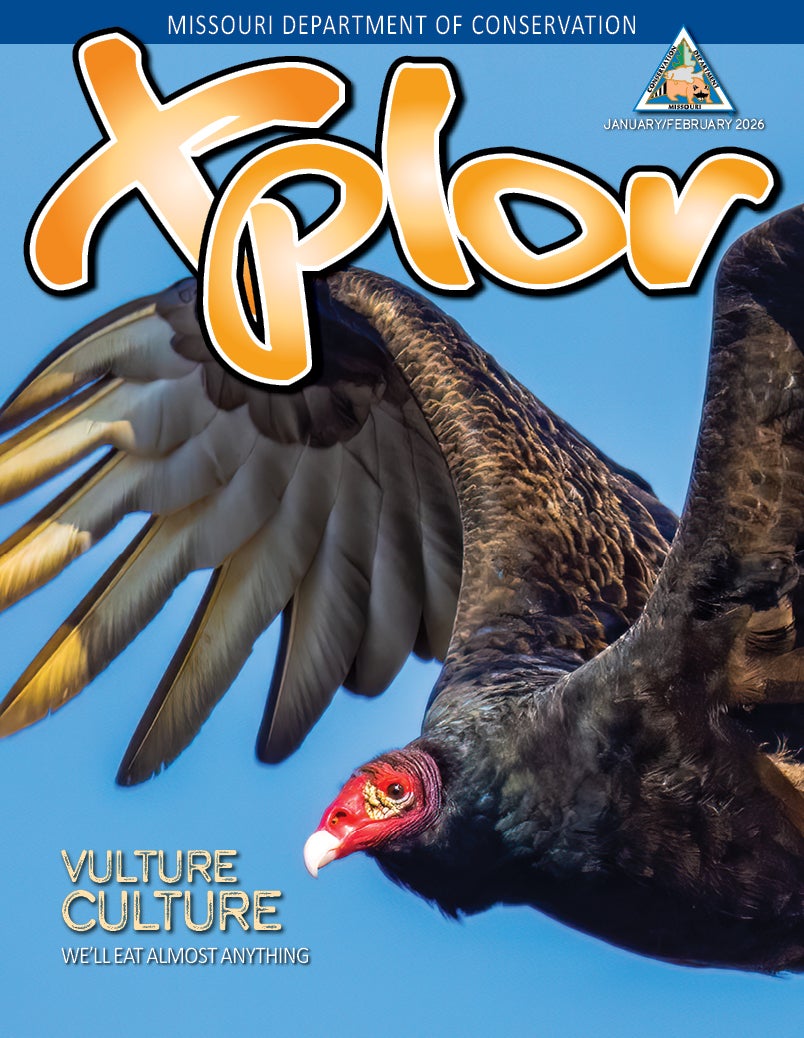

The smell of death hangs in the humid air. A large black bird circles overhead, homing in on the scent. It soon spies the source, a dead opossum swollen in the sun. The bird touches down, hops over to the roadkill, and plunges its beak into the body. In no time, the vulture picks the carcass clean, leaving little for the buzzing flies. Although this seems gross, it’s just part of the fascinating culture of vultures.
Graceful Gliders
With scruffy dark feathers and bald, wrinkly heads, vultures won’t win many birdie beauty contests. But let them take flight, and they just might win a talent show. Turkey vultures can soar for hours, holding their 6-foot wings in a shallow “V” as they ride currents of rising warm air called thermals. Their cousins, black vultures, work harder to stay airborne, flapping their wings often in between short glides. Since thermals don’t form until the sun heats the ground, vultures aren’t early birds. They rarely leave their roosts before 9 a.m.
Follow the Leader
Turkey vultures have super sniffers that they use to find decaying animals to dine on. Black vultures, like most birds, can’t smell squat. To find food, black vultures circle high in large flocks until they see a turkey vulture descend. Then, the black vultures quickly drop and pig pile onto the carcass, using their numbers to bully the turkey vulture off its dinner. When the feeding frenzy ends, the turkey vulture returns to polish off the scraps.
A Face Only a Mother Could Love
In spring, vulture couples search for a hollow stump, quiet barn, or cave in which to raise a family. The pair doesn’t bother building a nest. Instead, the female lays two creamy-white eggs on the bare ground. Both parents take turns sitting on the eggs until they hatch about a month later. The chicks are completely helpless at first but soon grow into bouncy balls of dingy-white fluff.
Barf Bags
Forget baby food. Vultures feed their babies by throwing up chunks of partially digested meat. While their parents are away, vulture chicks fend for themselves. They hiss, stamp their feet, and rush at intruders to scare them away. If any critter creeps too close, the chicks vomit on them. The vile smell is enough to send would-be predators packing.
Who’s Up for a Sleepover?
Dozens, sometimes hundreds, of vultures spend the night roosting together in large trees. Vultures lack a voice box, so they can’t sing or tweet. Instead, they chat with each other through hisses and grunts. Before taking flight the next morning, vultures warm up by spreading their long black wings to soak up sunshine. To cool down, they go to the bathroom on their legs. This habit has an added benefit: Acid in the chalky urine kills any germs clinging to the vulture’s legs.
Nature’s Cleanup Crew
Most critters would get a terrible tummy ache — or even die — from eating rotten meat, but not vultures. Bacteria and other microscopic creatures live in a vulture’s stomach and help fight off bad germs that the vulture might eat. Vultures also produce antibodies that protect them from food poisoning. By eating spoiled meat, vultures keep diseases from spreading. Without vultures, the world would be much sicker — and stinkier!
Take a peek into the foul but fascinating lives of nature’s feathered cleanup crew.


Also In This Issue

Under the Spotlight with a Black-Capped Chickadee
And More...
This Issue's Staff
Photographer – Noppadol Paothong
Photographer – David Stonner
Designer – Marci Porter
Art Director – Ben Nickelson
Editor – Matt Seek
Subscriptions – Marcia Hale
Magazine Manager – Stephanie Thurber