







Rainbow trout, like all fish, are cold-blooded. The colder it gets, the slower they move. During winter, trout still eat, but they don’t chase food far. Instead, they rely on stream currents to bring insects and other snacks to them.
Some eastern chipmunks hibernate during winter. Others stay active all winter long. Deep snow doesn’t seem to bother the chubby-cheeked acorn fiends. Chipmunks can tunnel through 3 feet of snow to exit their underground burrows.
Super snoozer: To conserve energy during winter hibernation, a woodchuck takes a breath once every four minutes, and its heart beats only four or five times a minute.
Red-breasted mergansers can rocket across the sky at speeds over 80 miles per hour. With a strong tailwind, the shaggy-headed ducks may fly even faster. Biologists in an airplane once followed a merganser that was moving at 100 miles per hour!
Most of time, snakes avoid each other’s company. (And for good reason! Some snakes eat other snakes.) But during winter, dozens — sometimes hundreds — can be found peacefully sharing burrows, caves, and crevices.
Hoo’s there? To hide from hawks and fussy songbirds, an eastern screech-owl sits up straight, raises its ear tufts, and squints its eyes. In this position, the owl’s camouflaged feathers make it look surprisingly like a branch.
Snow fleas (which aren’t fleas) are often seen dusting snow on sunny winter days. A snow flea’s body contains special proteins that work like antifreeze to keep the pepper-flake-sized creature from freezing solid.
Also In This Issue

Under the Spotlight with a Black-Capped Chickadee

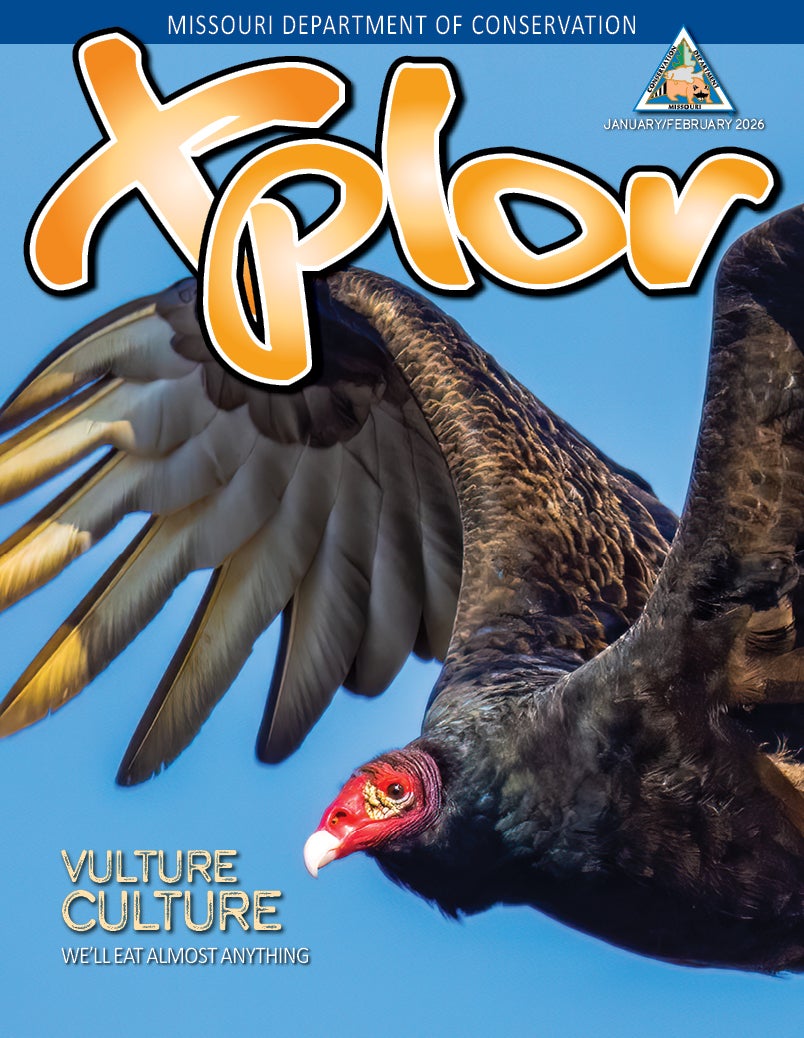
Take a peek into the foul but fascinating lives of nature’s feathered cleanup crew.
And More...
This Issue's Staff
Photographer – Noppadol Paothong
Photographer – David Stonner
Designer – Marci Porter
Art Director – Ben Nickelson
Editor – Matt Seek
Subscriptions – Marcia Hale
Magazine Manager – Stephanie Thurber