










During the winter of 2023, MDC’s deer biologists gathered to begin updating the department’s White-tailed Deer Management Plan. The cumbersome task of keeping management plans up to date is key to the long-term health of our Missouri fish and wildlife species.
This wasn’t the first time experts gathered to think about the management of a species. In 2020, three different management plans were completed — the Wild Turkey Management Plan, the Elk Management Plan, and the Black Bear Management Plan. The development of those plans was a multi-year endeavor that involved MDC staff around the state and lots of public involvement. For example, during the development of the Black Bear Management Plan, MDC hosted four open houses for citizens to learn about the draft plan and provide thoughts and comments. These comments were reviewed and helped influence the final plan.
What is a Management Plan?
Many of the state’s harvestable fish and wildlife species have statewide management plans to guide regulations and on-the-ground habitat work. Each plan includes high-level goals and objectives and includes the strategies needed for MDC staff and partners to accomplish those goals.
MDC subject matter experts start the process by revising a previous plan or developing a new one from scratch. Once the initial work has started, larger groups of MDC staff and external partners are brought in to refine the draft plan. Once the internal work is completed, management plans are released for public comment before being finalized.
Management plan decisions are not made in a vacuum. Many people have a vested interest in the future of our fish and wildlife species and input is taken into consideration when making management decisions.
While MDC has management plans for many wildlife and fish species, we will look at objectives from the deer, elk, bear, and turkey management plans to illustrate how they guide our work.
White-tailed Deer
(Odocoileus virginianus)
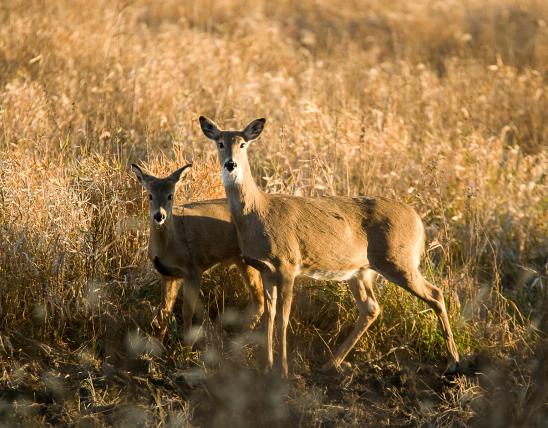
Deer hunting regulations and chronic wasting disease (CWD) management are so intertwined, it’s hard to talk about one without the other. CWD is a growing challenge within Missouri’s deer herd.
“The longer we can slow the spread of CWD, the healthier our deer population will be,” said Deb Hudman, MDC wildlife health program coordinator. “Hunters and landowners are key partners in helping MDC monitor and manage CWD.”
Annual deer hunting regulations are set through a consistent process, including public surveys, to better understand their desires and perceptions of the deer herd. Hunters and landowners are also surveyed to determine, at the county level, how they feel about deer numbers. Hunter surveys also ask about hunt quality and amount of hunting opportunities through the season. Those hunter and landowner perceptions are used to assess whether current deer population numbers are appropriate and whether changes to hunting regulations are needed. MDC strives to maximize opportunity, decrease regulatory complexity, and sustain the hunting culture within Missouri.
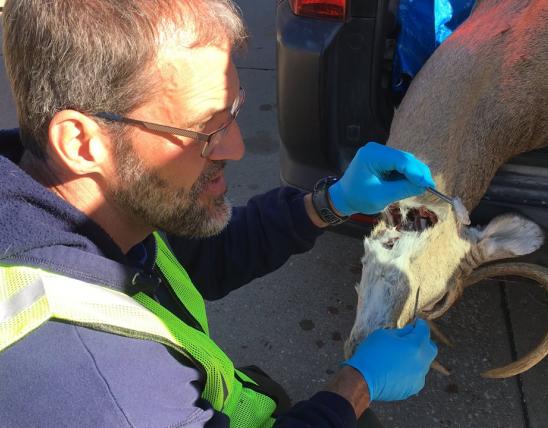
MDC is actively involved in both CWD surveillance and management. Surveillance involves collecting and testing samples from deer across the state. This is done in partnership with taxidermists, meat processors, and hunters. Surveillance allows MDC to detect where CWD is present, which in turn guides where management actions are needed. CWD management is focused on slowing the spread of the disease. For example, regulations prohibiting the placement of feed and minerals for deer are implemented at the county level to reduce unnatural deer congregation. In areas where CWD has been detected, targeted removal is conducted in a focused zone, typically within a 2-mile radius of a positive case.
- Goal 1: Deer Population Management
- Goal 2: Hunting and Recreation
- Objective 2.2: Establish a deer hunting season structure and regulations that promote hunter participation, recruitment, and retention.
- Goal 3: Deer Health and Disease
- Objective 3.2:
Conduct management practices that limit CWD prevalence and minimize the spread of CWD in the deer population.
- Objective 3.2:
- Goal 4: Education, Communication, and Public Engagement
- Goal 5: Research
Elk
(Cervus canadensis)
To accomplish objective 1.3, MDC Elk Biologist Aaron Hildreth evaluates the elk population on an annual basis. The intent of management at this time is to increase the number of elk, while also providing a limited hunting opportunity for select Missourians. This is done by allocating a conservative number of hunting permits and only allowing the harvest of males.
Surveys were sent out two different times — in 2018 and in 2024 — to get input from Missourians about how the elk season could be structured. The 2018 survey focused on the initial establishment of a hunting season, and the 2024 survey focused on how the season could be structured when cow elk are able to be harvested.
Survey respondents provided comments on aspects of the permit application and hunting season, from sit-out periods for successfully drawn hunters to timing of the firearms and archery portions of the season. This feedback was then used to help shape the recommendations Hildreth made to the regulations committee and commission.
“We wish to have elk into the future,” Hildreth said. “By providing a regulated harvest, we’re able to provide Missourians an opportunity to pursue elk in a way that is not deleterious to the population.”
Have you seen an elk in Missouri?
You can help biologists understand elk and their movement. Report sightings at short.mdc.mo.gov/49U.
- Goal 1: Elk Population Management
- Objective 1.3:
Establish effective harvest guidelines for management of elk on both public and private lands to meet population goals.
- Objective 1.3:
- Goal 2: Hunting and Wildlife Viewing
- Goal 3: Education, Communication, and Public Engagement
Black Bear
(Ursus americanus)
Bears and people can live together, and MDC’s Black Bear Biologist Nate Bowersock wants Missourians to know that.
“When people are thoughtful about living in bear county, we limit the number of human bear conflicts,” said Bowersock. “By focusing on minimizing and preventing conflicts with bears now, we can be better prepared to respond to the presence of bears as their population grows.”
To prepare Missourians for potential or upcoming bear activity, MDC regularly finds different outlets to educate people about bears. In addition, staff promptly respond to reports of bear activity and provide information about how to remove or secure food attractants, like bird feeders or bee hives, that greatly reduce the chances of conflict to occur.
Take two different bears. Bear number one got into some neighborhood trash but no one reported the incident. The bear continued to search that neighborhood for food, eventually breaking into a rental cabin and eating a pot roast in the crockpot. That bear had to be trapped and euthanized. Bear number two was getting into bird feeders in a neighborhood. MDC was notified and talked with neighbors about temporarily removing their bird feeders. With no attractive meal easily available, the bear moved on.
In both examples, a bear encountered food sources, but the outcomes were very different. Missourians living or recreating in bear country need to know what habits to modify to live responsibly with bears.
- Goal 1: Use science-based methods to manage a self-sustaining population of black bear, focusing on research and monitoring, population management, and habitat management.
- Goal 2: Increase statewide awareness of Missouri’s black bear population and management program through coordinated outreach and public education.
- Goal 3: Minimize and address human-bear conflicts.
- Objective 3.1:
Actively promote proactive measures to prevent/minimize human-bear conflicts.
- Objective 3.1:
Wild Turkey
(Meleagris gallopavo)
Creating and maintaining good turkey habitat is a collaborative endeavor.
“Public buy-in is critical for the management of the wild turkey,” said MDC Turkey Biologist Nick Oakley. “Ninety-three percent of Missouri is privately owned, so we can’t make any substantial improvements without the help of those landowners.”
Since private land managers are critical to the success of the turkey population, the outreach and education portion of the management plan is key. A lot has been learned in the last decade about what makes good turkey nesting and brooding habitat, and those habitat conditions may not be what people have traditionally thought.
“Turkey poults are basically nature’s chicken nuggets, everything eats them. Good nesting habitat, with good brooding habitat nearby, is crucial,” Oakley said.
Once poults can roost off the ground, their survival chances increase substantially, making the two-to-three-month window between when eggs are laid and the poults can fly extremely important.
Videos and workshops have been the main venue of communication for both the public and MDC land managers. The new Turkey Habitat website (short.mdc.mo.gov/4Fz) houses many valuable resources for land managers to reference when looking for habitat improvements. The recommendations and resources can help landowners protect the tiny “chicken nuggets” running around their property and increase the turkey population statewide.
- Goal 1: Use monitoring and research to maintain long-term stability of the wild turkey population.
- Goal 2: Create, improve, and maintain habitats that benefit wild turkeys on public and private lands.
- Objective 2.1:
Establish, improve, and maintain habitats that benefit wild turkeys on public lands. - Objective 2.2:
Establish, improve, and maintain habitats that benefit wild turkeys on private lands.
- Objective 2.1:
- Goal 3: Promote turkey hunting and provide opportunities to enjoy wild turkey-related recreational activities.
- Goal 4: Engage and educate stakeholders about wild turkey management through coordinated outreach.
- Goal 5: Minimize and address wild turkey damage and wild turkey-human conflicts.
Planning to Succeed
Efficiency coaches and experts frequently rely on the suggestion that “a failure to plan is a plan to fail.” With deer, bear, elk, turkey and many other fish and wildlife species, plans exist — and constantly evolve — to ensure their continued success and their continued presence on Missouri’s outdoor landscape.
Lauren Hildreth is a wildlife programs coordinator in MDC’s Statewide Resource Management Branch. She lives in Jefferson City with her husband, the department’s deer and elk biologist, and their three kids. She enjoys running around outside with her family and passing on a love of wildlife to her kids.


Also In This Issue

“One swallow does not make a summer.” —Aristotle

Partnership and patience sow success in restoring Missouri’s hellbender population
And More...
This Issue's Staff
Editor – Angie Daly Morfeld
Associate Editor – Larry Archer
Photography Editor – Ben Nickelson
Staff Writer – Kristie Hilgedick
Staff Writer – Joe Jerek
Staff Writer – Dianne Van Dien
Designer – Marci Porter
Designer – Kate Morrow
Photographer – Noppadol Paothong
Photographer – David Stonner
Circulation – Marcia Hale