






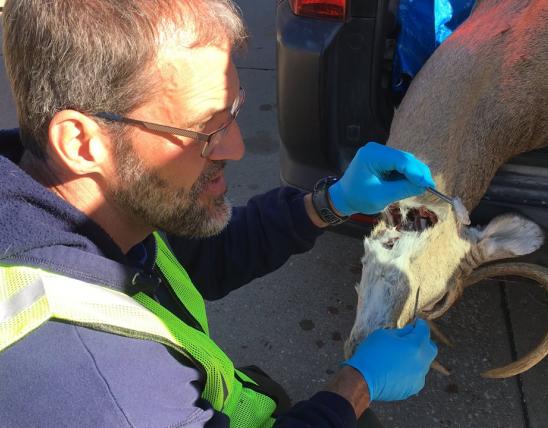



Hunters, taxidermists, meat processors, and others can help slow the spread of CWD by properly disposing of deer parts. Parts from CWD-infected deer can spread the disease. Long after infected carcass remains decompose, prions stay infectious in the environment, possibly exposing other deer to CWD.
Carcass Disposal
Parts of a deer carcass that are not kept or provided to a taxidermist, processor, or tanner must be disposed of in trash that is dumped in a sanitary landfill or left on the property where the deer was harvested. You must Telecheck your deer before transporting it (or its parts) out of the county where it was harvested or by 10 p.m. on the day of harvest, whichever comes first.
For Hunters Transporting Cervids (Deer, Elk, Moose, Caribou) Into Missouri
Hunters may not transport whole cervid carcasses into the state.
Heads from cervids with the cape attached and no more than six inches of neck in place may be brought into Missouri only if they are delivered to a licensed taxidermist within 48 hours of entering Missouri.
The following cervid parts may be transported into Missouri without restriction:
- Meat that is cut and wrapped or that has been boned out
- Quarters or other portions of meat with no part of the spinal column or head attached
- Hides from which all excess tissue has been removed
- Antlers or antlers attached to skull plates or skulls cleaned of all muscle and brain tissue
- Upper canine teeth
- Finished taxidermy products
For Taxidermists and Processors
Taxidermists and meat processors throughout the state are required to dispose of deer, elk, and other cervid parts, not returned to customers (except for hides from which all excess tissue has been removed), in a sanitary landfill or transfer station. Utilizing a commercial trash pickup service or disposing of waste in a dumpster with pick-up service meets this requirement.
See a map of landfills and transfer stations from DNR.
Proof of disposal must be retained for 12 months for meat processors and for three years for taxidermists.
- Examples of proof of disposal include receipts for your trash pick-up service, a receipt from the landfill or transfer station, or an affidavit from a business allowing access to their dumpster.
- Contact your County Conservation Agent with questions about proof of disposal requirements.
For All Hunters
Hunters can help prevent the spread of CWD and other diseases by following the carcass disposal regulations. Parts of a deer carcass that are not kept or provided to a taxidermist, processor, or tanner must be disposed of in trash that is dumped in a sanitary landfill or left on the property where the deer was harvested.
- Place in Trash or Landfill: The best way to prevent the spread of CWD is to double-bag carcass remains and dispose of them through trash collection or a permitted landfill.
- Leave On-Site: If carcass remains cannot be placed in the trash or landfill, leave carcass remains at the site where the deer was harvested.