


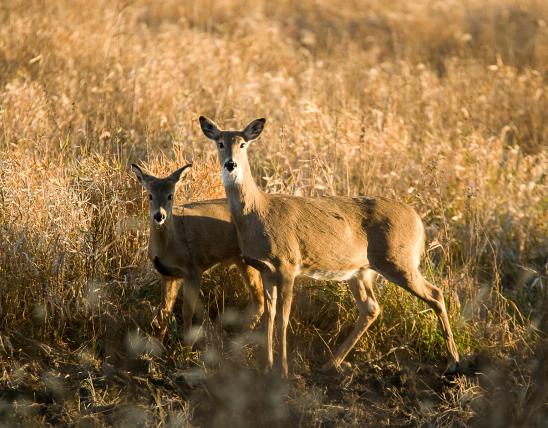





Deer hunting by managed hunt only. Consult the Fall Deer and Turkey Booklet, available on MDC's public website, for more information.
Media
Scientific Name
Colinus virginianus
Family
Odontophoridae (New World quails) in the order Galliformes
Description
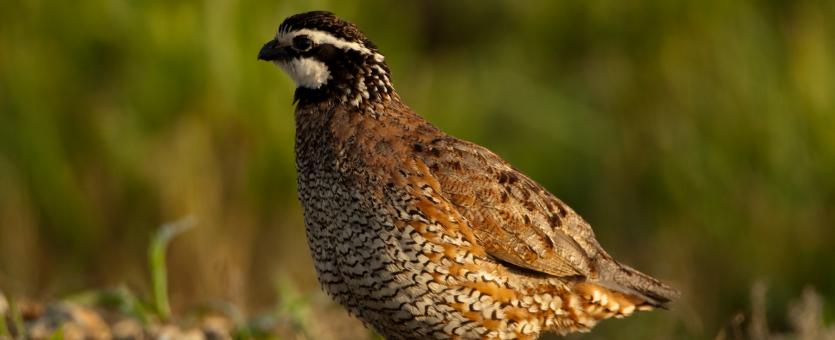
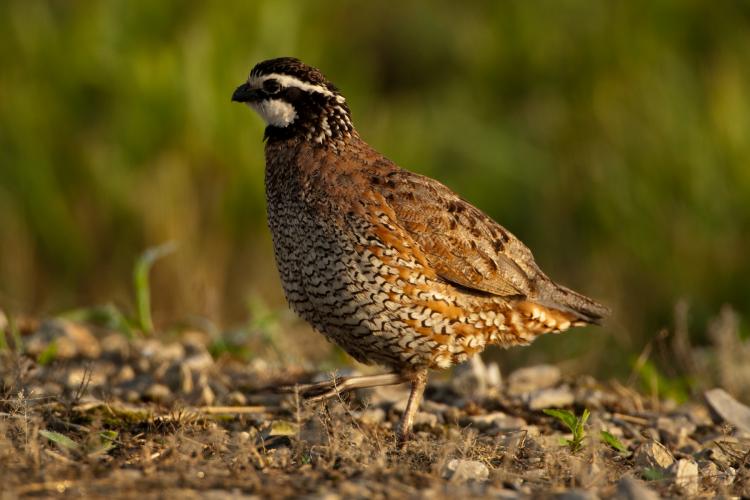
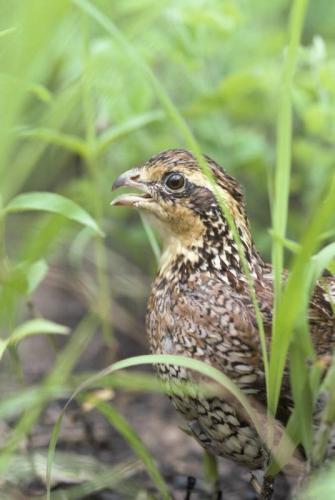
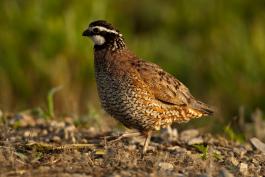
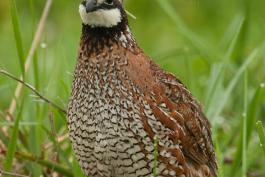
The northern bobwhite is a grassland bird that also requires some shrubby areas for cover. This quail is overall streaked or mottled reddish-brown and white, with a gray tail. Males have a distinctive dark brown cap and face with a white eyestripe and throat. Females are similar, except the white is replaced by buffy, yellowish brown, and the cap and face are not so dark.
The “bob-WHITE!” call is distinctive, but it is mimicked by a number of other bird species.
Other Common Names
Bobwhite quail
Size
Length: 10 inches (tip of bill to tip of tail).
Where To Find

Statewide, in appropriate habitats.
Habitat and Conservation
Northern bobwhites are still fairly common in grasslands, shrubby pastures, and some agricultural landscapes. Populations at the statewide level, however, have been steadily declining in recent decades. These declines are primarily due to habitat loss and land use changes. Landscapes with targeted habitat work combined with agricultural practices that promote certain bobwhite habitat needs have experienced stable population trends. The Missouri Department of Conservation offers public education, recreation opportunities, and landowner assistance to those interested in learning more or in managing their own properties for bobwhite.
Nesting and brood-rearing times are most critical for bobwhite production and often the limiting factor for bobwhite population numbers. Brood-rearing habitat consists of three components: shrubby cover, open herbaceous cover with bare ground, and green, growing vegetation with forbs and legumes (grasses make poor brood habitat). Pollinator and prairie plantings with a strong wildflower component and properly managed agricultural lands can provide great habitat during this critical time of year for quail. Learn more about bobwhite habitat needs on our quail management page.
Food
In fall and winter, northern bobwhites mainly eat seeds, including those of ragweed, foxtail, pigweed, and sunflowers. They also eat the seeds of many wild legumes, such as beggar's ticks and partridge pea, as well as agricultural waste and acorns.
In spring and summer, they feed primarily on insects, which are particularly important for bobwhite chicks. Some green plants and seeds make up a small part of their diet at this time.
Quality food sources are critical during nesting and brood-rearing to promote egg production and to increase brood survival.
Status
Northern bobwhites are fairly common permanent residents in appropriate habitats throughout Missouri.
Life Cycle
Life Cycle
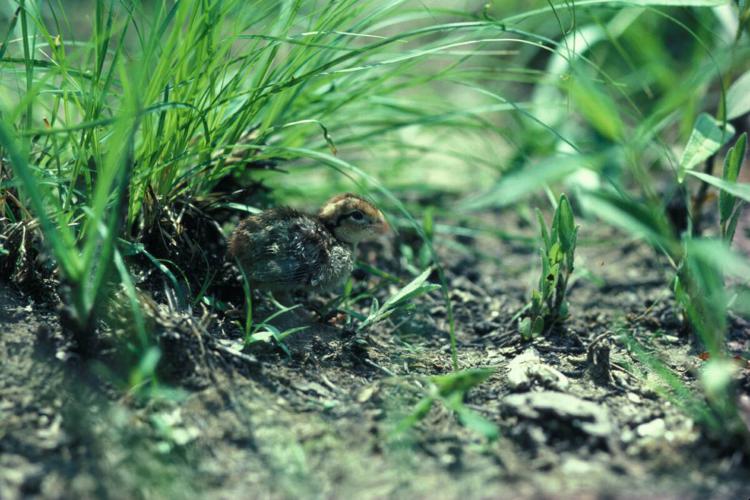
Bobwhites live in coveys (groups of 5–30 birds) from autumn to the beginning of breeding season the following spring. Eggs are laid about 1 a day and hatch after 23 days. The young are the size of bumblebees and are able to leave the nest about a day after hatching. Up to 3 clutches can be produced before the season ends in about October.
Human Connections
The northern bobwhite is a popular game bird and beloved by all who appreciate its clear summer song and exciting eruption when flushed. It is welcomed by farmers as a destroyer of weeds and harmful insects.
The Missouri legislature named the northern bobwhite Missouri's official state game bird in 2007. (Our state bird, the eastern bluebird, was officially proclaimed in 1927.)
Ecosystem Connections
There is a good reason why bobwhites are so well camouflaged; many species prey upon them, including mammals such as foxes, coyotes, and raccoons, as well as hawks, owls, snakes, and other species.
There's an interwoven connection between bobwhite, land managers, bird hunters, and those who appreciate wildlife. In today's landscape, bobwhite are generally a product of wildlife-friendly land management decisions made by landowners, farmers, and ranchers. Those land management decisions can directly impact bobwhite populations.
Title
Media Gallery
Image
Caption
Northern bobwhite, a type of quail, are ground-nesting grassland birds.
Credit
Anonymous
Right to Use
Photo by MDC Staff, courtesy Missouri Department of Conservation
Video file
Caption
Video of bobwhite quail in the wild.
Right to Use
Audio file
Caption
The northern bobwhite calls "Bob White!" during mating season and "koi-lee" in the fall.
Image
Caption
Newly hatched quail are the size of bumblebees. Although small, they soon leave their nests to eat tiny bugs.
Credit
MDC staff
Right to Use
Photo by MDC staff, courtesy Missouri Department of Conservation
Image

Caption
Adult male bobwhite quail.
Credit
MDC
Right to Use
Use of this image is restricted to MDC only
Image
Caption
Female adult bobwhite quail.
Credit
Jim Rathert
Right to Use
Photo by Jim Rathert, courtesy Missouri Department of Conservation
Image

Caption
Bobwhite quail brood in grass.
Credit
Jim Rathert
Right to Use
Photo by Jim Rathert, courtesy Missouri Department of Conservation
Image
Thumbnail

Thumbnail

Image

Image
Image

Image

Title
Similar Species
Similar Species
Media

Media

Media

Media

Media
Where to See Species

The Maintz Wildlife Preserve is an 804-acre area of rolling hills located in northwestern Cape Girardeau County.

Emmett and Leah Seat Memorial Conservation Area is in Worth and Gentry counties. The area was created in 1980 with a donation of 439 acres by the late Emmett and Leah Seat.
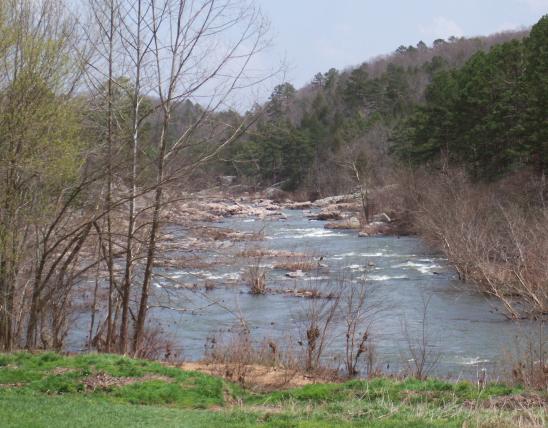
Millstream Gardens Conservation Area is a 916-acre tract of land in Madison County, about halfway between Fredericktown and Arcadia, off of Highway 72.
The spectacular Tiemann Shut-ins are within the
About Birds in Missouri
About 350 species of birds are likely to be seen in Missouri, though nearly 400 have been recorded within our borders. Most people know a bird when they see one — it has feathers, wings, and a bill. Birds are warm-blooded, and most species can fly. Many migrate hundreds or thousands of miles. Birds lay hard-shelled eggs (often in a nest), and the parents care for the young. Many communicate with songs and calls.
Reviewed On