


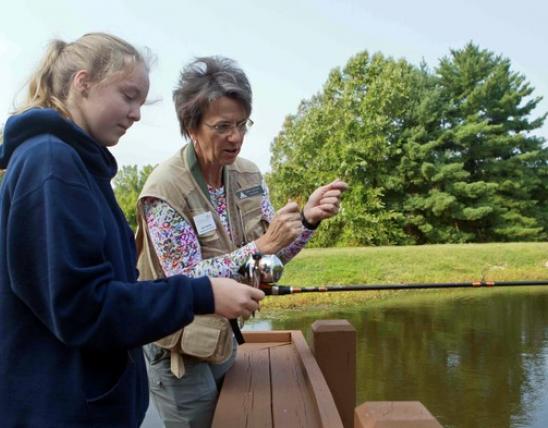
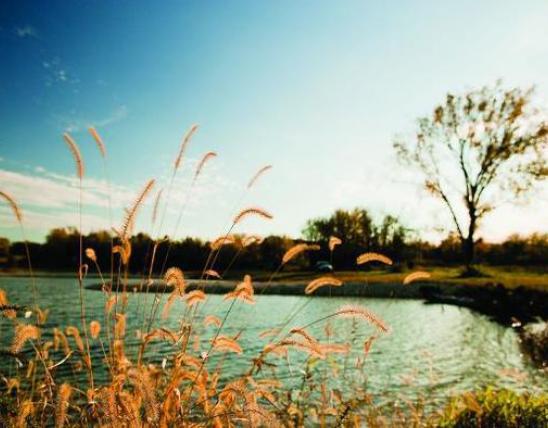
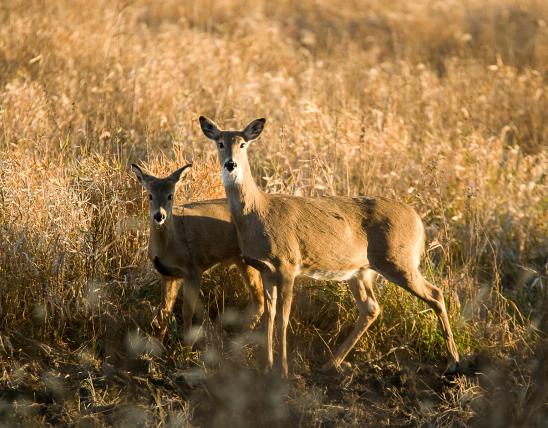



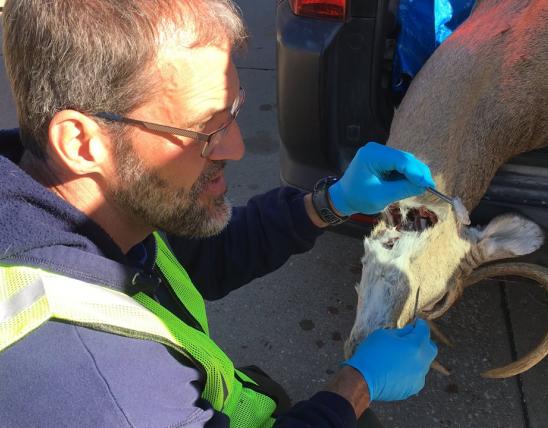




Amidon Memorial Conservation Area is a 1,878-acre area located on the upper reaches of the Castor River in Bollinger and Madison counties.
Media

Scientific Name
Silene virginica
Family
Caryophyllaceae (pinks, carnations)
Description
Fire pink is a low, clump-forming perennial with many slender, spreading stems that are sticky from glandular hairs, with open clusters of bright red flowers.
The flowers arise on fairly long stems (peduncles) from upper leaf axils. The calyx (the joined sepals) is a 5-pointed cylindrical tube with 10 parallel nerves. The corolla (joined petals) lobes are narrow, each with a single notch, and brilliant red. Where the lobes spread away from the tube, there is a small, crownlike circle of red lobes, and this corona (crown) is also red. Stamens protrude from the corolla.
Blooms April–June.
Basal leaves are usually numerous at flowering time. The stem leaves are opposite, simple, narrow, to 4 inches long, with or without short hairs and/or stalked glands.
Similar species: Fourteen species in genus Silene have been recorded growing in Missouri habitats.
- The one most similar is royal catchfly (Silene regia), because it, too, has bright red flowers. However, it is a taller plant (growing to 4 feet tall or more), blooms later (May–October), has thicker leaves, and has petals whose tips are entire or finely toothed (rarely notched, and never lobed). Also, it is usually found in sunny, rather dry habitats: upland prairies, glades, tops of bluffs, savannas, rocky openings of woodlands, sunny roadsides, and so on.
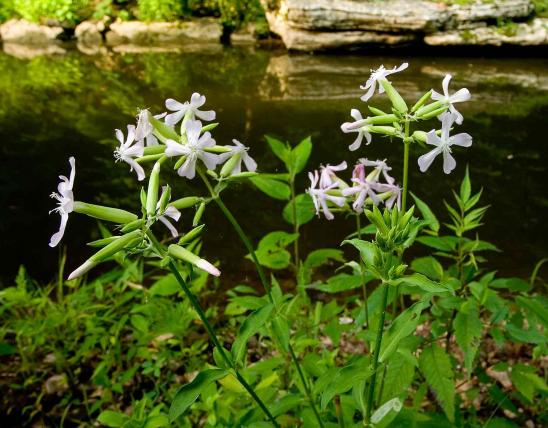
- Missouri's other Silene species bloom pink, white, or pinkish- or purplish-tinged. Some common examples include starry campion (Silene stellata) and sleepy catchfly (Silene antirrhina).
Size
Height: to 2 feet, but usually much shorter.
Where To Find

Scattered in the Ozarks and Ozark border counties; uncommon or sporadic in the plains of northern and western Missouri and in the Bootheel lowlands. Cultivated statewide.
Habitat and Conservation
Wooded slopes and valleys, bottomland forests, rich upland forests, banks of streams and rivers, bases and ledges of bluffs, edges of pastures, and shaded roadsides.
Also increasingly cultivated in rock gardens, native plant gardens, and woodland gardens.
Status
Native Missouri wildflower.
Human Connections
This native Missouri wildflower is an excellent choice for gardening.
- It prefers part shade and moist, well-drained soils.
- The flowers are showy and attract hummingbirds.
- Please don't dig these from the wild; buy them from ethical native plant nurseries.
The name "pink" refers not to the flower color but to the family of this plant, the Caryophyllaceae, the "pinks." This family includes the genus Dianthus, which embraces the carnations and several other flowers called "pinks." The color name of "pink" came from these flowers. The earliest meaning of the word "pink" refers not to any color but to something that is "cut out," like the notched edges of the petals (this is reflected in the term "pinking shears," for scissors that cut in a zigzag pattern).
Ecosystem Connections
Hummingbirds are the main pollinators of this species. Most bird-pollinated flowers are red, a color that bees are inefficient at detecting. This system benefits plant, birds, and bees. Plant-pollinator relationships are fascinating to study, with applications in horticulture and agriculture.
Title
Media Gallery
Image

Credit
Anonymous
Right to Use
Photo by MDC Staff, courtesy Missouri Department of Conservation
Image

Title
Similar Species
Similar Species
Media

Media
Media

Media

Media

Media

Media

Where to See Species
About Wildflowers, Grasses and Other Nonwoody Plants in Missouri
A very simple way of thinking about the green world is to divide the vascular plants into two groups: woody and nonwoody (or herbaceous). But this is an artificial division; many plant families include some species that are woody and some that are not. The diversity of nonwoody vascular plants is staggering! Think of all the ferns, grasses, sedges, lilies, peas, sunflowers, nightshades, milkweeds, mustards, mints, and mallows — weeds and wildflowers — and many more!