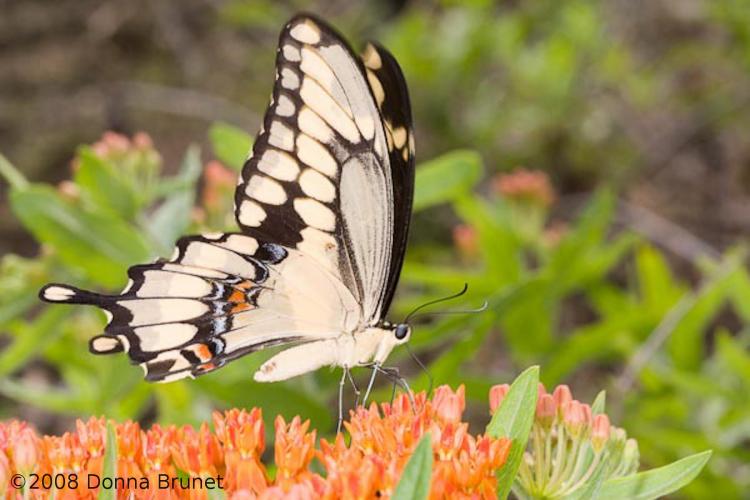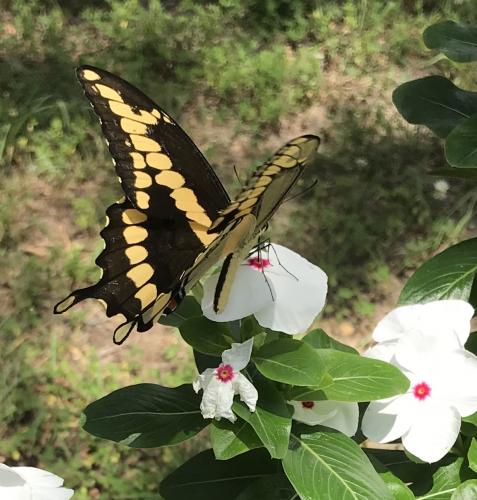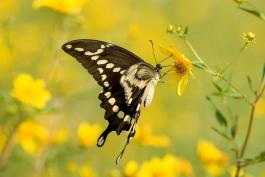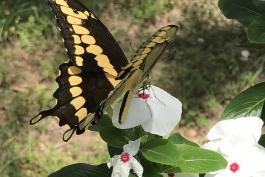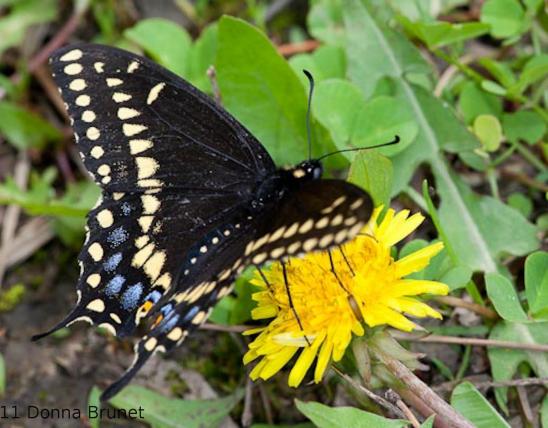





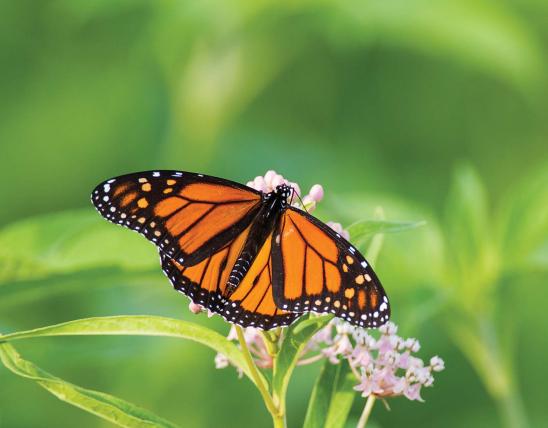

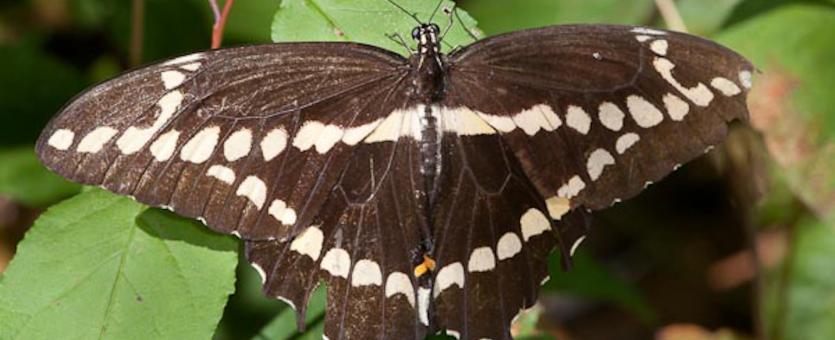
The eastern giant swallowtail is the largest butterfly in Missouri. The overall color of wings (top side) and body is dark blackish brown, with bands composed of several yellow spots. There is a yellow spot at the tip of each hindwing “tail.”
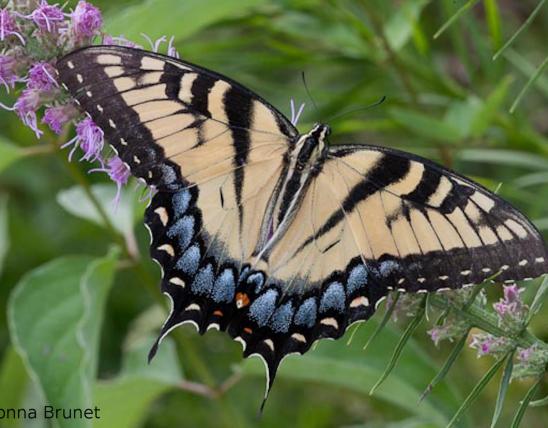
The undersides of wings are primarily yellow, with black, blue, and red markings.
There are yellow stripes on the abdomen.
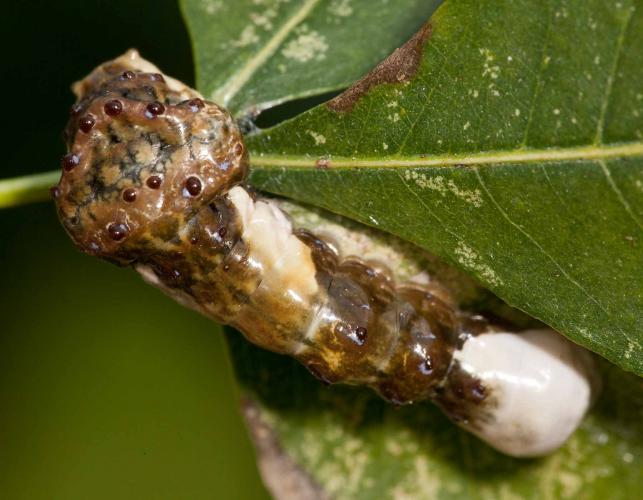
The caterpillars vary depending on stage of development. They mimic bird droppings. Overall, the coloring is brown with grayish-white markings, a patch at the end of the abdomen, and a wide saddle mark of the same color in center of the body. The osmeterium (a paired, hornlike appendage that protrudes when the larva is disturbed) is pinkish or red.
Similar species: Giant swallowtails in the western United States used to be considered this same species, but they have been split away as the western giant swallowtail (Papilio rumiko). This made our eastern form have a new common name, the eastern giant swallowtail (keeping its same scientific name, P. cresphontes).
Wingspan: 3¾ to 5½ inches.
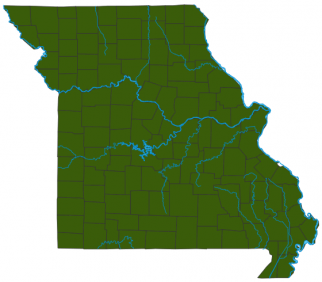
Statewide.
Habitat and Conservation
People usually see giant swallowtails in gardens, fields, and open woods. The adults are avid flower visitors and are sometimes found at mud puddles.
As with many other butterflies, look for them near their caterpillar host plants. There, you'll find not only the caterpillars but also the adults, which need to mate and deposit eggs on the correct host plants.
Food
Larvae feed on a members of the citrus family (Rutaceae); in our state, favorite host trees are wafer ash, or hop tree (Ptelea trifoliata), and prickly ash (Xanthoxylum americanum); they have also been reared from (nonnative) gas plant (false dittany; genus Dictamnus).
In southern states, the larvae are called “orange dogs” because they are pests on oranges and other citrus crops (which are also in the Rutaceae).
Adults drink flower nectar and take moisture and nutrients from puddles and damp ground.
Status
Breeding resident found in all regions of the state.
Life Cycle
There are two broods a year, with adults flying from April to October. Females deposit eggs singly on host plants.
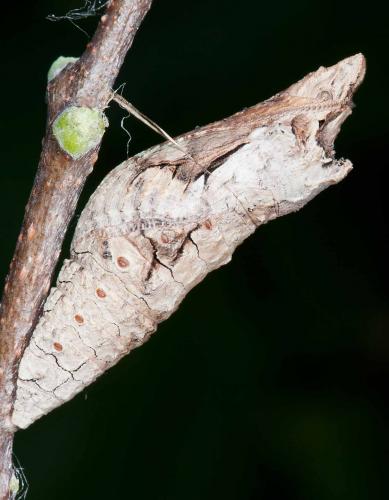
Giant swallowtails overwinter as chrysalids.
Human Connections
This largest butterfly in Canada and the United States is a welcome, striking visitor in butterfly gardens.
In southern states, the caterpillars are crop pests in citrus orchards.
Ecosystem Connections
The caterpillars are herbivores that graze on vegetation. The adults serve a role in pollination. All stages provide food for predators.
The young stages of the caterpillars resemble bird droppings, and older stages look more like little snakes and are also camouflaged against tree bark. Both camouflages help them avoid predation.