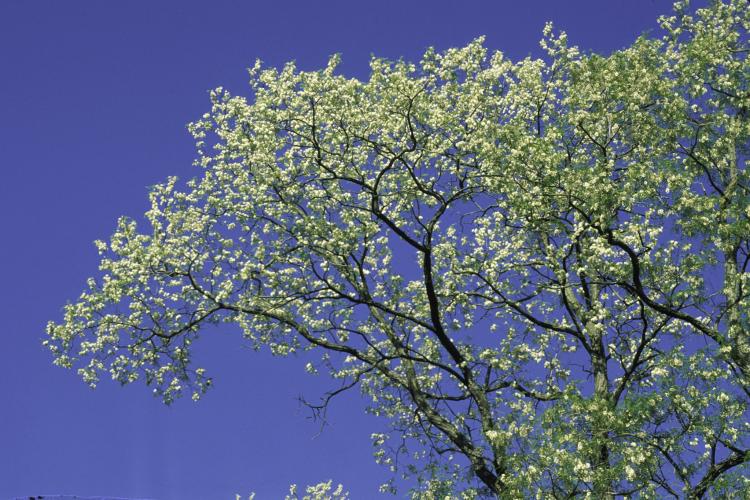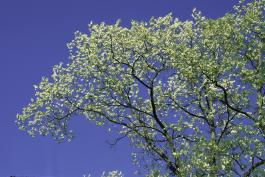







Black locust is a medium-sized tree with an irregular, open crown and some low branches, as well as several large upright branches.
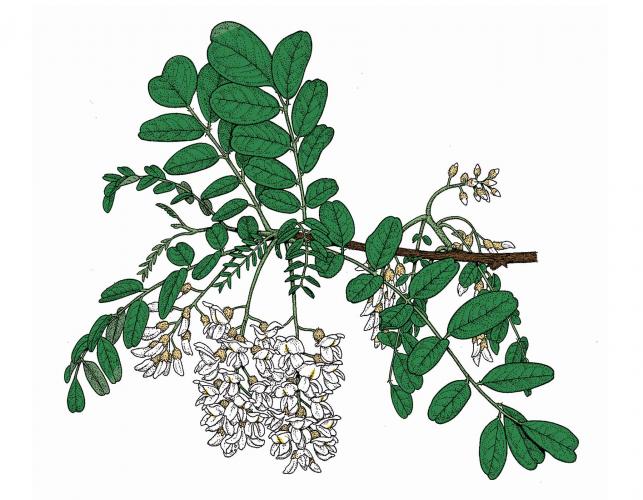
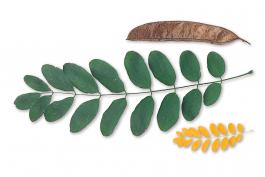
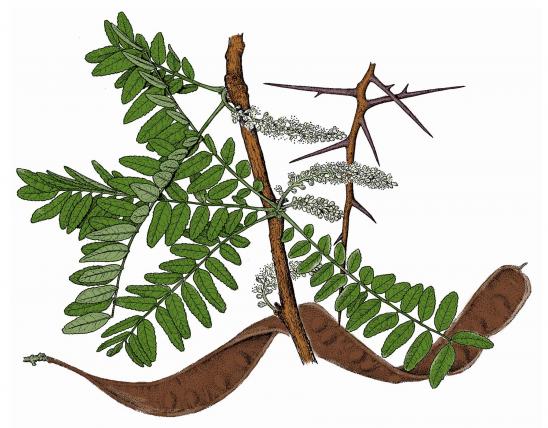
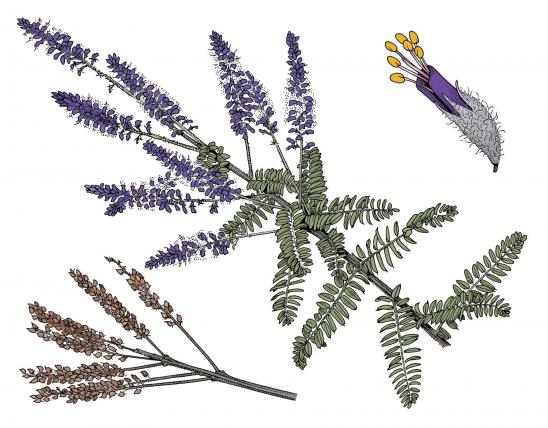
Leaves are alternate, feather-compound, 8–14 inches long, with 7–19 leaflets; leaflets ½–2 inches long, with tiny bracts at the base, the margin entire; upper surface bluish- to dark green, dull, smooth; lower surface paler, smooth except with hairs on the veins.
Bark is reddish-brown to almost black, with deep grooves and long, flat-topped, interlacing ridges.
Twigs are dark brown, stout, zigzag, brittle, smooth, angled with a pair of small spines where the leaves attach.
Flowers in May–June; pea-shaped, showy, white, fragrant, in loose, drooping clusters 4–5 inches long; each flower has five petals, with a yellow blotch on the inside of the uppermost petal.
Fruit in flattened pods 3–5 inches long and about ½ inch wide, smooth, reddish-brown, splitting along both sides; seeds 4–8, spotted, flattened; pods often persist on the tree through winter.
Height: to 70 feet; spread: to 45 feet.

Statewide.
Habitat and Conservation
Occurs in dry or rocky upland woods, along streams, and in pastures, thickets, and disturbed sites.
A pioneer species, black locust easily invades disturbed sites, often developing clones from sucker sprouts.
A tough tree, it is difficult to eradicate once established.
Black locust grows best in humid climates, although it has been introduced in many parts of the world where the climate is much drier. Black locust is a prolific seed producer, but seedlings are not common; few seeds germinate because of the impermeable seed coat. Most natural reproduction is vegetative by means of root suckering and stump sprouting. Root suckers arise spontaneously from the extensive root system of trees as young as 4–5 years old.
Status
Native Missouri tree. Common.
Human Connections
The wood of black locust is ranked as the seventh hardest of any tree in North America. The exceptionally hard wood has had many uses.
Widely planted for windbreaks, soil erosion control, and fence posts; also a popular fuelwood.
Because it easily invades disturbed sites, often developing clones from sucker sprouts, this tough tree can be hard to eradicate, and for this reason some consider it a nuisance.
Also planted as an ornamental. The flowers are quite fragrant and showy.
Native Americans chewed the root bark to induce vomiting and to reduce toothaches. All parts of the tree are considered toxic, although beekeepers disagree about the honey's toxicity. Some deem it the best of honeys.
Ecosystem Connections
The flowers are a good nectar source for bees.
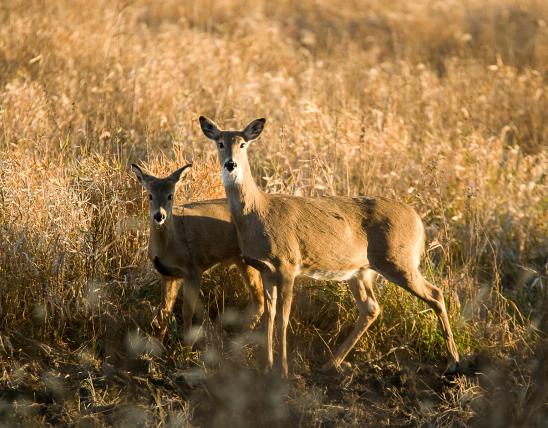
Deer browse the leaves and twigs.
Bobwhite and squirrels eat the seeds.
This tree is an important colonizer of disturbed sites.
The locust borer is a type of longhorned beetle whose grublike larvae tunnel into the trunks of black locust. Their infestations often kill weakened or damaged black locusts, and their tunnels are one reason why black locust wood is not more commonly used as lumber. The borer's colorful black and yellow adults are often seen in late summer as they feed on the pollen of goldenrod and other flowers.