







Much in common but total opposites
Humans are naturally attracted to shady, cool, sun-dappled spaces. But people who aspire to be expert-level aficionados of Missouri’s flora and fauna might consider cultivating an appreciation for lesser-known, sunnier natural communities like fens and glades.
What is a fen? What is a glade? Put very simply: They’re opposites. Fens are wet, glades are dry. But they can intersect in the same space, and it’s even possible for a small fen to exist on a glade.
“Normally glades are bone-dry. But even glades can have places that are seepy and wet. The plants and wildlife that live there are adapted to extremes,” said Natural History Biologist Susan Farrington.
Fens, sometimes called seeps, are a type of wetland. They’re characterized by a constant, or near-constant, supply of groundwater emerging from the landscape. In a fen, the soil is too wet for trees to thrive, which creates sunny openings in the canopy. But they’re good places to observe bulrushes, ragwort, brown mosses, sedges, cattails, and more.
It’s tempting to think of a fen as a small wet prairie, but the two are not the same. Grasses are more conspicuous on prairies. Fens stay wet throughout the year, whereas prairies are seasonally wet. This means fire plays a less-important ecological role for fens, but some fens may benefit from periodic, patchy, low-intensity burns.
Seen from a road or hiking trail, fens are easy to overlook. To the casual onlooker, a soggy spot dominated by sedges and cattails offers little interest. But to a keen-eyed observer, they teem with fascinating wildlife and rare plants.
A glade, on the other hand, is a dry, hot, and sunny opening in a woodland where the bedrock is close to the surface. The soil is poor and shallow, but hardy plants — some associated with deserts — thrive there. With a rich variety of grasses and native wildflowers, glades support grasshoppers, pollinators, and other insects. They, in turn, make glades excellent habitat for wild turkeys, songbirds, and reptiles.
Forming Fens
Missouri is home to numerous types of “groundwater seepages,” including Ozark fens, prairie fens, forested fens, glacial fens, acid seeps, and saline seeps.
More recently, scientists have described a new type of ecological site called “karst fen,” which occurs in association with calcium-rich, dolomitic bedrock. In 2020, researchers began surveying the soil and plants at 30 karst fen sites to gather reference data for
this unique habitat. Their work will help land managers and private landowners better understand and care for these small wetlands.
Except for glacial fens found in the rolling hills of Missouri’s northern counties, the remaining types of fens occur in the Ozarks.
“When you get into a valley system with unweathered dolomite, you’re ripe for glade production as well as fen production. They both start occurring on the landscape at about the same location,” explained Kyle Steele, ecologist for the U.S. Forest Service. “Fens often have bedrock below them (although not all the time) or they’re in a valley system next to unweathered bedrock. Water can’t permeate it, so it moves laterally across it.”
Running water dissolves dolomite and limestone easily. Missouri — riddled with caves, losing streams, sinkholes, and springs — is famous for its karst topography.
“Large areas of the Ozarks are completely weathered. It’s not until you get into these deep valley systems — the upper parts of them — that you start finding glades and fens,” he said.
Rather than collecting in flat or depressional areas, sometimes fens form on steeper slopes. When this happens, scientists call it a “hanging fen.” But the soil is shallow — often a few inches at most to the bedrock below.
Mapping fens accurately is a challenge because water is chaotic by nature.
“Is the water being captured by a rock crevice? Or is the rock serving as a conduit? Eventually it’s going to spill out somewhere. That’s where you see fen plants,” said MDC Wetlands System Coordinator Frank Nelson. “The leaky lithology of karst is driving
plant distribution.”
Missouri’s mineral soils mainly have particles of sand, silt, and clay.
“We have extremes of wet and dry, and so plant material decomposes quickly. In a fen, over time, the organic matter accumulates above the mineral soil. Fens are one of the few places in Missouri where the soil is organic. It’s mucky.”
To prove his point, Nelson dug a hole, lifting out glistening, mucky, black soil.
“Take a handful, squeeze it,” he said.
Prompted by a squeeze, water ran from the clump like a sponge.
Pioneers used these naturally organic places to farm, garden, and raise livestock, usually draining them in the process. Fens were a boon for the settlers, but their agricultural practices were a hardship for the plants and wildlife living there.
Scientists continue to work toward getting a firmer grasp of their understanding of fens, which are highly variable from location to location.
“What is a fen? How have they been degraded over time? How could you restore them?” Nelson asked. “They have been overlooked and modified drastically, but I think there still are opportunities.”
Botanical Sticky Traps
On a trip to Mark Twain National Forest near Bixby, Nelson offered a glimpse into the secret life of fens.
A long time ago, vast sheets of glacial ice blanketed northern Missouri. Powerful enough to push massive erratics (boulders) southward, the glaciers influenced the course of the Missouri River and subtly affected the Ozarks, too. Millenia ago, the Ozark’s climate was colder and wetter than it is today. Because fens are groundwater-fed, they currently remain microhabitats of cold water refugia, capable of replicating cool, moist conditions from long ago and moderating the harsher conditions of today’s surrounding landscape.
This allows plants that were plentiful 10,000 years ago, and plants that are still common in the northern U.S. and Canada today, to persist — albeit in smaller quantities — in Missouri’s fens.
For example, an orchid called the small white lady’s slipper can be found in the calcareous fens of western Minnesota. These orchids are rare in Minnesota, but they are especially rare here, where one of the few places this plant is found in Missouri is on the seepy ledge of a dolomite glade in southern Missouri.
Other glacial relicts found in fens are queen of the prairie, marsh bellflower and snake-mouth orchid, and tuberous grass pink orchids.
Farrington noted Ozark fens are among the few places where federally endangered Hine’s emerald dragonflies occur. Featuring iridescent emerald-green eyes, these dragonflies spend their larval stage in crayfish burrows before emerging.
“Why the crayfish don’t eat them, we don’t know,” she said.
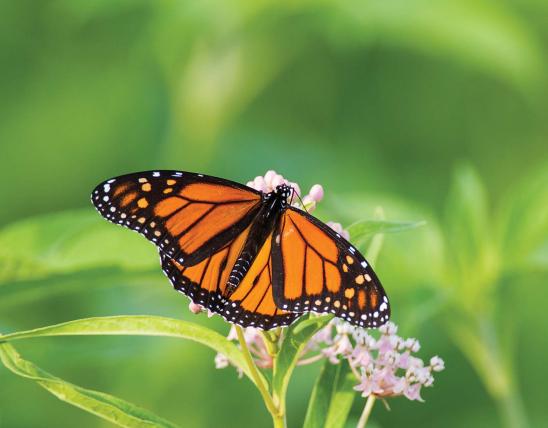
Other species that depend on fens are grey petaltail dragonflies and butterfly species like swamp metalmarks and monarchs. Birds like yellow-breasted chats, common yellowthroats, Kentucky warblers, and Lincoln’s sparrows thrive there, too. Fens are also great places to see more common species like ninebark, golden ragwort, swamp wood betony, and Indian paintbrush.
“Fens comprise a very small part of the landscape but are extremely species-rich and are habitat for a disproportionate number of rare species,” explained Farrington.
Fen Restoration? Hope Springs Eternal
There still may be some rare plants hanging on in Missouri’s fens that could be restored, given a chance. Nelson feels conservationists could restore wetlands in places where they didn’t even think they existed.
“We have put so much wetland conservation in our biggest river systems,” he said. “That’s where we have our biggest wetlands and our biggest bang for the buck. But we’ve overlooked the Ozarks in the past. And they have quite a lot of wetlands. They’re just smaller.”
Since they are driven by groundwater, restoring them is going to take a different set of tools. Building levees and installing pump systems won’t do much good but restoring the hydrology that has been diverted and lowered might. In small valleys near headwaters, nurturing beaver habitat might be one option to consider.
Sixty million beavers once lived throughout most of North America prior to European exploration. By 1900, most beavers were extirpated throughout much of their former range.
If beavers once kept the groundwater levels higher across these watersheds, there may have been a much wider distribution of fen-loving plants, Nelson theorizes. But when humans trapped the beavers and altered the hydrology, these widespread conditions for fen plants shrunk to smaller islands where groundwater drainage remains today.
“How long have these pockets of plants been isolated from each other?” he asked. “I’d like to do genetic analysis, and we could do the same with critters.”
He’s excited by the prospect of what might take place, once the hydrology is restored.
“You may not be able to hunt ducks over a restored fen, but there’s going to be these unique plants, insects, and critters that are going to increase the overall biodiversity,” he said.
And since fens serve as natural filters, conserving them helps protect the water quality of our Ozark streams.
Goodness Gracious, Glades!
If a permanent trickle of water is spilling from a rocky outcropping or bluff, it’s possible for small fenlets to form on glades. These microecosystems are fragile. Eastern red cedars can easily encroach if the area isn’t managed correctly. When that happens, the glade — which is already normally dry — can grow even drier since cedars are proficient at evapotranspiration. The fenlet can dry up.
Glades typically are not big; a 5-acre glade is considered large in the Ozarks. (Although the White River Hills Subsection has some expansive glades that exceed 100 acres.) But they are spectacular harbors for biodiversity.
“Glades and fens have a high number of species compared to the best woodlands,” Farrington said.
One such example is the prairie warbler, a bird in steep decline around the country. Belying their name, these warblers don’t typically live on prairies; they prefer shrubby dry glades and old fields. These warblers also do well in forest clear-cuts, but that habitat is temporary since clear-cuts regrow quickly. Glades, because of their permanence, are perfect for these lively yellow songbirds.
Glades are categorized by the type of bedrock they developed on. Dolomite is the most common form of bedrock within Missouri’s glade communities, followed by igneous, limestone, and sandstone. Chert glades are extremely rare.
Glades can be tortuous, bone dry, mini-deserts, but those are the conditions that allow species normally associated with the American Southwest — such as a prickly pear cactus, greater roadrunner, or a striped scorpion — to exist in Missouri.
Missouri sits at the intersection of many different habitat types.
“It’s why we have a fair bit of biodiversity,” Farrington said.
Helping Missouri’s Fens and Glades
Managing fens and glades can be challenging, but not impossible. Both benefit from eastern red cedar removal and prescribed burning.
A glade with cedar encroachment is prone to fuel overload. Cedars are resistant to decay; that’s one of the reasons they’re a valuable wood product. They rarely die unless they are cut down or every single needle is burnt off. And, when burned, the intensive heat can kill overstory trees like chinkapin oaks. Cut cedar logs persist for decades, although they do rot more quickly near the ground. They’re difficult to drag off glades. Farrington said MDC staff and volunteers try to build and burn the cedars in smaller bonfires on calm, wet, winter days.
“It’s labor-intensive,” she lamented.
Like glades, fens also can benefit from having other woody shrubs and trees removed.
A quality burn on a glade acts like fertilizer. In the year following the blaze, an abundance of flowers bloom into life. However, it can be difficult to manage a fen safely with fire, since fens stay wet and often won’t burn under the milder conditions favored for prescribed burns.
Landowners interested in conserving the fens and glades on their properties are invited to reach out to MDC’s Community and Private Lands Conservation Branch staff. You can learn more here at mdc.mo.gov/your-property.
Kristie Hilgedick serves as the MDC ombudsman, responding to public questions submitted to Ask MDC and writing the Ask MDC column in Missouri Conservationist.


Also In This Issue

A ‘who’s who’ guide to these entertaining pint-sized songbirds

The history of callmaking and how it shaped turkey hunting in Missouri
And More...
This Issue's Staff
Editor – Angie Daly Morfeld
Associate Editor – Larry Archer
Photography Editor – Ben Nickelson
Staff Writer – Kristie Hilgedick
Staff Writer – Joe Jerek
Staff Writer – Dianne Van Dien
Designer – Marci Porter
Designer – Kate Morrow
Photographer – Noppadol Paothong
Photographer – David Stonner
Circulation – Marcia Hale