











Lots of critters lay eggs. But what do mom and pop — or, in some cases, other animals — do with the eggs after they’re laid? It depends …
Guard ’em
After a mama hellbender lays her eggs, dad goes on guard duty. Hellbenders live in Ozark streams, and their nests are usually hidden under large rocks or logs. Dad stations himself at the nest’s entrance to keep fish and other predators from sneaking inside to eat the eggs. While he watches, he swishes his tail and wiggles his body, which moves fresh water over the eggs.
Carry ’em
Babies on board! A mama wolf spider wraps her eggs in a silken sac and then sticks it to her rear-end. She carries the pea-sized sac with her as she crawls around hunting for insects. When her babies are ready to hatch, mom tears open the sac, and dozens of tiny spiders climb onto her back.
Hide ’em
Killdeer parents hide their eggs in plain sight. They scratch out a shallow depression on the ground in a pasture, sandbar, or gravel parking lot, and mom lays four to six speckled eggs inside. The eggs blend in so perfectly against a rocky background that they become nearly invisible, even from just a few feet away.
Bury ’em
Like a pirate burying treasure, a North American snapping turtle digs a hole and lays about three dozen ping-pong-ball-sized eggs inside. The nest’s temperature determines whether the babies will be boys or girls. Warmer temperatures produce mostly girl turtles, while cooler temperatures produce mostly boys. The turtle toddlers tunnel out of their dirty nursery about three months after the eggs are laid.
Float ’em
North American bullfrogs lay a lotta eggs! Each mama frog lays about 10,000 eggs, and older frogs may lay over 20,000. The tiny eggs float on the water’s surface like a jiggly raft made of jelly. Many get gobbled up by fish — who doesn’t enjoy a jelly sandwich? But because there are so many eggs to start with, quite a few turn into tadpoles.
Sit on ’em
Birds, like this American robin, sit on their eggs, and it’s not because they offer a comfy seat. The parent bird’s body keeps the eggs at the right temperature so the babies inside can grow. Some birds don’t begin incubating until the last egg is laid. This way, all of the eggs hatch at about the same time.
Eat ’em
Eggs pack a lot of energy, protein, and vitamins into a convenient, easily snackable package. It’s no wonder that lots of critters — from raccoons and skunks to snakes and fish — rarely pass up a chance to eat an egg or two for breakfast (or lunch or dinner). With all the egg-munching going on, it’s no wonder why parents use so many tricks to keep their eggs safe.
Wear ’em
Most dads love to give their kids a piggyback ride, but giant water bugs go the extra mile. A female water bug glues her skinny eggs — up to 100 of them — onto her mate’s back. Dad carries the eggs with him everywhere he goes until they hatch about three weeks later. During this time he can’t fly, and it’s harder for him to swim.
Lay ’em and leave ’em
Do you notice anything odd about this nest? One of the eggs doesn’t look like the others. The oddball was laid by a brown-headed cowbird. Cowbirds don’t raise their own babies. Instead, they let feathered foster families care for their young. The energy a cowbird mom saves by not raising her chicks lets her lay up to 50 eggs each year.
As we’ve seen, there are lots of different things that can happen to an egg after it’s been laid. But the goal for each egg is the same: to have a healthy baby hatch out, grow up, and, eventually, lay some eggs of its own. Nature works in eggs-traodinary ways, huh?


Also In This Issue

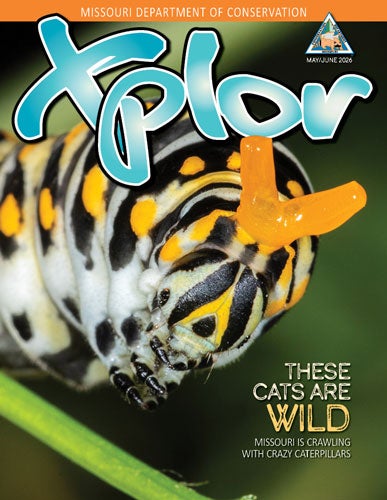
Some are huge. Some are hairy. Some are spiky. Some look scary. Some are pretty. Some are not. Some, literally, look like snot. Welcome to the wild world of caterpillars.
And More...
This Issue's Staff
Photographer – Noppadol Paothong
Photographer – David Stonner
Designer – Marci Porter
Art Director – Ben Nickelson
Editor – Matt Seek
Subscriptions – Marcia Hale
Magazine Manager – Stephanie Thurber