


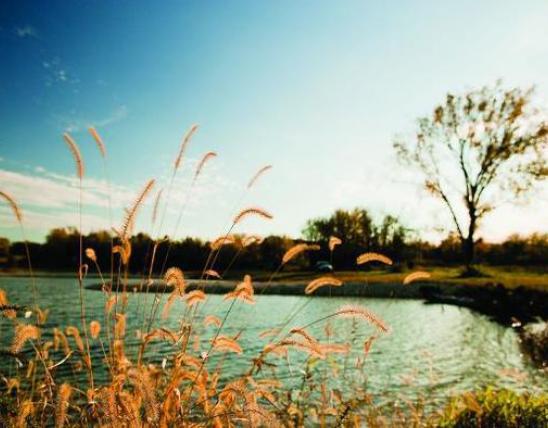
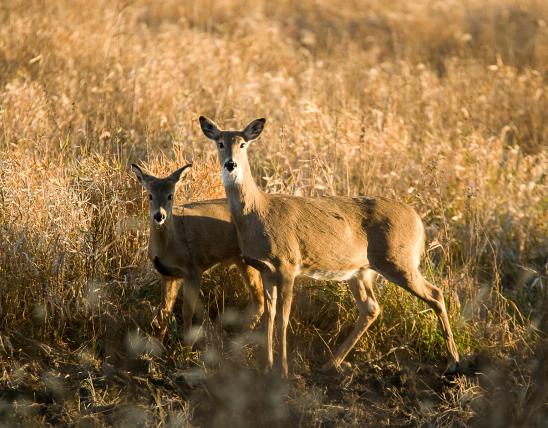
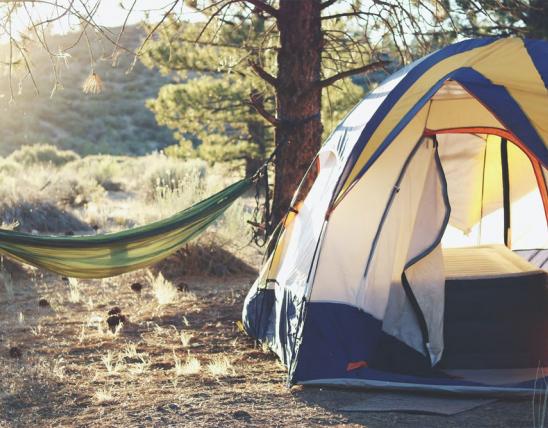








In an Ozark forest no bigger than two football fields, trees drop about 10,000 pounds of leaves every autumn. This layer of discarded tree parts is called leaf litter — but there’s nothing trashy about it! Tucked beneath the crunchy brown blanket is a hidden world of fascinating creatures. Biologists have counted over 2,500 insects crawling among the leaves in a space no bigger than a page of this magazine. And that’s just insects. Thousands of other creatures — many no bigger than the period at the end of this sentence — share the same space. Some litter critters spend their entire lives tucked out of sight under layers of leaves. Others only visit to nest, rest, hunt, or hide.
Millipede
For many litter critters, dead leaves are both bed and breakfast. Most millipedes, for example, eat rotting leaves. Their munching helps break the leaves into smaller pieces. These tiny crumbs nourish the soil and provide nutrients to help plants grow — maybe even the tree that dropped the leaves in the first place. “Millipede” means “a thousand feet,” and though a millipede doesn’t have quite that many, its army of churning appendages gives it a leg up as it burrows through the leaves.
Centipede
Centipedes use their sharp fangs to inject venom into insects, spiders, and other small creatures. Many kinds of centipedes live in Missouri, prowling the shadows under leaves, rocks, and logs. Although it’s best to observe centipedes from a distance, only a few kinds grow big enough to inflict a painful bite to people who try to pick them up.
Millipede or Centipede?
Although millipedes and centipedes look similar, it’s easy to tell them apart if you look closely. Millipedes have round bodies, two pairs of legs on most body segments, and move at a leisurely pace. Centipedes have flattened bodies, one pair of legs on each body segment, and generally move quite quickly.
Eyed Click Beetle
The big black spots on the back of a click beetle aren’t eyes. But they are meant to look like eyes to make predators think twice about taking a bite. If the fake eyes fail, a click beetle has another trick. It bends its body into a “U” and then straightens out suddenly with a loud click! This flips the insect airborne and startles any critter that was hoping for a beetle bonbon.
Wolf Spider
Wolf spiders don’t build webs. Instead, these athletic insect-eaters run down prey and pounce on top of it like a wolf. Mama wolf spiders even carry their babies on their backs while hunting! Unlike many spiders (which can’t see squat), wolf spiders have excellent eyesight, even at night. If you point a flashlight at a wolf spider, you’ll see its eyes shining back at you like a tiny, eight-legged cat’s.
Give Your Rake a Break
Lots of insects, including many important pollinators, survive winter under a blanket of leaf litter. To make sure you have plenty of luna moths, butterflies, and other insects, don’t rake up the leaves in your yard every fall. Instead, leave them on the ground until April.
Luna Moth
Luna moth caterpillars are chunky green eating machines that gobble leaves from several kinds of trees. When a caterpillar has grown about as big as a grown-up’s pointy finger, it waddles down the tree and into the leaf litter. There, it weaves a silky cocoon around itself. Often, luna caterpillars fold leaves around their cocoons, which makes them all but invisible in the litter. Caterpillars that are born late in the summer spend winter in their cocoons. In the spring, they emerge as bright and beautiful luna moths.
Pillbug
Like centipedes and millipedes, pillbugs (aka roly-polies) have more legs than most — seven pairs to be exact. Although they’re often mistaken for insects, pillbugs are more closely related to lobsters, crabs, and shrimp. Like their aquatic cousins, they breathe using gills. The gills must be kept moist, or the pillbug will suffocate. That’s why they live in dark, damp places, like leaf litter. To keep from drying out — or protect themselves from predators — pillbugs roll up into a tiny armored ball. Sowbugs, which are closely related and look similar, can’t roll up.
Eastern Hercules Beetle
Hercules beetles are named after a super-strong hero from Greek mythology. And for good reason. The brawny bugs can bench press over 100 times their own weight. If you were that strong, you could easily pick up a pickup. Male beetles push each other around using their rhinoceros-like horns. (Females don’t have horns.) The winner of the beetle battle gets more girlfriends.
Spotted Salamander
Never play hide-and-seek with a spotted salamander. You’ll lose. Although these six-inch-long amphibians are brightly spotted and fairly common in damp forests near shallow ponds and puddles, people rarely see them. That’s because they sleep during the day under leaf litter or inside shallow burrows made by mice and shrews. At night, they leave their hidey-holes to hunt for worms, snails, and insects to eat.
Short-Tailed Shrew
Tiny but mighty, short-tailed shrews have larger-than-life attitudes and appetites. They hunt day and night, rarely stopping to rest, prowling a maze of tunnels just below the leaf litter. To fuel this almost constant activity, a shrew must eat half its weight in insects, earthworms, and snails every day. Since it spends so much time in pitch-black tunnels, a shrew’s eyes aren’t much use. To find its way, it lets out a burst of high-pitched squeaks. These echo off the walls and paint a picture in the shrew’s tiny brain of the tunnel’s size and shape.
Little Brown Skink
Rarely stretching more than 5 inches from the tip of its nose to the end of its tail, the little brown skink is Missouri’s littlest lizard. Because they’re so small, it’s usually easier to hear them than see them. They make quite a ruckus as they rustle through leaf litter, hunting for insects, spiders, and earthworms. If a predator grabs a skink by the tail, the lizard leaves its behind behind. By flexing special muscles, the tail snaps off and blood vessels squeeze shut. The tail twitches, which distracts the predator and allows the shortened skink to slink to safety.
Three-Toed Box Turtle
After a long day of hauling its heavy shell across the forest, a tired box turtle snuggles underneath a blanket of leaves to get some shut-eye. There, its hard brown shell keeps it hidden and protected until morning. In the fall, box turtles dig shallow holes, crawl inside, and become buried by falling leaves. Although the holes are rarely deep, antifreeze in a turtle’s blood keeps it from turning into a turtlesicle during winter.
Eastern Red Bat
Not all bats sleep in caves. Red bats hang out in trees — literally. After a long night of bug busting, a sleepy bat finds a branch and dangles upside down. When the wind blows, the little bat twists and flutters like a dead leaf. But that’s not the only connection this moth-muncher has with leaves. In the fall, most red bats migrate south to spend winter where it’s warmer. But a few stick around. On chilly winter nights, you’ll find them snuggled under a blanket of leaves, happily huddled up with the rest of the litter critters.


Also In This Issue

These hardworking hounds help their humans solve crimes.
And More...
This Issue's Staff
Photographer – Noppadol Paothong
Photographer – David Stonner
Designer – Marci Porter
Art Director – Ben Nickelson
Editor – Matt Seek
Subscriptions – Marcia Hale
Magazine Manager – Stephanie Thurber