











Trout Opener
March 1 ushers in the catch-and-keep trout season
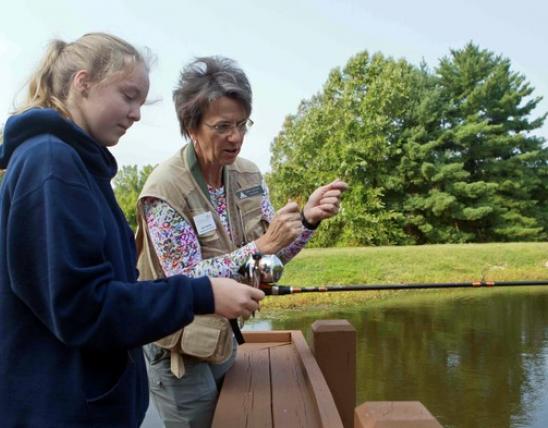
March 1 marks the annual opening of catch-and-keep trout fishing in Missouri at the state’s four trout parks: Bennett Spring State Park near Lebanon, Montauk State Park near Licking, Roaring River State Park near Cassville, and Maramec Spring Park near St. James. The catch-and-keep season at the trout parks runs through Oct. 31.
MDC operates trout hatcheries at all four parks and stocks rainbow trout daily throughout the season. MDC staff stock more than 800,000 trout annually at the state’s four trout parks and approximately 1.5 million trout annually statewide.
Trout anglers need a daily trout tag to fish in Missouri’s trout parks during this time. Daily trout tags can only be purchased at each of the four trout parks. MDC encourages trout anglers to have the correct amount of cash for daily tags if possible. Missouri residents 16 through 64 and nonresidents 16 and older also need a fishing permit in addition to the daily trout tag.
The cost of a daily trout tag is $5 for adults and $3 for those 15 and younger. A daily fishing permit is $9. The daily limit is four trout.
To prevent the spread of the invasive alga called didymo or “rock snot,” the use of shoes, boots, or waders with porous soles of felt or matted or woven fibrous material is prohibited at all trout parks, trout streams, Lake Taneycomo, and buffer areas.
Missouri has a wealth of trout waters, including red-, white-, and blue-ribbon areas that support naturally reproducing trout. MDC offers the Missouri Blue Ribbon Trout Slam to honor anglers who catch a trout in at least five of the nine blue-ribbon trout streams. Participants can have their successes listed on the MDC website. Learn more at mdc.mo.gov/troutslam. For more information on trout fishing in Missouri, pick up a copy of the Trout Fishing in Missouri booklet, available for free at MDC locations where publications are found or order one online at short.mdc.mo.gov/4fK.
MDC encourages trout anglers to buy their fishing permits ahead of time from numerous vendors around the state or online at mdc.mo.gov/buypermits. Once purchased, permits can be carried electronically through our free mobile apps, MO Hunting and MO Fishing, available for download through Google Play for Android devices or the App Store for Apple devices.
Deer and Turkey Hunting Dates
2026 Spring and Fall Turkey Hunting Dates
- Youth Spring Turkey Season: April 11–12
- Regular Spring Turkey Season: April 20–May 10
- Fall Archery Turkey Portion: Sept. 15–Nov. 13 and Nov. 25–Jan. 15, 2027
- Fall Firearms Turkey Portion: Oct. 1–31 (in open counties)
Youth hunters who are successful during the spring youth season may now harvest their second bird during the first week of the regular season. In the past, youth turkey hunters who were successful during the youth season could not harvest a second bird until the second week of the regular season.
Hunters using a Nonresident Spring Turkey Hunting Permit are now limited to one bird. Hunters using any other valid spring turkey hunting permit maintain the traditional two-bird limit.
2026–2027 Archery Deer Hunting Dates
- Sept. 15–Nov. 13 and Nov. 25–Jan. 15, 2027
2026–2027 Firearms Deer Hunting Dates
- Firearms Early Antlerless Portion: Oct. 9–11 (in open counties)
- Firearms Early Youth Portion: Oct. 24–25
- Firearms November Portion: Nov. 14–24
- Firearms Late Youth Portion: Nov. 27–29
- Firearms Late Antlerless Portion: Dec. 5–13 (in open counties)
- Firearms Alternative Methods Portion: Dec. 26, 2026–Jan. 5, 2027
The Missouri Conservation Commission approved changes to allow the early youth portion to be moved one week earlier in years when it overlaps with Halloween.
Get more information from MDC’s 2026 Spring Turkey Hunting Regulations and Information booklet and 2026 Fall Deer & Turkey Hunting Regulations and Information booklet, available closer to the seasons where permits are sold and online at mdc.mo.gov.
Daniel Dey Named Master Conservationist
During its December meeting, the Conservation Commission presented Daniel Dey of New Bloomfield with the Master Conservationist Award for his lifetime commitment to forestry and conservation.
Dey has been a leader in forestry research and teaching for more than 30 years with a focus on improving the productivity, diversity, health, value, and sustainability of forests in Missouri and beyond.
He has spent most of his career in Missouri, including two early years as the MDC forest research supervisor followed by 26 years with the USDA Forest Service where he was promoted to positions of progressively greater responsibility, scope, and stature. These included research forester, research project leader, assistant director of research, and most recently as a ”super scientist,” the highest rank that can be earned by a scientist in the USDA Forest Service.
Dey’s research, outreach, and education efforts include providing forestry research leadership for MDC’s Missouri Ozark Forest Ecosystem Project. The project is a comprehensive, landscape-scale experiment measuring the effects of forest disturbance on wood, water, wildlife, health, and sustainability of Ozark forests.
Dey was also involved in restoring mixed oak-pine forest habitats to increase landscape-scale animal diversity with emphasis on restoration of the brown-headed nuthatch in southern Missouri.
Dey’s research includes advancing understanding of white-oak health and productivity with special emphasis on sustainability of Missouri’s white oak resource for manufacturing oak barrels sold globally. Oak cooperage production is important in creating employment and investment opportunities in rural Missouri communities and throughout the Midwest and Midsouth.
Dey was key in developing a statewide shared stewardship agreement among state and federal agencies to create opportunities for collaboration on landscape-scale activities to address forest health, diversity, productivity, sustainability, and rural employment.
Dey co-authored the 600-page textbook, The Ecology and Silviculture of Oaks, considered the definitive text on oak ecology and silviculture in the country. He has also published more than 300 scientific and technical papers on forestry, silviculture, ecology, and related subjects and made more than 400 presentations to share research findings and forest management recommendations.
Through the course of his career, Dey has received acknowledgements for his scientific accomplishments and his service to the forestry profession, including the Karkhagne Award from the Missouri Chapter of the Society of American Foresters and lifetime recognition as a Fellow in the Society of American Foresters.
“Thanks to his decades of research, outreach, and education in the fields of forestry and conservation, Dr. Daniel Dey is an excellent example of a Master Conservationist Award recipient,” said MDC Director Jason Sumners. “The relevance and broad geographic scope of his research, his outgoing personality, his communication skills, and his decades of work have resulted in Dan being very well known, very well respected, and embraced by Missouri’s forestry community.”
The MDC Master Conservationist Award was created in 1941 to honor living or deceased citizen conservationists, former commissioners of the department, and employees of conservation-related agencies, universities, or organizations who have made substantial and lasting contributions to fisheries, forests, or wildlife resources, including conservation law enforcement and conservation education activities in the state.
Psst!
We want to hear from you
To better understand our readers and deliver the best content, we need to hear from you! Please take a few minutes to respond to the Missouri Conservationist reader survey.
Scan the QR code with your smartphone or visit short.mdc.mo.gov/4w8. The survey should only take approximately 5 minutes.
The Princess Tree
by Angela Sokolowski


Invasive nonnative species destroy habitat and compete with native plants and animals. Please do what you can to control invasive species when you landscape, farm, hunt, fish, camp, or explore nature.
The princess tree (Paulownia tomentosa) is a highly invasive, deciduous species that rapidly colonizes forests, roadsides, and riverbanks. It has large, fuzzy, heart-shaped leaves arranged oppositely on the stem. In early spring, the tree produces clusters of fragrant, pale violet, trumpet-shaped flowers prior to leaf emergence. Leaves and flowers closely resemble those of catalpa trees. Blooms become egg-shaped woody seed capsules that persist throughout the winter months.
Why It’s Bad
Marketed as a fast-growing ornamental (also known as empress tree or royal paulownia), it can spread into natural habitats and outcompete and shade out native hardwood species, leading to reduced forest biodiversity and resources for wildlife. A single mature specimen can disperse up to 20 million lightweight seeds annually.
How to Control It
Mechanical: Hand pull young seedlings, removing the entire root. Simply cutting mature trees without using herbicide is ineffective, as it stimulates aggressive root suckering.
Chemical: Effective herbicides have glyphosate or triclopyr as the active ingredients. Apply a mix of 50 percent herbicide concentrate and 50 percent water to stumps of freshly cut trees. Always follow herbicide label instructions.
Title
Answer
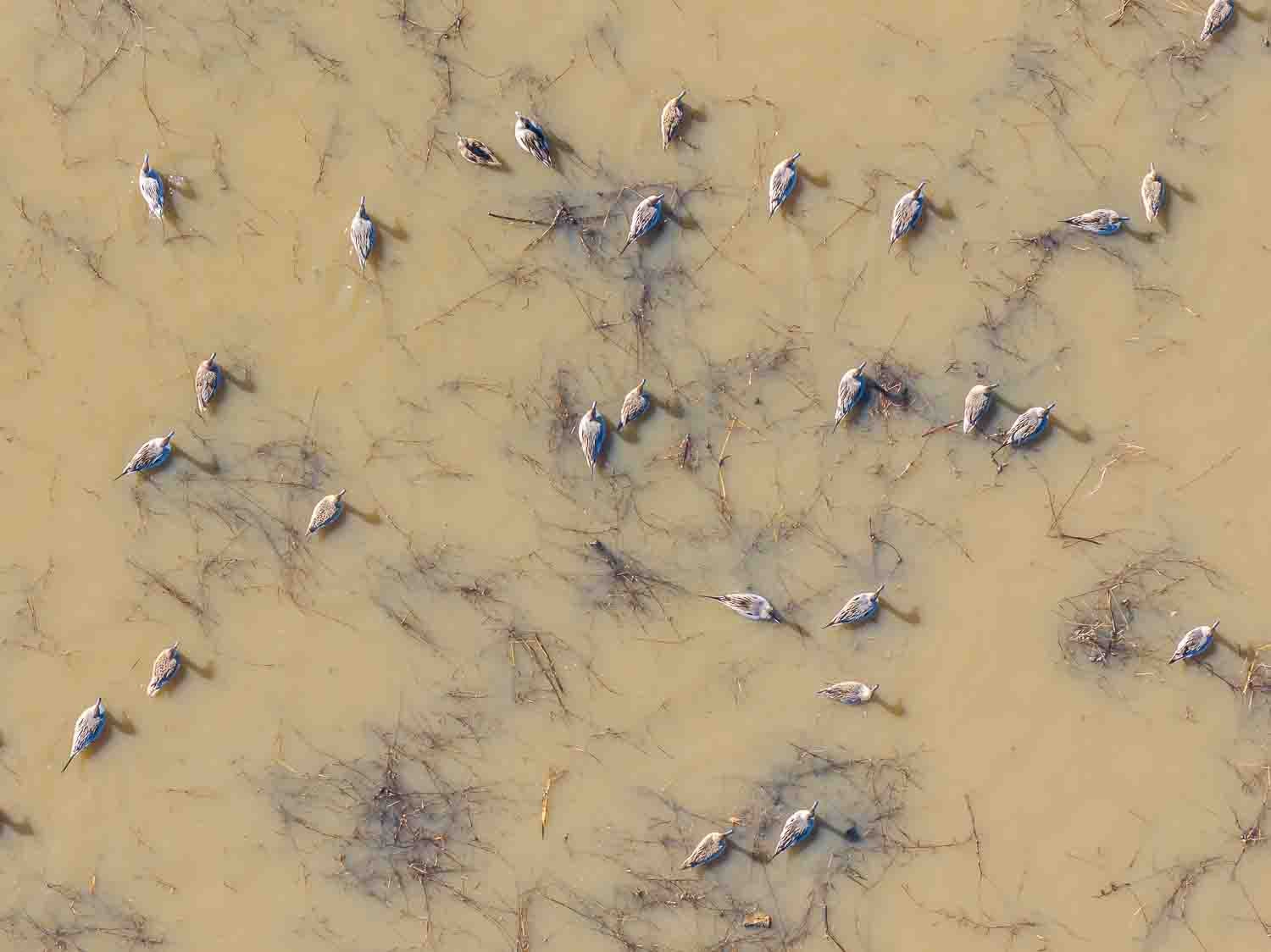
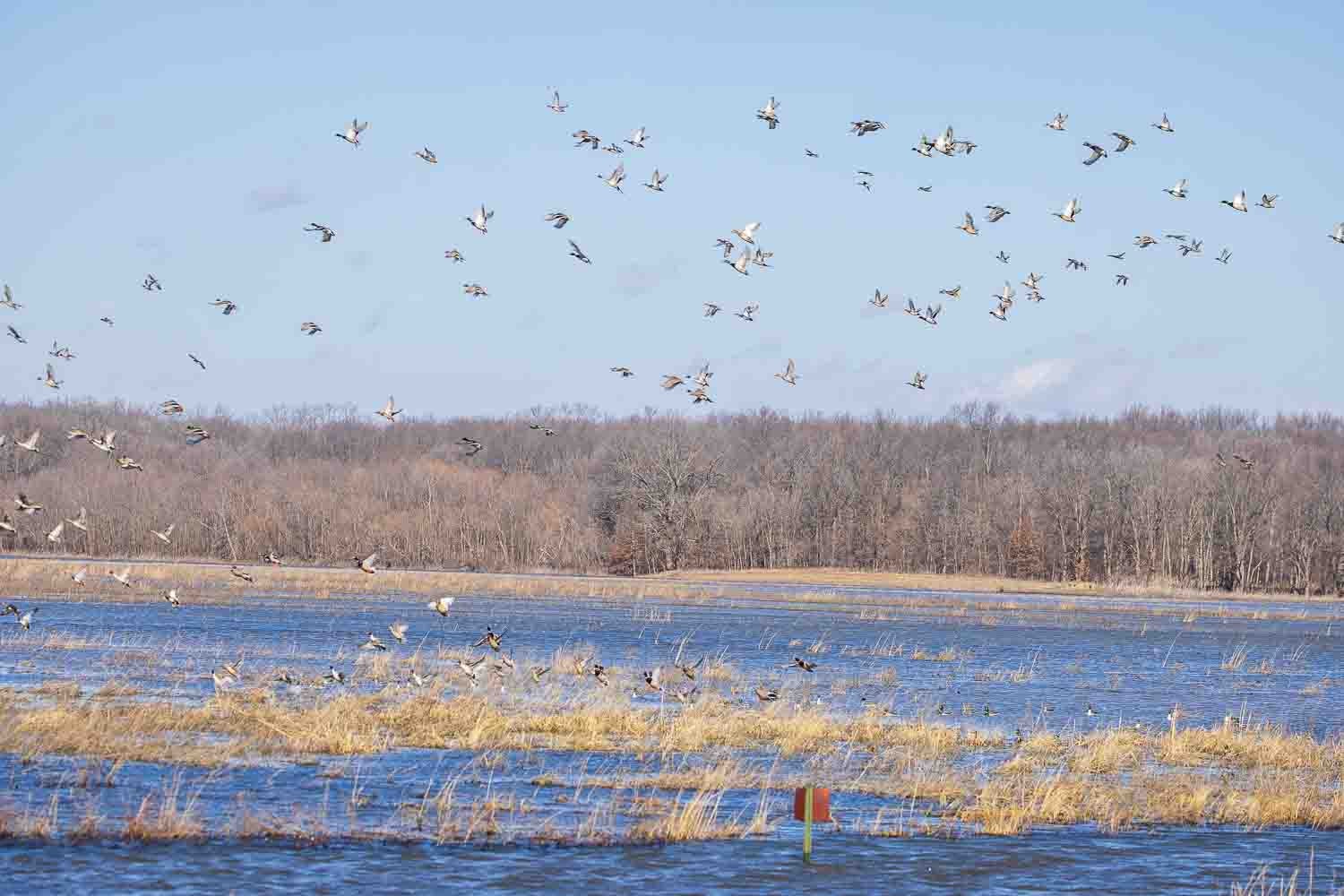
Ducks at Fountain Grove
Fountain Grove Conservation Area was the first wetland developed by the Conservation Commission. Established in the 1940s, the area has grown to 7,906 acres and includes marshes, bottomland forests, grain fields, oxbow lakes, and sloughs. Flights of birds, including wood ducks, are common on the area. It sits in the floodplain of the Grand River and serves as an important migration stop for a variety of wildlife and wintering habitat for Canada geese.
And More...
This Issue's Staff
Editor – Angie Daly Morfeld
Associate Editor – Larry Archer
Photography Editor – Ben Nickelson
Staff Writer – Kristie Hilgedick
Staff Writer – Joe Jerek
Staff Writer – Dianne Van Dien
Designer – Marci Porter
Designer – Kate Morrow
Photographer – Noppadol Paothong
Photographer – David Stonner
Circulation – Marcia Hale