






Discover Nature through Eagle Days
Missouri’s winter eagle watching is spectacular
Missouri’s big rivers, many lakes, and abundant wetlands make it one of the leading lower 48 states for bald eagle viewing. Discover nature through MDC’s Eagle Days events or on your own from December through February. Watch for eagles perched in large trees along the water’s edge. Early in the morning you can see them flying and fishing for the day’s meal. Be sure to dress for winter weather and don’t forget cameras and binoculars. For scheduled events and tips for viewing on your own, visit
short.mdc.mo.gov/Zt6.
MDC and MCFC Recognize Missourians for Making Trees Work
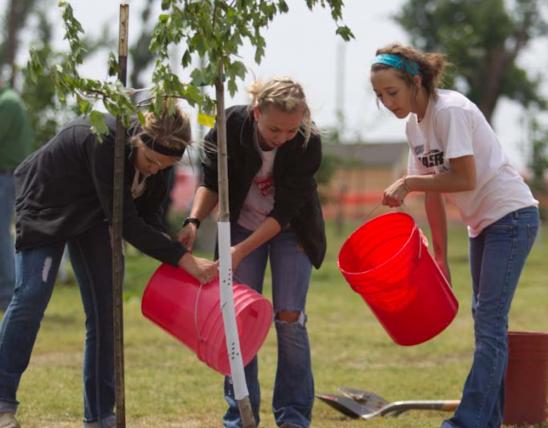
For more than 30 years, MDC and the Missouri Community Forestry Council (MCFC) have recognized Missourians who prove themselves to be outstanding stewards of community trees through the Missouri Arbor Awards of Excellence. This year’s awards were presented at the annual Missouri Community Forestry Council Conference in Kirkwood in September.
Congratulations to the 2025 recipients of the Missouri Arbor Awards of Excellence:
Winner of Individual Category — Jason O’Malley, St. Louis
Winner of Individual Category — Aaron Dohogne, St. Louis County
Winner of Municipal Category — City of Kirkwood
Winner of Business/Institution Category — Premier Charter School of St. Louis
Winner of Organization Category — St. Louis Neighborhood Foresters
New Non-Resident Migratory Bird Hunting Permit
Beginning Jan. 1, non-resident hunters in Missouri who want to pursue waterfowl, doves, snipe, woodcock, and rails will be required to purchase a new Non-Resident Migratory Bird Permit for $60. The new permit is part of a broader set of permit price adjustments by MDC and was approved by the Missouri Conservation Commission in October.
If non-resident hunters purchase a Migratory Bird Hunting Permit before Jan. 1, 2026, the permit will remain valid through the end of the season, Feb. 6, and no additional permit is needed for that season.
If non-resident hunters have not purchased a Migratory Hunting Bird Permit before Jan. 1, 2026, they must buy the new Non-Resident Migratory Bird Permit to hunt between Jan. 1 and the end of the season, Feb. 6.
Starting with the 2026–2027 migratory-bird hunting season, all non-residents must purchase the new Non-Resident Migratory Bird Permit.
Give Nature-Themed Gifts This Holiday Season
Have nature lovers on your holiday gift list? MDC’s online Nature Shop has you covered. Offerings include the ever-popular Natural Events Calendar, a variety of books, and more.
Holiday shoppers can also skip retail stores and visit one of our nature centers — located in Kirkwood, Cape Girardeau, Springfield, Kansas City, Blue Springs, Joplin, and Jefferson City — for an array of reasonably priced, nature-themed holiday gifts. To find the nature center closest to you, visit short.mdc.mo.gov/4JV.
Our holiday gift offerings include:
2026 Natural Events Calendar ($9) — This annual favorite has amazing images of native animals, plants, and places, along with phases of the moon, holidays and days of recognition, daily notes about natural events, and more.
You Discover Mini Field Guide for Xploring Outside ($8.95) — Adapted from MDC’s Xplor magazine, this engaging new booklet combines 13 mini field guides into a single, convenient, on-the-go guide.
Coneflower Nature Journal ($8) — This journal includes simple tips to get started drawing or writing about nature. It is spiral bound with plenty of blank pages.
Cooking Wild in Missouri ($16) — This favorite cookbook features more than 100 recipes for native game, fish, fruits, nuts, and mushrooms.
Strange but True ($8.95) — This fun offering was adapted from the pages of MDC’s Xplor magazine and features 350 weird and wild facts and illustrations about creatures that inhabit Missouri.
A Paddlers Guide to Missouri ($9) — This revised edition makes a great gift for canoeists, kayakers, and floaters with color photos, maps, and descriptions of 54 rivers and streams. The 102-page, spiral-bound guide includes trip planning tips, equipment recommendations, paddling pointers, and more. New to the 2023 edition are maps of the upper Mississippi River from Hannibal to St. Louis and an expanded section on the Big River.
Owl and Nuthatches Notecard Sets ($8) — This is great for gift giving. Each set includes 12 cards of either a barred owl or a pair of brown-headed nuthatches.
Missouri’s Wild Mushrooms ($26) — This book is a great guide for hunting, identifying, and cooking the state’s most common mushrooms.
Discover Missouri Natural Areas, Second Edition ($19.95) — This handy reference helps nature lovers experience 50 great examples of our state’s natural heritage. The new edition features updated maps, text, references, and scientific names.
The Amphibians and Reptiles of Missouri, Third Edition ($29) — This classic book has been updated and expanded to a 522-page illustrated guide that provides descriptions, distribution, habitats, habits, breeding, and other information on nearly 130 species of native salamanders, toads, frogs, turtles, lizards, and snakes.
Purchase these and other items at MDC nature centers, through the MDC online Nature Shop at www.mdcnatureshop.com, or by calling 877-521-8632. Order early as some supplies are very limited. Applicable tax, shipping, and handling costs will apply.
Coporal Justin Emery
Camden County
Conservation Agent
Missouri is a great place to fish, even in the winter. If you’re taking the boat out as the temperatures dip, keep these safety measures in mind. Check your equipment — including battery and life jackets — to make sure it’s in proper order. Wear a properly fitted life jacket and be prepared should your vessel turn over. It takes mere minutes for hypothermia to set in. Give someone your plan for the day. Carry a radio or cell phone, but not in your pocket. A whistle is also a good idea because it can be used during times of distress. Be aware of changing weather conditions. Be respectful of others on the water and you’ll have an enjoyable day.
Pancakes with Missouri Maple Syrup, Apples, and Pecans
Few things bring a feeling of warmth and comfort like a stack of hot pancakes on a cold winter morning. And the crowning jewel on this stack of comfort is Missouri’s native pecans, apples, and sweet maple syrup.
Makes 12 medium pancakes

Maple-syrup apples
2 tablespoons unsalted butter
3 large Missouri apples (peeled, cored, and cut into ½-inch-thick slices)
½ cup maple syrup
½ teaspoon cinnamon
Melt butter in a large skillet over medium-high heat. Add apples and 1 tablespoon maple syrup. Sauté for a few minutes until apples are tender. Mix in remaining maple syrup and cinnamon. Turn off heat and reheat briefly, if desired, just before the last pancake is cooked.
Pancakes
2/3 cup white flour
1/3 cup whole-wheat flour
2 tablespoons yellow cornmeal
2 tablespoons turbinado or brown sugar
1 teaspoon baking powder
1 teaspoon baking soda
½ teaspoon salt
1 cup buttermilk
1 cup plain low-fat yogurt
1 large egg
1½ tablespoons unsalted butter, melted
24 Missouri pecan halves, lightly toasted
Whisk together dry ingredients in a large bowl. In another bowl, whisk together buttermilk, yogurt, and egg until well blended. Add to dry ingredients and stir gently until just blended, but still lumpy (don’t overmix). Gently mix in 1½ tablespoons melted butter.
Heat griddle over medium heat. Melt a thin coating of butter over griddle. Drop batter by 1/3 cupfuls onto griddle. Cook pancakes until brown on bottom and bubbles form on top. Flip pancakes over and cook until bottoms are brown and pancakes are barely firm to the touch. Transfer to plate. Repeat with remaining batter, adding butter to the griddle as needed.
Spoon maple-syrup apples over pancakes and sprinkle with pecans. Set additional syrup on the table and use as needed.


Title
Answer
American Beaver Dam
American beavers, considered “ecosystem engineers,” construct dams using logs, mud, rocks, and grass. These dams provide habitat for plants, animals, birds, and insects. In Missouri, however, they are less likely to construct dams than they are in regions farther west and north. Instead, in our faster and fluctuating streams, they usually excavate a den or lodge in a high bank with an entrance below water.
Also In This Issue

Readers share their stories through photos
And More...
This Issue's Staff
Editor – Angie Daly Morfeld
Associate Editor – Larry Archer
Photography Editor – Ben Nickelson
Staff Writer – Kristie Hilgedick
Staff Writer – Joe Jerek
Staff Writer – Dianne Van Dien
Designer – Marci Porter
Designer – Kate Morrow
Photographer – Noppadol Paothong
Photographer – David Stonner
Circulation – Marcia Hale