

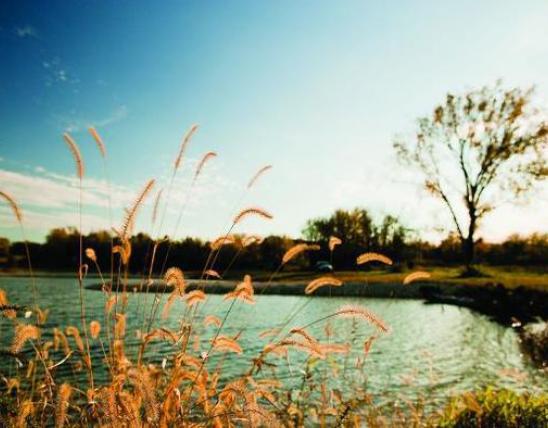








The fatmucket occurs nearly statewide in small to large streams with quiet waters. It lives in a wide variety of substrates, including sand and mud, and is sometimes found in the soft mud of lakes.
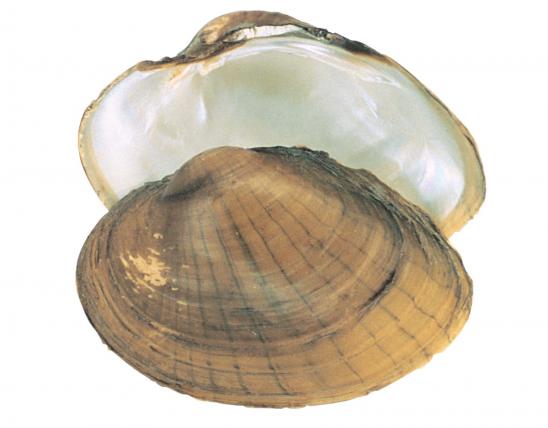
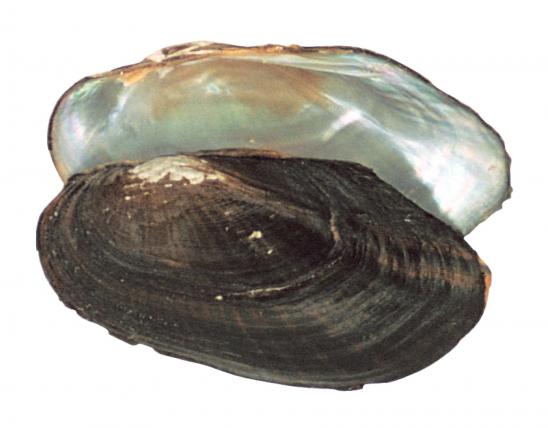
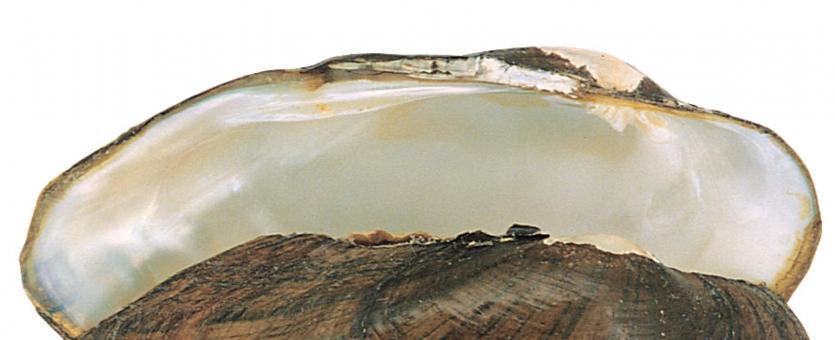
The fatmucket's shell is moderately thick and elongate, with the anterior end rounded; the posterior end is blunt (in males) or inflated and squared-off (in females). The umbo (beak) is slightly raised above the hinge line. The periostracum (thin outer layer) is smooth, shiny yellow to brownish yellow, becoming dark chestnut in some older adults; usually there are distinct green rays.
Inside the shell, the beak cavity is moderately deep; the pseudocardinal teeth are thin to triangular and roughened; the lateral teeth are bladelike, moderately long, and straight; the nacre (mother-of-pearl layer) is bluish white, iridescent posteriorly.
For a fuller introduction to Missouri’s native freshwater mussels, and to learn the terms for their anatomy, see their group page.
Similar species: The plain pocketbook is more inflated and has a higher umbo. The mucket’s shell is more oval and compressed. The yellow sandshell is also similar.
Adult length: 3–6 inches.

Nearly statewide except for north-central and northwest Missouri.
Habitat and Conservation
Small to large streams with quiet waters in a wide variety of substrates, including sand and mud. Sometimes found in the soft mud of lakes.
Food
Freshwater mussels consume algae, bacteria, and fine particles of decaying organic matter. They extract nutrients and oxygen from water drawn into the body cavity through a specialized structure called the incurrent siphon; sediment, undigested food, and waste (called pseudofeces) are expelled through the excurrent siphon.
Status
Common, although degrading water quality and watershed destabilization interfere with the survival of this and all freshwater mussels.
Life Cycle
Males release sperm directly into water. Females downstream siphon sperm into the gill chamber, where eggs are fertilized. Eggs mature into larvae (called glochidia), which discharge into the water and attach to host fish. The host fish for this species include largemouth bass, common shiner, white sucker, white bass, rock bass, bluegill, and several more. The tiny mussel eventually breaks away and floats to the bottom of the stream, and the cycle repeats.
Human Connections
Mussels play important roles in maintaining the health of Missouri’s water resources:
- As food for fish, they are important for Missouri’s fisheries. Small mammals and some birds eat them, as well.
- They filter algae, bacteria, and other particles from the water, improving water quality and cycling nutrients and energy in streams and lakes. Clean water is necessary for people and nature.
- Because mussels are sensitive to habitat disturbance and pollution, they are good indicators of the overall health of aquatic ecosystems and water quality.
The fatmucket was a favorite species harvested for the button industry in the early 1900s. Some species of freshwater mussels are still commercially important in the cultured pearl and jewelry industries.
Ecosystem Connections
Native freshwater mussels provide vital functions in aquatic ecosystems:
- They are an important food source for many species of fish, wildlife, and other invertebrates.
- Their shells, both while the animal is alive and after it dies, provide habitat for other organisms.
- As filter feeders, individual mussels can filter a significant amount of water per day, but not all of what they remove is eaten. What they don’t eat is combined with mucus into packets. These pseudofeces packets are eaten by some fish and invertebrates.
Freshwater mussels depend on healthy populations of certain types of fish to complete their life cycle. Although as larvae they temporarily parasitize these fish, the harm to the fish is negligible.