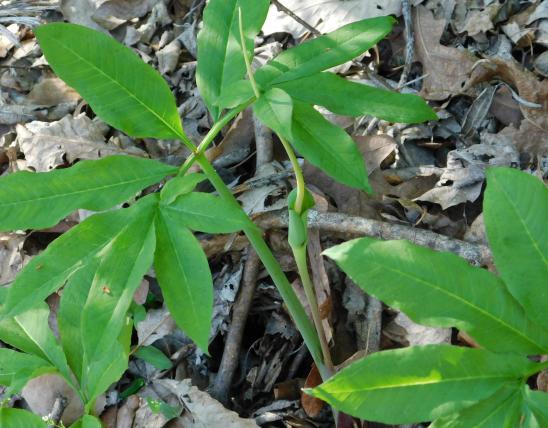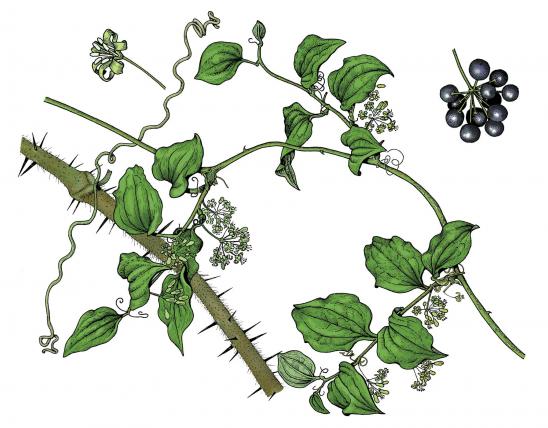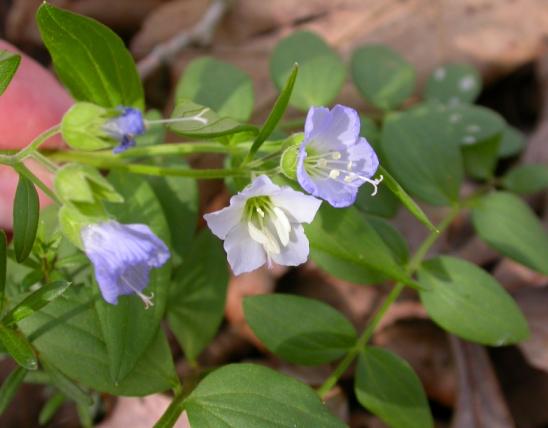







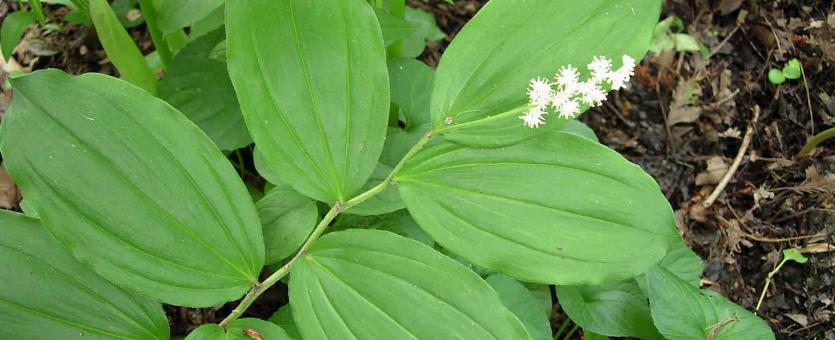
False Solomon's seal is an herbaceous perennial growing from a long, creeping rhizome.
The stalk is arching, usually unbranched, and slightly zigzags between the leaf nodes.
The flowers are in a plumelike cluster of minute florets arising from the tips of the plant stalks; they are fragrant and creamy white.
Blooms May–June.
The leaves are alternate, spreading horizontally in 2 ranks, broadly elliptical, similar to those of true Solomon's seal (Polygonatum biflorum) but with fewer veins.
The fruits are red berries, often with purple dots.
Similar species: As noted above, "true" Solomon's seal has subtly different leaves, but its flowers are greenish white, bell-like and dangle from the stalk at the leaf axils; also, its fruits are dark blue at maturity, not red.
Stem length: 2–3 feet.
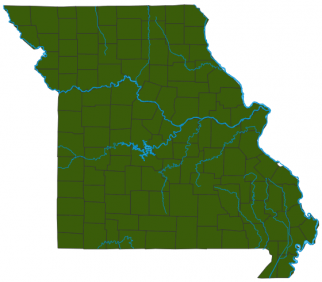
Statewide.
Habitat and Conservation
Common statewide in rich soils of bottomland and upland forests.
Status
Native Missouri wildflower.
Human Connections
False Solomon's seal is a popular native plant for landscaping in partially shady locations, as it offers pretty sprays of flowers, bright berries, and interesting foliage, which turns yellow in fall. Make sure you get your plants from an ethical native wildflower nursery; don't dig them from the wild.
The young shoots can be cooked and eaten like asparagus, in all the ways asparagus might be served: as a side dish, in stir-fries, omelets, casseroles, soups, and so on. Since collecting this way may kill the plant, only harvest this native wildflower where it very abundant, and do not overcollect in any given area.
The ripe berries may also be eaten raw or cooked. Note that they are said to have laxative properties, especially if you eat a lot of them
The roots of this species have been used medicinally.
This plant was named "false Solomon's seal" because of its resemblance to the plant called Solomon's seal.
Ecosystem Connections
Various bees, flies, and beetles are attracted to the flowers.
Fruit-eating birds, as well as rodents, eat the berries and thereby spread the seed to new areas.
Deer and other herbivores browse the foliage.
False Solomon's seal and a group of its relatives used to be considered lilies (family Liliaceae). Botanists, using molecular (DNA) evidence, showed that this subgroup of "lilies" are different enough to be separated into a different family, the Asparagaceae, the asparagus family.