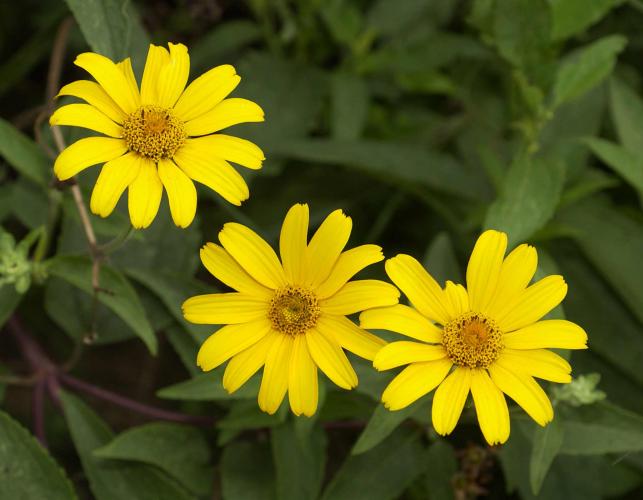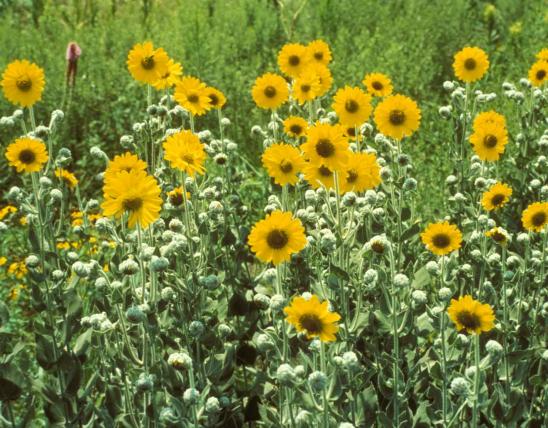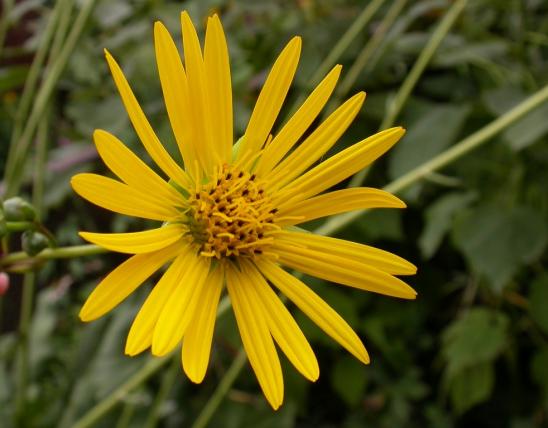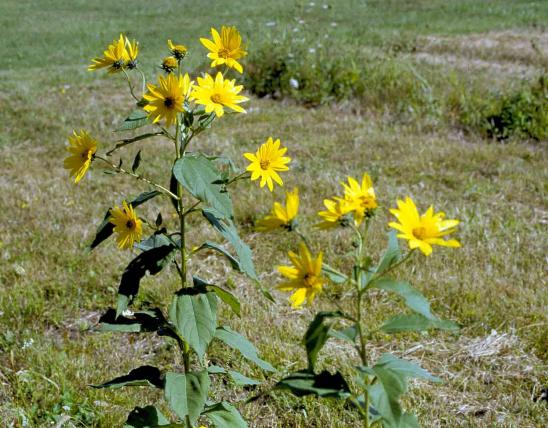











Ox-eye, also called sunflower heliopsis and false sunflower, is a sunflower lookalike. It's a member of the sunflower family, but is not a true Helianthus; instead, it is in genus Heliopsis. It occurs almost statewide and is growing in popularity as a native garden flower.
Ox-eye is a clump-forming, spreading, branched, sunflower-like, short-lived perennial of variable height, but usually 2 or 3 feet tall.
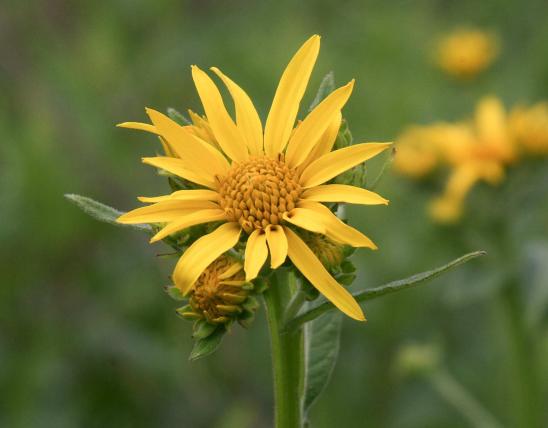
The flowerheads are about 2 inches across. The receptacle ("disk") is cone-shaped, not flattened. The ray florets are 8–15 (usually 10), distinctively orange-yellow when young, fading to light yellow, eventually drying out (to tan) but persisting (instead of withering and falling off); the ray florets are fertile, with achenes (seeds) developing at their base (a close look shows the pistil's Y-shaped style protruding at the base of each ray floret). The disk florets are fertile, too, yellow turning brownish with time.
Blooms May–September.
The leaves are opposite, on long petioles (leaf stems), broadly ovate to nearly triangular, without hair; with large, regular teeth.
The fruits are achenes (structurally sunflower "seeds") and are angular, while those of true sunflowers (Helianthus) are more flattened.
Similar species: There are nearly 20 species in genus Heliopsis, but this is the only one in Missouri (most of the others are in Central and South America).
- You can distinguish it from true sunflowers (genus Helianthus) by its conical (not flattened) central disk and by its ray flowers, which are fertile and which dry out but persist, instead of withering and falling off.
Common names of plants can be confusing; the name “sunflower” can technically apply to any of the thousands of species in the sunflower family. However, most people consider only the plants in genus Helianthus (which translates to “sunflower”) as “true” sunflowers. For more about true sunflowers, visit their group page.
There are many other sunflower-like plants in the sunflower family, such as the rosinweeds (genus Silphium). Paying close attention to the flowerheads can help you learn to separate these. In the rosinweeds, for example, only the ray florets produce seeds, not the disk florets (which only produce pollen).
Height: 2–5 feet.

Statewide, but apparently absent from the Southeast Lowlands.
Habitat and Conservation
Occurs in dry areas, edges of woods, roadsides, railroads, fields, and waste places; also in prairies, thickets, and open woodlands.
Status
Native Missouri wildflower.
Human Connections
Ox-eye is a good native plant for sunny Missouri gardens.
- It tolerates dry spells, erosion, and poor soils.
- It has a long blooming period.
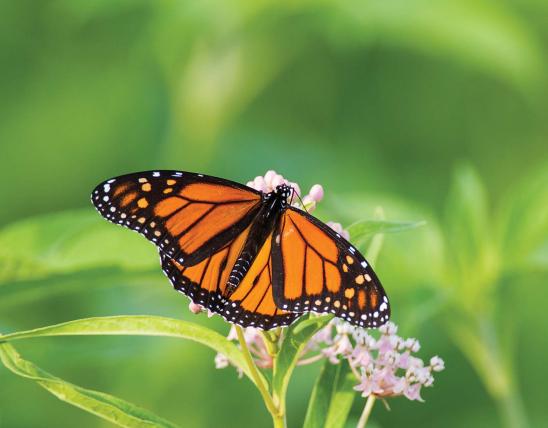
- Its flowers are showy and attract butterflies and other pollinators.
- The flowers can be cut and used in arrangements; the stiff stems are unlikely to wilt.
- Because the ray flowers dry and remain on the flowerhead, this is a good choice for dried flower arrangements or autumn wreaths.
- Several cultivars are available.
Heliopsis is Greek for “sun-eye” or “sun-resembling,” and helianthoides means “like a sunflower.”
Ecosystem Connections
Butterflies, skippers, and other insects visit the flowers for nectar. As with many other composite flowers, a variety of animals that eat insects are attracted, too: birds, for example.
Birds, such as finches, and rodents eat the seeds.