









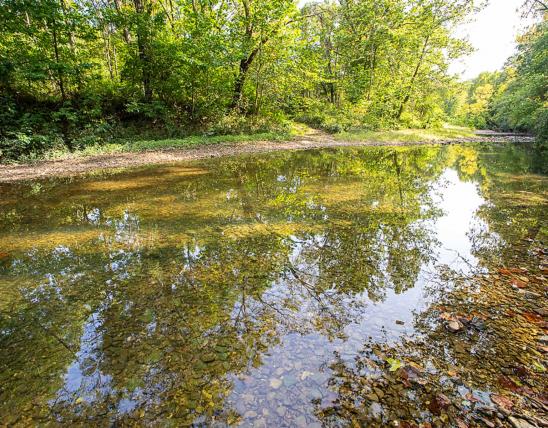
Three Creeks Conservation Area is in Boone County (halfway between Columbia and Ashland).
Media

Scientific Name
Asclepias purpurascens
Family
Apocynaceae (dogbanes); formerly Asclepiadaceae (milkweeds)
Description
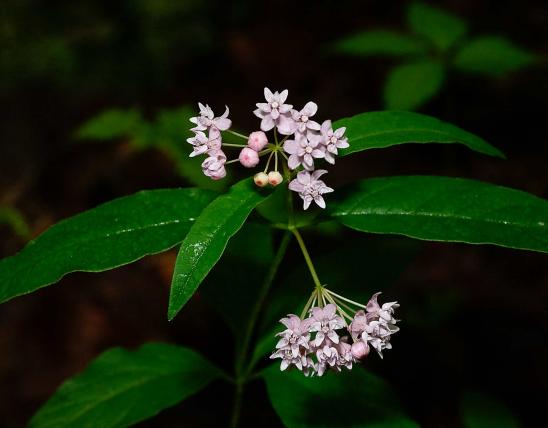
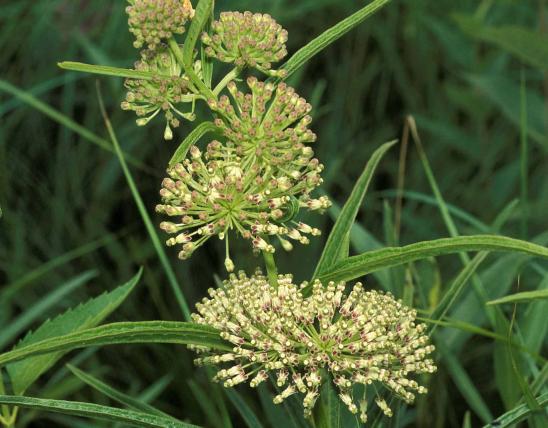
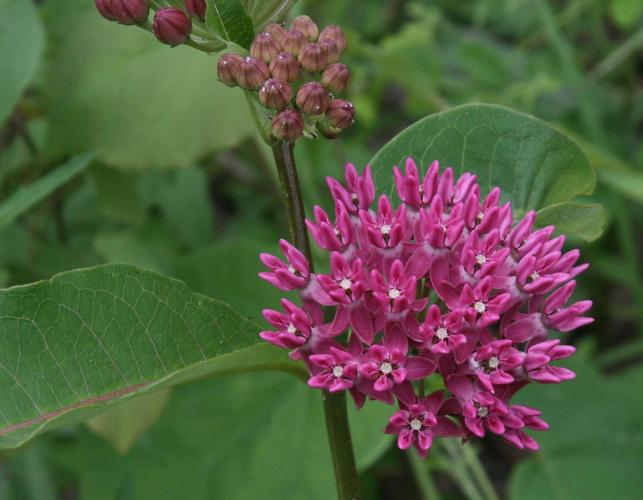
The flowers of purple milkweed are pale purple to reddish purple to dark purple, with greenish or red tints. The scientific name means “becoming purple”: The flowers start off rather pale and become more intensely purplish as they mature.
Purple milkweed is a slender perennial to 3 feet tall; it grows statewide in a variety of habitats.
The flowers are in the form typical of milkweeds, borne in umbels (rounded clusters), usually on stout, single stalks; pale purple to reddish purple to dark purple, with greenish or red tints. The clusters typically begin rather pale and greenish; the purplish color deepens and intensifies with time.
Blooms May–July.
The leaves are opposite, broad, ovate, pointed at both ends, to 6 inches long, with fine down on the underside, on very short stalks.
The fruits are relatively narrow seedpods, to 6 inches long, with numerous, tightly packed seeds, released and windborne on silky floss.
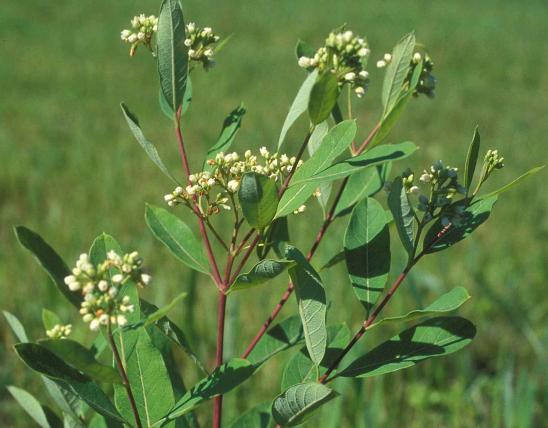
Similar species: Common milkweed (A. syriaca) has paler flower clusters that arise more often from leaf axils along the stalk instead of from the top of the stem; its seed pods are covered with soft prickles instead of being smooth on the outside.
Missouri has several species of milkweeds. Learn more about them on their group page and on the other individual pages in this guide.
Size
Height: to 3 feet.
Where To Find
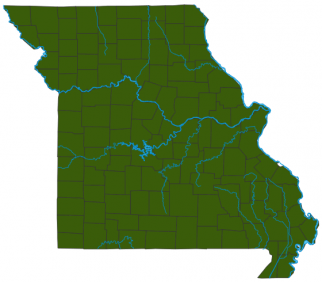
Scattered statewide.
Habitat and Conservation
Occurs in upland prairies, glades, savannas, tops of bluffs, upland forests, and less commonly banks of streams; also pastures, roadsides, railroads, and open, disturbed areas.
Where they occur together, purple milkweed might hybridize with common milkweed (S. syriaca).
Status
Native Missouri wildflower.
Human Connections
Milkweeds have a long list of historical medicinal uses.
The milky sap (latex) was once explored as a potential source of rubber.
The silky floss of the seedpods has been used for stuffing pillows and life preservers.
With proper preparation, young shoots of the plant can be eaten.
Ecosystem Connections
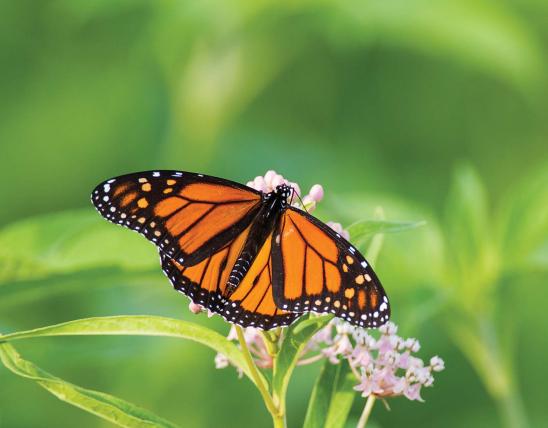
Many bees, butterflies, and skippers drink nectar from the flowers, and crab spiders often hide in the clusters, hunting them. Monarch butterflies use milkweeds as larval food plants, collecting the sap's toxic cardiac gycosides in their bodies and becoming unpalatable to predators.
The entire former milkweed family (Asclepiadaceae) has recently been rolled into the dogbane family (Apocynaceae). For many years, botanists have known the two families were closely related. The milkweed group, with its distinct floral structures, is still considered a unique subfamily or tribe of the dogbane family. As you consult various sources, you can expect to see milkweeds grouped in either family.
Title
Media Gallery
Image
Caption
The flowers of purple milkweed are pale purple to reddish purple to dark purple, with greenish or red tints. The scientific name means “becoming purple”: The flowers start off rather pale and become more intensely purplish as they mature.
Credit
Chris Evans, Illinois Wildlife Action Plan, Bugwood.org
Right to Use
Use of this image is restricted to MDC only
Image

Title
Similar Species
Similar Species
Media

Media

Media

Media

Media

Where to See Species
About Wildflowers, Grasses and Other Nonwoody Plants in Missouri
A very simple way of thinking about the green world is to divide the vascular plants into two groups: woody and nonwoody (or herbaceous). But this is an artificial division; many plant families include some species that are woody and some that are not. The diversity of nonwoody vascular plants is staggering! Think of all the ferns, grasses, sedges, lilies, peas, sunflowers, nightshades, milkweeds, mustards, mints, and mallows — weeds and wildflowers — and many more!