Body
PARK HILLS, Mo. – The Missouri Department of Conservation (MDC) and Mineral Area College (MAC) have completed a project to remove invasive Bradford pear trees on campus and replace them with native species, improving habitat and long-term landscape health.
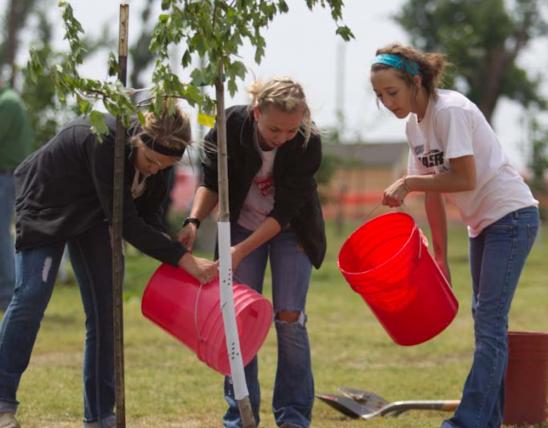
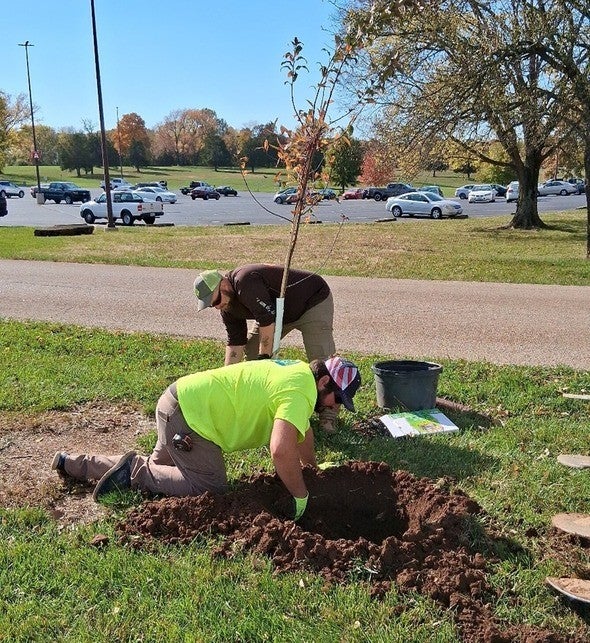
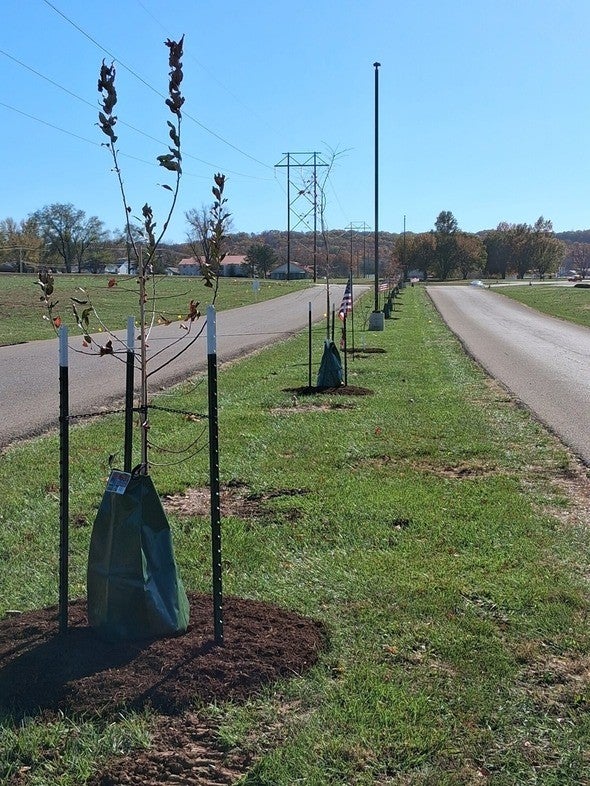
More than 80 Bradford pear trees were removed along the main campus drive and surrounding median areas this past fall. In their place, 42 native trees were planted to support local pollinators, wildlife, and the natural character of Missouri’s landscape. The work also included staking, mulching, and initial watering to help the new trees establish successfully.
“This project is a great example of how communities can take meaningful steps to improve local habitat,” said MDC Priority Habitat Specialist Julie Norris. “By removing invasive Bradford pears and planting native trees, MAC is helping restore natural diversity on campus while supporting the insects and wildlife that depend on native species. We hope this inspires others to make similar changes in their own communities.”
The effort was supported through MDC’s community conservation programs, which assist local partners in removing invasive plants and restoring native habitat. Funding also allowed the college to purchase equipment to support ongoing watering and maintenance of the new trees.
Bradford pear trees are considered invasive in Missouri because they spread aggressively and outcompete native vegetation. MDC encourages communities, landowners, and organizations to replace Bradford pears with native trees that provide better ecological benefits and are well adapted to Missouri’s climate.
This project highlights how local partnerships can make a positive impact on conservation while creating healthier, more sustainable community spaces.
For more information about invasive plants and recommended native tree alternatives, visit mdc.mo.gov.
Learn more about community conservation opportunities with MDC online at https://mdc.mo.gov/community-conservation.