






NatureBoost MiniBoost Tarantula
November 2025
SMA
[Intro music ♫]
>> Hey there! It's Jill with NatureBoost, here with another MiniBoost just in time for the spooky season! While ghosts, goblins and those sweet Reese's peanut butter pumpkins get most of the spotlight this time of year, there is another Halloween icon that lives right here in Missouri! Eight legs, fuzzy body, and a reputation that's a little misunderstood. I'm talking about Missouri's very own tarantula!
[Music ♪]
Yes, tarantulas do live in Missouri. In fact, the Missouri Department of Conservation is teaming up with the University of Missouri-St. Louis, to learn more about these secretive spiders. How they live, where they roam, and how we can help protect their habitat.
>> We only have one species of tarantula here in Missouri. In other parts of their range, like in Texas, there's lots of them. You can go in the backyard and have a dozen or more, easily. But we're at the more northern part of the range, up here in Missouri. They only live, as far as we're aware, in really dry areas and places where there have been grasslands historically or currently. So, we don't have near as many. There's just fewer of them.
We're working with MDC to try and count them, and see how their populations are doing. In addition to giving data to MDC, so they can make good decisions about tarantula and glade conservation, I'm really interested scientifically if I can use some of the data to answer questions about reproduction, population growth . . . a little bit of genetics. Just to see how the tarantulas are doing. Are they able to mate with each other? Are they too far apart? The lady tarantulas, they want to stay in their burrows. Males in the mating season are wandering around, looking for them.
[2:00.]
That makes them vulnerable to predators and things. So how they reproduce, and their populations get bigger and smaller is really interesting.
>> That's Becky Hansis-O'Neill, a PhD candidate at UMSL who is leading the charge on this tarantula research. We caught up with Becky and her team earlier this fall while they were out collecting data on these shy arachnids on one of Missouri's natural glades. Now, tarantulas spend the bulk of their time in burrows, their underground hideaways. Researchers have to work efficiently to gather their data before carefully returning each spider to its home.
>> When we get a tarantula out of a burrow, it disturbs them a fair bit. So, we want to get as much data as we can whenever we pull them out. We take temperature, humidity, we measure the tarantula . . . we write down if there's any other animals in there. Today we'll be taking some heart rates. We have some research in the lab where we're curious if heart rate is a good measure of stress in the tarantulas. It's unique to have an opportunity to work with wild tarantulas.
If we can't get a tarantula out of their burrow, we'll use the sewer camera to see if anybody is home, if anyone is in there.
[Unclear noise.]
>> Ready, set, start.
[Noise continues.]
>> 15.
>> I got 18.
>> I got 18. We're in agreement. So, 18 times 4 . . .
>> Like many spiders, tarantulas are nocturnal, hiding away during the day and coming out at night to pursue insects. They prefer areas seldom seen by people. Though in late summer and fall, Missourians in the southern part of the state may see these spiders crossing the roads. But because of their shy nature, there's still so much to learn about them. MDC urban wildlife biologist Miranda Wilkinson tells us more.
>> The interesting thing about tarantulas in Missouri, is we actually don't know much about their ecology or natural history. We don't know their home range size, or what they're eating, or their reproductive habits.
[4:01.]
So, this project is really important for us to be able to get a baseline knowledge about tarantulas in the state. There is also concern that they could be poached regularly for the pet trade. We see a lot of pressure on some of our natural areas where tarantulas occur, for that exact reason. So we're also wanting to see if eventually these species might need to be protected as a species or conservation concern in the state as well.
>> From the tip of its fangs to the end of its abdomen, a tarantula's body can measure more than 2 inches long. Females are slightly larger than males, and can weigh more than some songbirds. Add in their hairy look and it's understandable why some suffer from a little bit of arachnophobia. But, they're only found in specific areas and are actually the gentle giants of the spider world.
>> What I always tell people, is if you're not out specifically looking for tarantulas in Missouri, you're not going to find them. They live in very specific habitats, in areas where you would need to be looking under things, and finding them that way. So, you're really probably not going to see them on accident. Also just knowing that they're super docile creatures, they're not going to chase after you. They're not going to try to attack you. They're much more afraid of you, than you are of them.
[Music ♪]
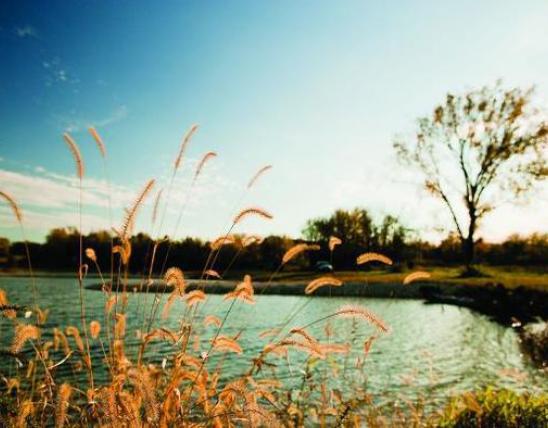
>> We mentioned tarantulas are found on glades, which are dry, rocky areas located in upper woodlands, and often described as "desert-like." Conservationists have learned the importance of maintaining this critical habitat through the careful use of fire. Becky shares more.
>> Glade grasslands in Missouri are really unique because they support basically a lot of desert species. You can find cactus, you can find yucca, you can find the tarantulas, you can find scorpions . . . so, this is a really unique grassland. Thousands of years ago, we had more glades here. As the climate has changed, there's fewer and fewer of them.
[6:01.]
And as Missouri was colonized, we started getting really good at fighting fires. And, glades need fires to be maintained. So when we have conservation areas, natural areas with glades, these are places that we can make sure are still getting the fire that they need, and that they have all the species that they need. They're super unique. Basically, it's like having a little desert grassland in the middle of Missouri.
Fire is really important for glades, and the reason we have to do prescribed burns is to make sure that trees don't start growing in the glades. When trees start to grow, you get a lot more shade, and it's not as hot. It's not as easy for the desert animals and plants to be able to grow here like the cactus, yucca, tarantulas and scorpions. So, we really need it to be sunny and dry. That's why we need fires, to keep trees from growing in the glade.
>> Missouri's glades are beautiful, but are more than just scenery. They're homes. Be respectful when you visit. Follow the "leave no trace" principles, and do not collect wildlife or disturb their habitat. The best way to enjoy them is by observing them from a respectful distance.
>> Glade ecosystems are often popular for people to visit, looking to find things like tarantulas or snakes or lizards . . . however, these ecosystems are kind of rare. They're fragmented here in Missouri, so we're trying to take really good care of them. At the sites we work at, without a permit, you cannot go looking for tarantulas, snakes, lifting rocks or logs or anything like that. What happens, we've found, is if the rocks are disturbed they're a little less attractive to any animal. So, even if you're in a place where it is legal to look under things for animals, you need to put those things back exactly how you found them. Even a few centimeters makes a difference, we're finding. With the tarantulas in particular, it takes them so long to get big enough to mate that if people are out there taking the adults, that's really going to hurt the population, and their reproductive potential.
[8:08.]
Because those animals are so valuable . . . because we just don't have that many here. So, this is not an appropriate place to collect them.
[Outro music ♫]
>> Next time you see a spider, take a moment to appreciate just how fascinating and vital these creatures are. And remember, the creepiest crawlies often have the coolest stories! That's it for today's MiniBoost. If you enjoyed this episode, be sure to subscribe and leave us a review. And don't forget, you can always send us a message at missouriconservation.org/natureboost. I'm Jill Pritchard with MDC. I'll catch you next time! [Spooky voice.] "It's NatureBoost! Creepy crawly!"
[End of podcast.]