







Earlier this summer, I had the opportunity to visit the new Theodore Roosevelt Presidential Library in Medora, North Dakota. They have done an incredible job of telling an inspirational story that chronicles Roosevelt’s growth from a sick kid to a Dakota rancher to the nation’s foremost conservation president.
I’ve shared stories of how time outdoors has created strong emotional connections with people and places. This is very true for Roosevelt. One of the most impactful stories for me was Roosevelt’s journey to the Dakota Territory in 1883, following the death of his wife and mother. Roosevelt was in pursuit of a buffalo before they disappeared from the Great Plains. By 1883, the once great herds that covered the plains were relegated to a few scattered remnants. He was finally successful, but the hunt was hard and left a lasting impression. It was an experience that would shape Roosevelt’s conservation ethic.
Roosevelt’s conservation legacy is incredible — 20 million acres of public land protected, five national parks established, and the creation of the U.S. Forest Service. It’s a legacy shaped by many significant conservation figures, with whom Roosevelt engaged frequently. His camping trip with John Muir to Yosemite clearly shaped his thoughts about wild places, a lifelong interest in birds, and ties to Audubon’s early bird conservation societies, fueling the protection of Florida’s Pelican Island, the nation’s first wildlife refuge. He was surrounded by people who pushed his conservation thinking.
In 1887, he and George Bird Grinnell started the Boone and Crockett Club, the nation’s first hunter-conservation group and often considered one of the major starting points of the North American Model of Wildlife Conservation. Those founding ideas were science-based management, hunting as a conservation tool, and wildlife as a public trust. These ideas still guide the way we manage fish and wildlife in Missouri today.
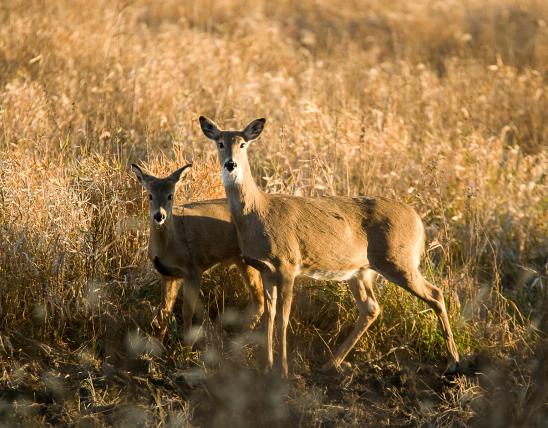
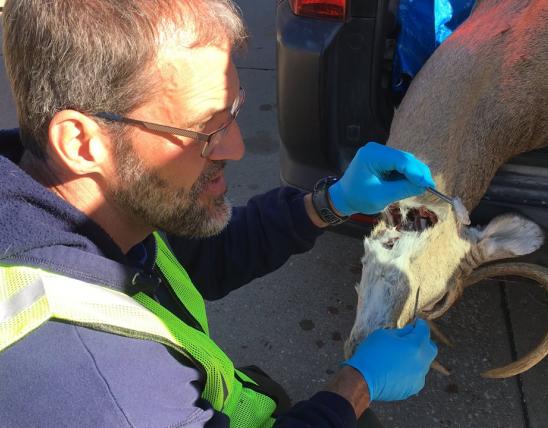
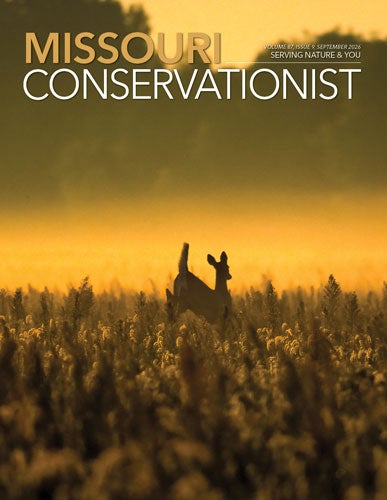
Roosevelt knew he couldn’t do it alone, and that mantra is driven home in this issue of the Conservationist. Our feature on the future of deer management (Partnering for Missouri’s Deer Herd, Page 11) makes it clear — healthy herds depend on landowners, hunters, researchers, and wildlife managers pulling together. A centuries-old conservation ethic is kept alive not by one person, but all of us pulling in the same direction.
Jason Sumners, Director


And More...
This Issue's Staff
Editor – Angie Daly Morfeld
Associate Editor – Larry Archer
Photography Editor – Ben Nickelson
Staff Writer – Kristie Hilgedick
Staff Writer – Joe Jerek
Staff Writer – Dianne Van Dien
Designer – Marci Porter
Designer – Kate Morrow
Photographer – Noppadol Paothong
Photographer – David Stonner
Circulation – Marcia Hale