









Leave Wildlife Wild
Young animals may appear abandoned, but that’s usually not the case
As you head outdoors this spring, you may encounter a variety of newborn wildlife. MDC asks that you leave wildlife wild by not interfering with newborn or young animals as it can do more harm than good.
“Young animals are rarely orphaned,” said MDC State Wildlife Veterinarian Sherri Russell. “If the young are left alone, the parent will usually return. Parents are normally out searching for food and cannot constantly attend to their offspring.”
Russell added that baby birds are typically the wildlife people want to help.
“If you see a chick on the ground hopping around and it has feathers, leave it alone and bring pets inside,” she said. “It is a fledgling and the parents are nearby keeping an eye on it. Fledglings can spend up to 10 days hopping on the ground while learning to fly. If you find one that is featherless, you can return it to the nesting area, if possible, as it probably fell out of the nest.”
Dogs catching baby rabbits and lawn mowers running over nests are other common issues.
“Rabbits seldom survive in captivity and can actually die of fright from being handled,” Russell said. “Even if the animal is injured, return it to the nest because the mother will most likely return.”
Despite what many think, wild mothers do not abandon their young because of a human scent, and most newborn animals do not survive in captivity.
“While people have good intentions, the care and rehabilitation of wild animals require special training, knowledge, facilities, and permits,” she explained. “Without such care, wild animals will remain in poor health and could eventually die. And it is illegal to possess many wild animals without a valid state or federal permit.”
Russell also noted that wildlife can become dangerous as they mature and can also carry parasites, disease, and can damage property.
“Native wildlife can carry mites, ticks, lice, fleas, flukes, roundworms, tapeworms, rabies, distemper, tuberculosis, respiratory diseases, and skin diseases,” Russell said. “Some of these can be transmitted to humans.”
Although tempting to take them into homes, the best help people can offer wild animals is to leave them alone.

Get Hooked on Fishing
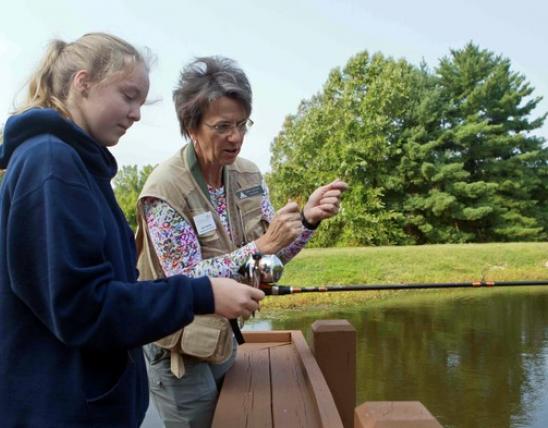
Want some free fun that gets family and friends outside in nature? Get hooked on fishing with MDC’s Free Fishing Days June 6 and 7. During Free Fishing Days, anyone can fish in the Show-Me State without a fishing permit, trout permit, or trout park daily tag.
Other fishing regulations remain in effect, such as limits on size and number of fish an angler may keep. Special permits may still be required at some county, city, or private fishing areas. Trespass laws also remain in effect on private property.
Conservation makes Missouri a great place to fish, and Free Fishing Days encourages people to sample our state’s abundant fishing opportunities. Missouri has more than a million acres of surface water, and most of it provides great fishing. More than 200 different fish species are found in Missouri, with more than 20 of them being game fish for the state’s more than 1.1 million anglers.
Missouri Stream Team Releases Annual Report, Hosts Celebration
In 1988, a small group of anglers became fed up with unsightly trash disrupting their fishing in Roubidoux Creek in Pulaski County. These conservation-minded Missourians decided to clean this section of stream, thus forming the first Missouri Stream Team in 1989.
Fast forward more than three decades later. The Roubidoux Fly Fishers Association — Stream Team #1 — is still going strong and has been joined by more than 7,000 Stream Teams around the state with more than 58,000 volunteers who helped Missouri’s streams in some impressive ways last year.
“Missouri Stream Team just released our 2025 Annual Report with some impressive accomplishments,” said Stream Team Volunteer Programs Manager Rebecca O’Hearn. “During 2025, Stream Teams collected 506 tons of trash, planted 1,119 trees, stenciled 53 storm drains, conducted 334 water monitoring trips, educated 22,967 attendees, gave more than 58,900 volunteer hours, and much more.”
The Missouri Stream Team Program is a volunteer-led effort to conserve Missouri streams. Sponsored by MDC, the Missouri Department of Natural Resources, and the Conservation Federation of Missouri, the program focuses on education, stewardship, and advocacy for Missouri stream resources.
O’Hearn added that the ongoing work of more than 7,000 Stream Teams and their volunteers have made significant positive impacts on the health of Missouri’s streams over the last 36 years. That work includes volunteers giving more than 3.5 million hours of time, removing more than 15,079 tons of trash from Missouri waterways, planting 407,842 trees along streams, conducting 35,692 water quality monitoring trips, and stenciling 22,458 storm drains.
Learn more about Missouri Stream Team and read the 2025 Annual Report at mostreamteam.org/annual-reports.
Watershed Celebration Planned
Missouri Stream Team and Stream Teams United invite Stream Teams from around the state to come together for the 30th Annual Watershed Celebration at Meramec State Park on July 25 from 10 a.m. to 5 p.m. at the Hickory Ridge Conference Center and Overlook Pavilion.
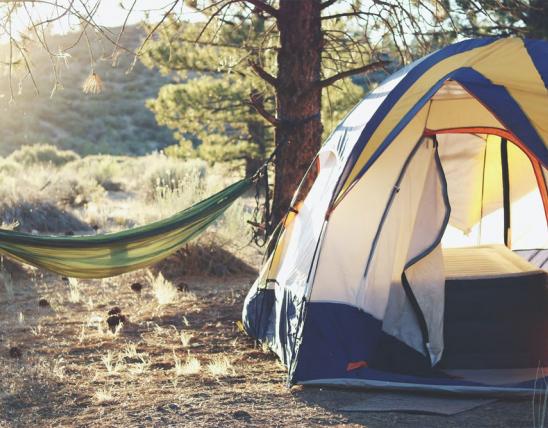
Free Stream Team camping will be available. Lunch will be provided, and attendees are encouraged to bring a dessert to share. The day will include a variety of fun and educational activities for all ages.
For more information, including a full list of activities and calendar of the Watershed Celebration Weekend, visit Stream Teams United at short.mdc.mo.gov/oS2.
Make a Splash During Frogging Season
Discover nature this summer during frogging season. Beginning June 30 at sunset through Oct. 31, those with a fishing permit or small-game hunting permit may frog for bullfrogs and green frogs.
The fun does not have to end after catching frogs. Be sure to browse tasty recipes by visiting short.mdc.mo.gov/Zxz.
Buy Missouri hunting and fishing permits from numerous vendors around the state or online at mdc.mo.gov/buypermits. Once purchased, permits can be carried electronically through MDC’s free mobile apps, MO Hunting and MO Fishing, available for download through Google Play for Android devices or the App Store for Apple devices.
by Holly Dentner
Missouri’s conservation agents spend hours patrolling our rivers and lakes. This work assures the state’s fishing regulations are being followed and helps keep people safe when they’re out on the water.
Summer is prime fishing time, and when agents aren’t keeping an eye on others, they often find time to enjoy a little fishing themselves. Such was the case a few years back when Corporals David Harms, Haeley Eichler, and Christine Boyd were fishing from Cpl. Harms’ personal boat near Warsaw on the Lake of the Ozarks.
A boat pulled up to their location two separate times, and the man piloting it claimed they were fishing in the wrong location and needed to move. The man also claimed to have 25 fish in the bottom of his boat.
“We decided to make our way over to the boat ramp and check this guy’s catch,” said Cpl. Harms. “We identified ourselves as conservation agents and found 15 blue catfish and one channel catfish in the boat.”
The man had no fishing permit but claimed it was in his vehicle. That’s when Cpl. Harms ran the angler’s license and boat registration through the system. It turns out the boat had been reported stolen from Camden County. The agents also saw a methamphetamine pipe on the dashboard of the vehicle.
The angler was arrested for the illegal drugs and stolen boat and received a citation for the overlimit of blue catfish. The daily and possession limit for blue catfish at the Lake of the Ozarks is 10, with a protected slot length of 26 to 34 inches. The daily limit may not contain more than two blue catfish longer than 34 inches.
“Most people we encounter are doing their best to follow the law and enjoying the great fishing opportunities we have in Missouri,” said Cpl. Eichler. “In this instance, I think it will be the last time this guy brags to other people on the water about his catch.”
Stay up to date on current fishing seasons and regulations at mdc.mo.gov/fishing.
Invasive nonnative species destroy habitat and compete with native plants and animals. Please do what you can to control invasive species when you landscape, farm, hunt, fish, camp, or explore nature.
Phragmites
Phragmites (Phragmites australis), also known as European common reed, is an invasive perennial aquatic or semi-aquatic grass. It grows up to 15 feet tall with stiff and hollow tan stems, long blue-green leaves, and large, dense, feathery seedheads.


Why It’s Bad
Phragmites invades wetlands, shorelines, moist ditches, and floodplains, outcompeting native wetland vegetation that supports a wide array of wildlife, including migratory waterfowl. Dense stands form, altering hydrology and creating breeding areas for mosquitoes. Native phragmites occurs in Missouri, but new patches found in ditches or floodplains are most likely the invasive species.
How to Control It
Mechanical: Small patches may be controlled with repeated spading, tarping, or flooding. Spading involves severing the main stems below the soil surface with a shovel. Tarping is placement of thick black plastic over the plants through the growing season to block light and smother plants. Flooding may be effective if the stalks are cut below the water level.
Chemical: Herbicides with the active ingredient of glyphosate or imazapyr can be effective. Treat midsummer with imazapyr or late summer with glyphosate. Herbicide treatments in wet areas require the use of aquatically approved herbicides. Always follow herbicide label instructions.
To learn more, visit short.mdc.mo.gov/oS9


Title
Answer:
Chanterelles
Chanterelles are funnel- or trumpet-shaped mushrooms with wavy cap edges. Most are bright orange or yellow, except for the black trumpet, which is brownish black. Chanterelles grow amongst grass and leaf litter in hardwood forests. They can be found singly, but are more commonly found in scattered groups, often in large areas. They will reappear in the same spot annually. Chanterelles are choice edibles.
To be safe, always be certain of your mushroom identification before consuming. For more information, consult A Guide to Missouri’s Edible and Poisonous Mushrooms at short.mdc.mo.gov/ZNf.
And More...
This Issue's Staff
Editor – Angie Daly Morfeld
Associate Editor – Larry Archer
Photography Editor – Ben Nickelson
Staff Writer – Kristie Hilgedick
Staff Writer – Joe Jerek
Staff Writer – Dianne Van Dien
Designer – Marci Porter
Designer – Kate Morrow
Photographer – Noppadol Paothong
Photographer – David Stonner
Circulation – Marcia Hale