








This amendment modifies verbiage to more accurately describe the Department of Conservation’s organizational structure.
Acknowledgements
Title 3 – Department of Conservation
Division 10 – Conservation Commission
Proposed Amendment
Proposed Amendment
(2) The commission appoints a director who serves as the administrative officer of the Department of Conservation. The director appoints other employees. Deputy directors, general counsel, assistants to the director, chief budget officer, and internal auditor are responsible to the director and facilitate administration of the department. Programs and activities are carried out by [administrative services, design and development, fisheries, forestry, human resources, outreach and education, private land services, protection, resource science, wildlife divisions, policy coordination, and information technology units]the divisions of Business, Engagement, and Resource Management.
(3) The department carries out its programs through the following major administrative divisions[ and units]:
[(A) Fisheries Division manages four (4) warmwater fish hatcheries (for rearing the fish needed to stock public waters and waters used for special fishing events and aquatic resource education) and five (5) coldwater fish hatcheries (for rearing trout needed to stock public waters and trout parks); administers the Stream Team program; provides fisheries management of public impoundments, rivers, and streams; offers technical guidance in stream and lake management to private landowners and other public agencies; oversees the acquisition and development of public fishing and boat access areas; administers community, agency, and partnership agreements; participates in recovery plans of threatened or endangered aquatic species; and educates and informs the public about aquatic resources through technical and popular written materials, electronic media, presentations to groups, workshops, interviews to journalists, and personal contacts;
(B) Wildlife Division assists with the administration of hunting seasons on conservation areas; acquires, develops, and manages wildlife habitat, hunting, and other public use on conservation areas; assists private landowners with wildlife population and habitat management efforts; cooperates with federal and state agencies and farm organizations in wildlife management; develops improved management methods and promotes enhancement of wildlife habitat; provides coordination in the agency for management of species of conservation concern; restores natural communities and recognizes the best examples through the Missouri Natural Areas Program; provides international support for Missouri birds nesting in Canada and overwintering in Central America; and provides wildlife damage control assistance;
(C) Forestry Division controls wildland fires; manages forest and woodland habitat, restores natural communities, and facilitates public use on conservation areas; provides rural fire protection, training, and assistance; provides planning advice in urban and community forestry; provides forest products utilization and marketing advice; provides advice and technical assistance to private forestland owners; provides educational programs about forests and forest management; provides diagnosis and management of forest pest outbreaks; and provides low-cost tree planting stock to Missouri residents;
(D) Protection Division carries out the department’s resource law enforcement program. Conservation agents perform a full range of conservation programs in their assigned districts and serve as the local representative for the department. The division also provides training in the safe and responsible use of firearms, investigates hunting-related firearms injuries, and coordinates the Operation Game Thief, Share the Harvest, and Interstate Wildlife Violator Compact programs;
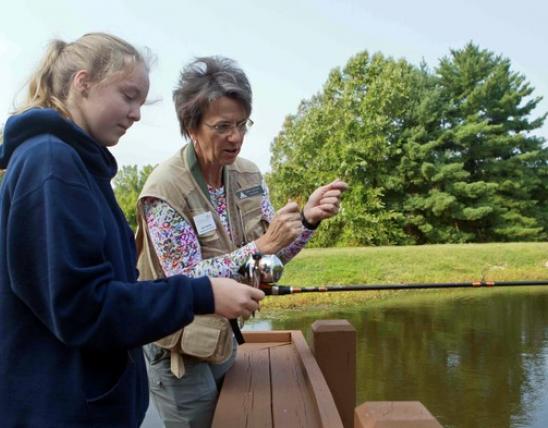
(E) Outreach and Education Division administers the department’s public information and education programs. Education programs include operating nature centers, visitor centers, and shooting ranges; developing interpretive exhibits; administering the hunter education program; teaching outdoor skills; and providing conservation education curricula, training, and materials to teachers and youth leaders. The division produces the department’s magazine, books, and other publications; creates the Missouri Department of Conservation website, digital media, audio, and video productions; issues news releases and coordinates with news media; and coordinates the Missouri Master Naturalist and No More Trash programs;
(F) Administrative Services Division administers the department’s financial and business support services. Financial services collects and processes funds received; processes accounts payable; and coordinates procurement. Business and support distributes hunting, fishing, and special permits; audits permit distributors; maintains inventory records, including the department’s real property holdings; provides repair and disposition of fleet, aircraft, marine, and other mechanical equipment; maintains a distribution center and warehouse for department publications; and operates offset printing, mailing, and sign production services;
(G) Design and Development Division is responsible for providing engineering, architectural, surveying, and construction/maintenance services for the department. Services include design and construction of engineering and architectural projects as part of implementation of the construction development program of the department. Surveying services include engineering surveying for construction development projects and land surveying for property boundary delineation. Construction maintenance services include renovation and repair of department infrastructure and maintenance of department areas and facilities;
(H) Private Land Services Division provides technical assistance and resource training to private landowners; participates in media and other outreach efforts for resource management; coordinates with other governmental agencies and private organizations to integrate fish, forest, wildlife, and natural community considerations with agriculture and other private land initiatives; and provides cost-share to assist landowners with priority resource needs;
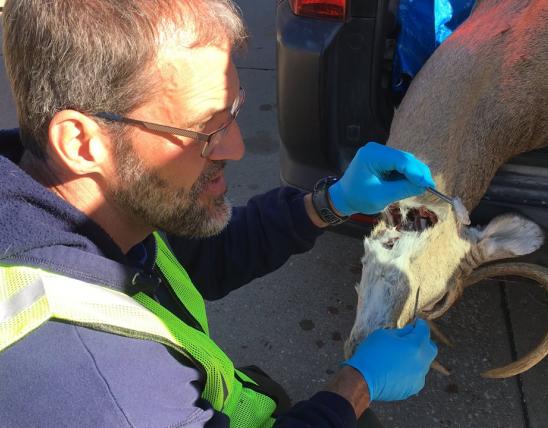
(I) Resource Science Division is the center of the department’s resource inventory, monitoring, and research. The division helps department managers, administrators, and commissioners understand and conserve the biological diversity of Missouri’s fish, forests, and wildlife. Other services of this division include: administration of hunting seasons; investigations of fish and wildlife impacted by pollution and contaminants; statewide information pertaining to fish, wildlife, and plant populations; diagnostics and monitoring of disease outbreaks in wildlife populations; surveys of habitats and natural communities; recommendations for Wildlife Code regulations; surveys of attitudes and satisfaction levels of constituents; surveys to determine hunter and angler harvests; monitoring and research of species of conservation concern; identification of plants, fish, and wildlife; development of management techniques for special natural communities and invasive species; and storage and development of geospatial databases of Missouri’s natural resources; and conducts environmental reviews of proposed development. The State Wildlife Veterinarian plans, directs, coordinates, and implements statewide programs for prevention, detection, control, and management of emerging and known diseases occurring in wildlife populations;
(J) Human Resources Division provides a full range of services that help the department attract and retain a diversified, dynamic workforce. Services and programs include recruitment and selection, including Equal Employment Opportunity and Workforce Diversity; compensation and classification administration; policy administration, including law and regulation compliance and employee relations; employee benefits administration, including administration of a comprehensive group life, medical, accidental death and dismemberment, and dependent life insurance program; maintaining official employee documents and records; managing a safety program (including workers’ compensation); and new employee orientation, as well as in-service training in human relations, personal communications, and supervisory skills;
(K) Policy Coordination Unit serves the director, divisions, and regions by assisting with environmental and regulatory issues; and
(L) Information Technology Unit provides direction and management of the department’s information technology assets, including computer hardware and software systems, telephone systems, two-way radio and other telecommunication systems, and coordination of those systems with other state agencies.]
(A) Business includes the following branches: Conservation Business Services, Human Resources, Information Technology, and Infrastructure Management. These branches are responsible for management of the department’s financial, human, fleet, equipment, and information technology resources, including administering human resource activities intended to attract and retain a diversified, dynamic workforce; providing direction and management of the department’s information technology assets, including computer hardware and software systems, telephone, other telecommunication systems, and coordination of those systems with other state agencies; providing engineering, architectural, surveying, and construction/maintenance services and infrastructure asset tracking and planning; collecting and processing all revenues received; processing accounts payable; coordinating procurement; and administering all recreational and commercial licenses offered by the department.
(B) Engagement includes the following branches: Communications, Relevancy, Education, Governmental Affairs, and Policy. These branches are responsible for the department’s public information efforts, education programs and facilities, interagency coordination, volunteer programs, and publications. These efforts include offering education programs; operating nature centers, visitor centers, and shooting ranges; developing interpretive exhibits; administering the hunter education program; teaching outdoor skills; providing conservation education curricula, training, and materials to teachers; producing the department’s magazines, books, and other publications; creating and maintaining the Missouri Department of Conservation website, digital media, audio, and video productions; issuing news releases and coordinating with news media; providing strategic guidance on citizen engagement; developing volunteer and partnership programs; assisting with environmental and regulatory issues; and providing interagency coordination with various federal, state, and non-governmental interest groups.
(C) Resource Management includes the following branches: Statewide Resource Management, Regional Resource Management, Community and Private Land Conservation, Science, and Protection. These branches are responsible for resource management, restoration, and protection, as well as research, in order to conserve Missouri’s fish, forest, and wildlife resources. These efforts include guiding strategic planning of conservation priorities; maintaining conservation areas for public use; developing and implementing a Comprehensive Conservation Strategy; implementing statewide and regional programs and services; guiding strategic budget development related to resource management; leading development of regulations, policies, and procedures to effectively manage Missouri’s fish, forest, and wildlife resources; directing activities to further public recreation, appreciation, and use of fish, forest, and wildlife resources; and encouraging compliance with the Wildlife Code of Missouri through enforcement and education.
(4) The method by which the public may obtain information or make submissions or requests to the department are by letter, telephone call, email, or personal visit. The address, phone number, and email are: P.O. Box 180, Jefferson City, MO 65102-0180 or 2901 W. Truman Boulevard, Jefferson City, MO 65109, 573-751-4115, or askmdc@mdc.mo.gov.
[(4)](5) Conservation Commission meetings are open to the public. Some of the meetings are held in Jefferson City, with the remainder in various locations throughout the state, often at the invitation of interested local citizens. Any person may be scheduled on a meeting agenda to make a presentation to the commission by submitting a written request to the director at least ten (10) working days prior to a meeting date. Comments or suggestions by letter are always welcomed. Information relating to conservation may be obtained by writing to the director or appropriate staff members, or by calling any conservation office.
[(5)](6) The performance of any duty or the exercise of any authority by the Conservation Commission shall be done in the following manner:
(A) Meetings. Regular meetings may be held at any time and place within the state as may be agreed to by a majority of commission members. Special meetings may be held by unanimous consent of all commissioners. All regular and special meetings will be held pursuant to the applicable laws of Missouri;
(B) Quorum. A majority of commissioners, three (3), shall constitute a quorum for the transaction of business. If a quorum is not present, the remaining members must adjourn the meeting to a later time. No business shall be transacted without a quorum;
(C) Voting. Any action shall be adopted if it receives a majority of votes cast with a quorum. Proxy voting will not be allowed. If any commissioner is present but does not vote, the abstention shall not be counted as a vote. Unless the vote is unanimous, the secretary shall indicate in the minutes how each commissioner voted;
(D) Officers. The commission shall elect at the meeting in July of each year the following officers: chairman, vice chairman, secretary. These officers will hold office until their successors are elected.
1. The chairman shall conduct the meetings and be the presiding officer of the commission. The chairman shall recognize the different members for the purpose of having the floor to speak, to state and put actions to vote, and shall rule on all points of order. The chairman may not make a motion, but may second a motion put on the floor and may vote on any issue before the body.
2. In the absence of the chairman, the vice chairman shall assume the duties of the chairman.
3. The secretary shall sign all minutes of the commission as prepared by the secretary for the commission;
(E) Delegation. The director is authorized to act for the commission in emergency matters subject to ratification by the commission at the next regular meeting. The director is authorized to execute any conveyances, easements, or other documents on behalf of the commission as it may direct; and
(F) Miscellaneous. Any matters not covered by these rules, or court decisions and the statutes of Missouri shall be governed by Robert’s Rules of Order.
AUTHORITY: sections 40 and 45 of Art. IV, Mo. Const. Original rule filed June 28, 1974, effective July 8, 1974. For intervening history, please consult the Code of State Regulations. Amended: Filed September 4, 2020.
PUBLIC COST: This proposed amendment will not cost state agencies or political subdivisions more than five hundred dollars ($500) in the aggregate.
PRIVATE COST: This proposed amendment will not cost private entities more than five hundred dollars ($500) in the aggregate.
NOTICE TO SUBMIT COMMENTS: Anyone may file a statement in support of or in opposition to this proposed amendment with Regulations Committee Chairman, Department of Conservation, P.O. Box 180, Jefferson City, MO 65102-0180, or via the department’s website at https://short.mdc.mo.gov/Z49. To be considered, comments must be received within thirty (30) days after publication of this notice in the Missouri Register. No public hearing is scheduled.