











Canine Distemper Virus
Scientists monitor and track distemper in Missouri’s wild carnivores
A raccoon saunters across your yard on a sunny afternoon. Its movements seem slow, uncoordinated. It looks disheveled. You stomp your feet and yell, but it doesn’t react. You wonder, does this animal have rabies?
While rabies is certainly a possibility, in Missouri there’s a good chance that this raccoon has another disease — canine distemper virus.
“A lot of people see an animal with these symptoms and think it’s rabies because the symptoms are so similar,” said MDC Wildlife Health Specialist Samantha Maywald.
Both rabies and distemper can cause animals to be weak, lethargic, disoriented, and lose their fear of humans. Animals with rabies may drool and become aggressive. Animals with distemper may have difficulty breathing, mucus around their eyes, and thickened skin on their nose and pads of their feet. For your safety, never approach an animal to check for specific symptoms. Instead, contact your local MDC office or conservation agent so trained staff can safely handle the situation.
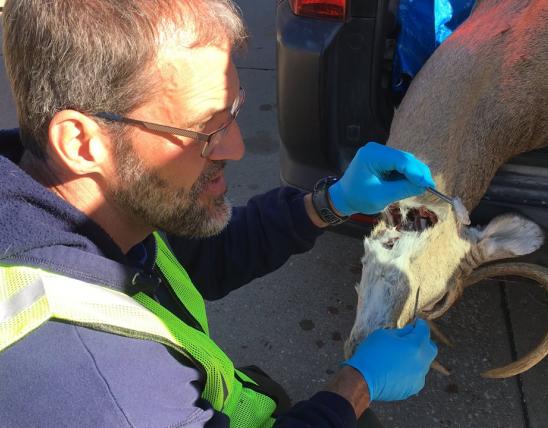
Because canine distemper and rabies can appear so similar in the field, MDC sends samples from sick wildlife for diagnostic testing at the University of Georgia. MDC also receives tissue samples from the Missouri Department of Health and Senior Services from wildlife that tested negative for rabies. Many of those animals, particularly raccoons, ultimately test positive for canine distemper.
“Every sample submitted provides valuable information about the health of Missouri’s wildlife,” said MDC Conservation Health Section Chief Deb Hudman. “By tracking where disease occurs, which species are affected, and how cases change over time, MDC biologists can identify disease trends, monitor wildlife health, and improve management decisions.”
Canine distemper virus is transferred through bodily fluids, including droplets in air exhaled from the lungs, so it can easily spread among social animals like raccoons. But foxes, coyotes, bobcats, skunks, and members of the weasel family can also get distemper. The disease is often fatal.
“Canine distemper won’t affect people, but it can affect pets,” Maywald said. “This is why it’s important to get your pets vaccinated for distemper as well as for rabies.”
At a Glance
Canine distemper virus is one of several wildlife diseases that MDC monitors. Raccoons are the most commonly affected species, but foxes, coyotes, skunks, bobcats, and members of the weasel family can also contract it. People cannot get distemper, but unvaccinated dogs and other susceptible pets can.
How you can help:
- Keep pet vaccinations up to date.
- Keep pets away from sick or dead animals.
- Do not touch or try to rescue sick wildlife.
- Do not feed wildlife, which can cause animals to congregate and spread disease.
- Report wildlife with signs of illness to MDC.
To report a sick or dead animal: Call your local conservation agent or MDC office, or report online at short.mdc.mo.gov/4KD.
Partners: Southeast Cooperative Wildlife Disease Study at the University of Georgia, Missouri Department of Health and Human Services
And More...
This Issue's Staff
Editor – Angie Daly Morfeld
Associate Editor – Larry Archer
Photography Editor – Ben Nickelson
Staff Writer – Kristie Hilgedick
Staff Writer – Joe Jerek
Staff Writer – Dianne Van Dien
Designer – Marci Porter
Designer – Kate Morrow
Photographer – Noppadol Paothong
Photographer – David Stonner
Circulation – Marcia Hale