






Points of Interest:
• See Missouri’s largest prairie remnant with wide-open horizons.
• Enjoy hundreds of species of prairie plants and the full range of prairie birds.
• Explore one of Missouri’s last remaining intact prairie streams.
• Witness bison grazing on native prairie.
Natural History:
Experience the grandeur and vastness of the tallgrass prairie. This is one of the largest prairie preserves remaining in Missouri, where over 99% of the prairie landscape has been destroyed. Visitors can see the full range of prairie natural communities. Broad, flat ridges support hardpan prairies, prairies with a claypan in their soil that creates saturated conditions in the spring but can become rock hard by mid-summer. Narrow ridges and rocky, gentle slopes have dry-mesic prairie types with moderately shallow soil and sandstone outcrops and bedrock. This less productive soil and protruding sandstone are two reasons why the area was spared from agricultural development.
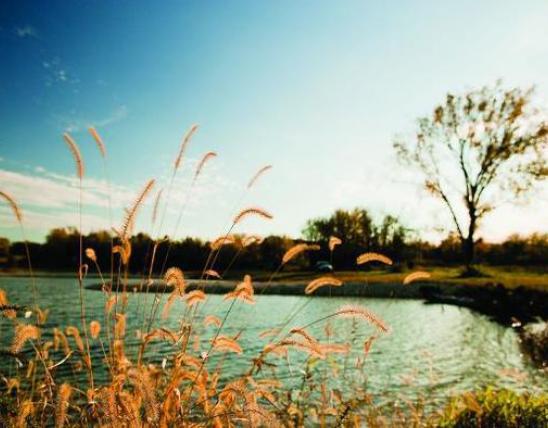
Hiking across this prairie, you can see waving native grasses and wildflowers that in places extend to the horizon. More than 650 native plants have been documented here, and you can enjoy a procession of wildflowers throughout the growing season. In the spring, look for Indian paintbrush and prairie phlox, followed by large-flowered coreopsis and pale purple coneflower. In the summer, look for prairie blazing star, downy sunflower, and purple prairie clover. In the fall, the prairie grasses take on a bronze hue and a plethora of colorful asters and goldenrods bloom. By late fall, the deep indigo color of downy gentian is one of the last remaining blooms.
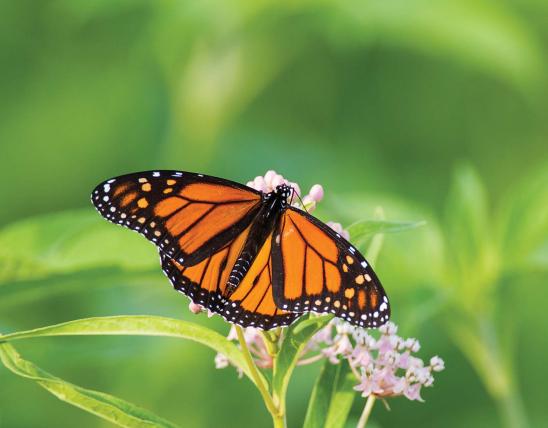
Bison have been reintroduced to the park and now reside here year-round. Lucky visitors may get a glimpse of these giants grazing on the native plants. The park is also home to an abundance of smaller animals. More than 230 bird species and some 60 butterfly species have been observed here. Many of the birds are grassland specialists: dickcissels, Henslow’s sparrows, grasshopper sparrows, field sparrows, eastern meadowlarks, upland sandpipers, and scissor-tailed flycatchers. In the winter, northern harriers and short-eared owls, two species of conservation concern, are common sights. Other species of conservation concern, such as the regal fritillary butterfly, the northern crawfish frog and the prairie mole cricket, can be seen or heard in the warmer months.
While exploring this area, you may encounter East Drywood Creek. This prairie headwater stream originates in the southeast portion of the park, runs through the center of this Natural Area, and then exits the property at the northern boundary. Compared to streams surrounded by row crops and fescue pasture, streams surrounded by prairie have lower concentrations of nutrients that can cause water quality problems. East Drywood Creek is one of two high-quality prairie headwater streams remaining in Missouri. It is listed as an Outstanding State Resource Water.
Park staff have worked hard to restore and maintain this prairie landscape. Without active management, prairies do not thrive. Prescribed fire, bison grazing, and invasive plant control are among the measures used here. Philanthropist Katharine Ordway provided significant funding for the purchase of park acreage through The Nature Conservancy. The area was dedicated as a state park in 1980.
From Lamar, take Highway 160 west 10.4 miles to Highway 43. Turn right (north) and travel 4.9 miles to Highway K. Turn left (west) on Highway K and drive 4.1 miles to the intersection, passing through Liberal. Go left (south) onto Highway P and follow it for 2.2 miles. Turn left (south) onto NW 150th Lane (gravel) and go 1.8 miles south to reach the Regal Tallgrass Prairie Nature Center. Seven hiking trails provide access to the Natural Area: Coyote Trail (3.25 miles), Drover’s Trail (2.5 miles), Gayfeather Trail (1.5 miles), Nature Center Trail (0.4 miles), Path of the Earth People (1.9 miles), Path of the Sky People (1.7 miles), and Sandstone Trail (4.25 miles). Inquire at the nature center for directions to the trailheads. Hunting, the collection of animals/animal parts, plants or other natural resources within the Natural Area is prohibited.
MO
United States