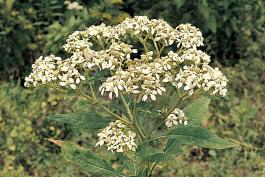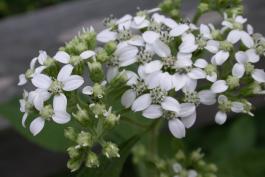











White crownbeard is a tall native perennial wildflower with clusters of white flowerheads. It's called “wingstem” for the narrow green wings running along the stem. It’s called “frostweed” because it forms frost flowers: strange and beautiful formations at the stem bases after a sudden hard frost.
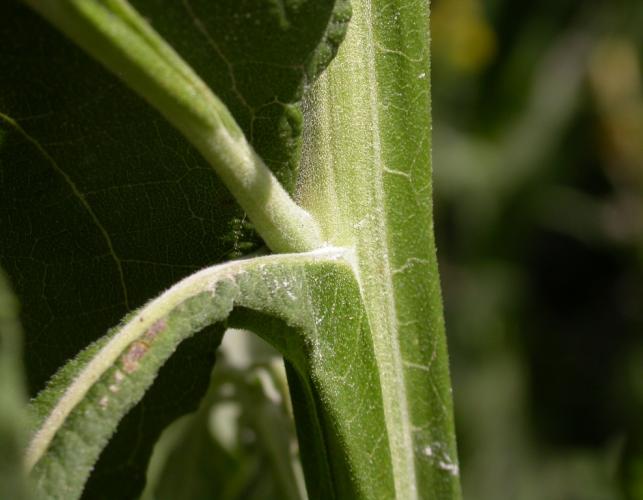
White crownbeard is a tall perennial with winged stalks. The wings are extensions of the leaf tissue.
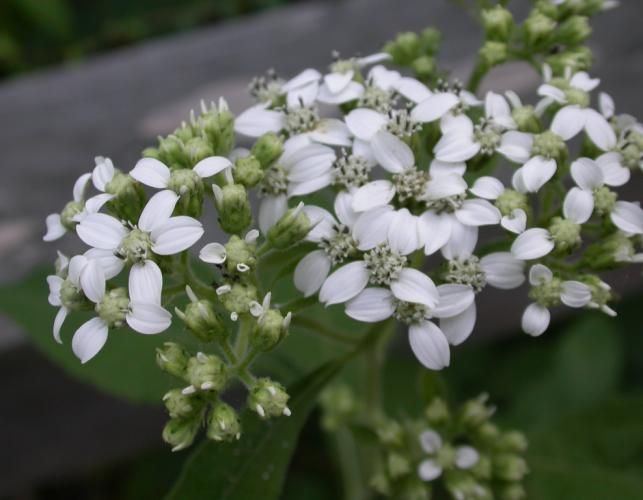
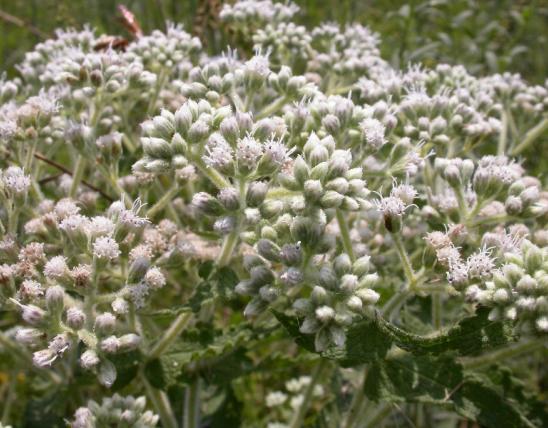
The flowerheads are small, white, clustered terminally, 1–1½ inches across with few (1–5) ray florets.
Blooms August–October.
The leaves are alternate, oval to lance-shaped, to 7 inches long, with short fine hairs above and hairier below, and widely spaced, small teeth.
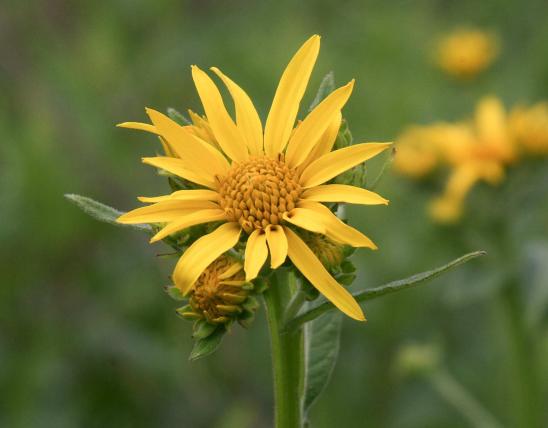
Similar species: There are 4 other species of Verbesina in our state, but they all have yellow, not white flowers. One of these, yellow ironweed (V. alternifolia), is also famous as a "frost flower" plant.
Height: to 7 feet.

Scattered south of the Missouri River.
Habitat and Conservation
Occurs on banks of streams and rivers, bluff bases, bottomland and upland forests, pastures, railroads, and roadsides.
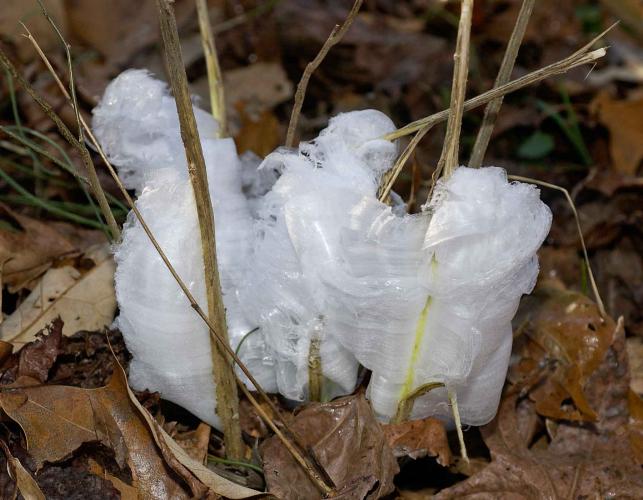
This plant is called frostweed because it often forms spectacular "frost flowers" in the fall, when a sudden overnight freeze causes the stems to burst and release quantities of sap, which freezes into intricate ribbons or flowerlike shapes that can be about 4 inches in diameter. Look for these formations early in the morning after a sudden first hard freeze.
Status
Native Missouri wildflower.
Human Connections
It’s not the prettiest of our native wildflowers, but white crownbeard and other clump-forming perennial crownbeards, with their love of moist ground, can be good choices for rain gardens, where they can absorb rainwater runoff as well as provide food for pollinators and other insects, which in turn feed birds.
One of the most popular hobbies in the world is photography. It’s satisfying to make great pictures, but with nature photography, it’s great fun simply to be outdoors hunting for beautiful subjects such as frost flowers on a bracing, clear autumn morning.
Some say white crownbeard is named for its profuse clusters of white flowerheads. Others contend the name refers to the two noticeable pronglike points (awns) that remain attached to the seedlike fruits (achenes) at maturity.
It’s called “wingstem” for the narrow green wings running along the stem.
It’s called “frostweed” because of the strange and beautiful formations it forms at the stem bases after a sudden hard frost.
Ecosystem Connections
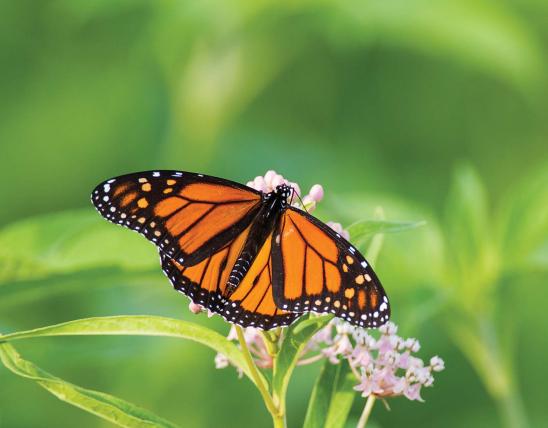
Members of the sunflower family that bloom late in the season provide nectar to many butterflies and other insects. The monarch and cloudless sulphur, for example, are butterflies that migrate south in late summer and fall, and they rely on plants like this to provide their nourishment.
A number of insects have been recorded feeding on white crownbeard's leaves, stems, flowers, or developing seeds, including the larvae of certain beetles, flies, and moths. Some of these moths are leaf miners, which create squiggly pale marks on the leaves as they chew their way through the soft leaf tissues between the upper and lower leaf surfaces.
Insects that are nourished by eating white crownbeard and other native plants are important foods for birds.
The silvery checkerspot butterfly has been recorded feeding on this and other members of the aster family.