Fall Color

Media
Image
Fall Color
Title
Fall Color
Body

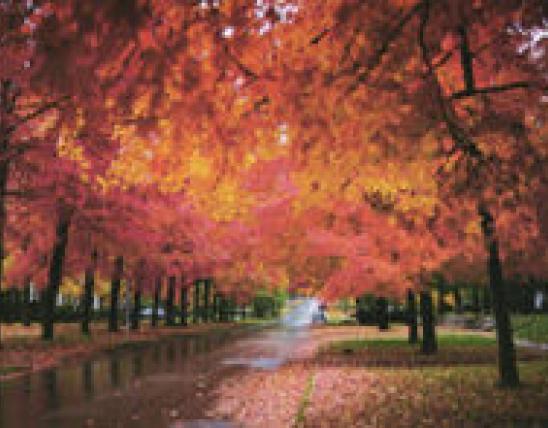
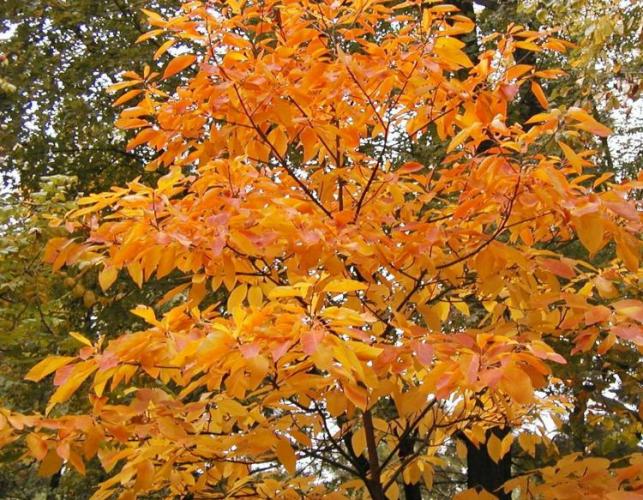
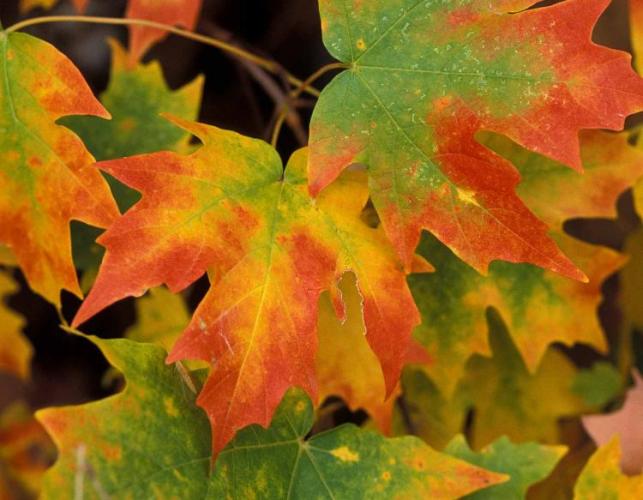
Missouri is blessed with a great variety of trees, shrubs, and woody vines. In autumn, their leaves turn color at different times, so Missourians enjoy a fall color season that may last six to eight weeks. It progresses in phases. Sassafras, sumac, and Virginia creeper are some of the earliest to change, beginning in mid-September. By late September, black gum, bittersweet, and dogwood are turning.

The peak of fall color in Missouri is usually around mid-October. This is when maples, ashes, hickories, and oaks are at the height of their fall display. Normally by late October, the colors are fading and the leaves are dropping from the trees. Fall color is usually finished by the middle of November.

The progression of color change usually starts earliest in northern and western Missouri and moves southward and eastward across the state. Generally, the color change is predictable, but it can vary from year to year. Predicting the peak of fall color can be difficult. Much depends on the weather: during fall, but also during the entire growing season.

MDC's Fall Color Reports usually begin in the second half of September (whenever colors start to appear) and wrap up around the middle of November, when most of the leaves have fallen or turned to brown. Reports appear weekly and are usually posted by Thursday evenings.

Where’s The Best Place?

You can enjoy Missouri’s fall color almost anywhere.

  • For spectacular vistas, choose routes along rivers with views of forested bluffs, and along ridges with sweeping scenes of forested landscapes.
  • On a smaller scale, drive on back roads, hike, or take a float trip under a colorful forest canopy on a clear, blue-sky day. Visit MDC Conservation Areas and Missouri State Parks.
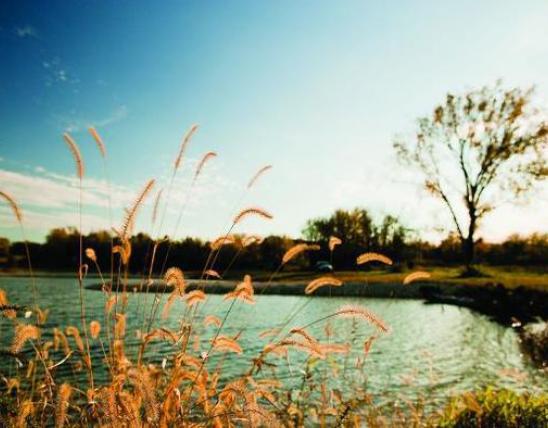
  • Even treeless areas, such as prairies and roadsides, display beautiful shades of gold, copper, purple, olive, and auburn with autumn wildflowers, shrubs, and curing, rustling grasses.
  • If you can’t get out of town, enjoy places with mature trees, such as older neighborhoods, parks, and even cemeteries.

Find events on your route

The Missouri Division of Tourism’s online calendar is packed with events happening all across Missouri. You’re sure to find fun things to do along your scenic fall color trips.

Title

Fall Color Video

Embed Code
Title
Related Content

Fall Color Reports

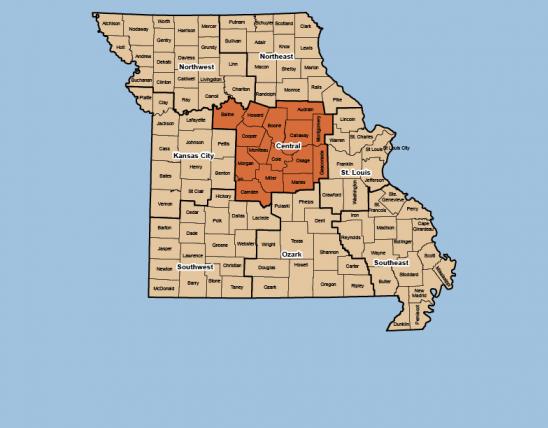
  • MDC regional map with Central Region highlighted
    Central Region, including Columbia, Jefferson City, and Lake of the Ozarks
    Status
    Not Started

    Posted Sept. 17, 2026

    “Real” fall color has not started in the Central Region, but drought stress has created some pops of color. Some trees are starting to show some color due to drought stress. Dogwood and sassafras trees are slightly orange; walnuts and some hickories are showing some yellow; cottonwoods and sycamores are slightly yellow in places; sumacs growing in fields are starting to turn red; some maples are starting to turn red and orange; most elms have started to drop their leaves; and persimmons are starting to show their normal foliage display.

    Across central and southern Missouri, groups of oaks are shutting down due to drought stress. Because of this, you may notice patches of brown right along the middle of hills — especially on hill slopes that face south or west.

    Along the roadside, wildflowers add some color. Watch for yellow goldenrods, purple blazing stars, and some yellow still showing on compass plant and prairie dock.

    Fall Color Hot Spots

    Nowhere in particular in the region is currently a color hot spot, but look for fall color in the herbaceous layer of vegetation — the soft-stemmed grasses and wildflowers growing close to the ground.
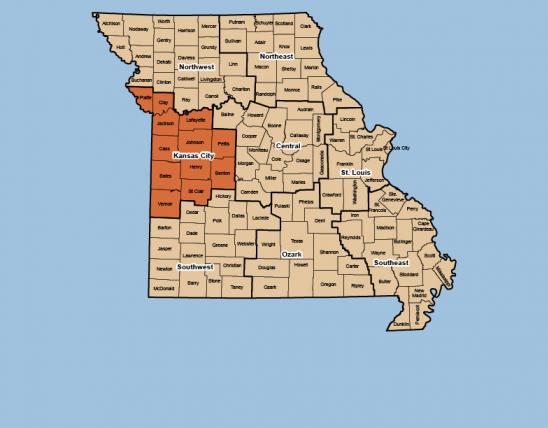
  • MDC regional map with Kansas City Region highlighted
    Kansas City Region
    Status
    Not Started

    Posted Sept. 17, 2026

    In the Kansas City region, most trees remain green, except those that may be drought stressed. However, sunflowers and goldenrods are blooming in the ditches. Some cottonwood, mulberry, walnut, hackberry, catalpa, elm, and pawpaw trees are beginning to show touches of yellow. The high prevalence of mimosa webworm on honey locusts again this year has left many stretches prematurely brown.

    To easily view these species in a landscape, walk the trails at the Anita B. Gorman Conservation Discovery Center. Visit Get MO Wild on Saturday, Oct. 3, at Blue Valley Park in Kansas City for fun, family-friendly activities and scenic hikes. The Visit Kansas City website gives additional fall color recommendations for the area.

  • MDC regional map with Northeast Region highlighted
    Northeast Region, including Kirksville and Hannibal
    Status
    Not Started

    Posted Sept. 17, 2026

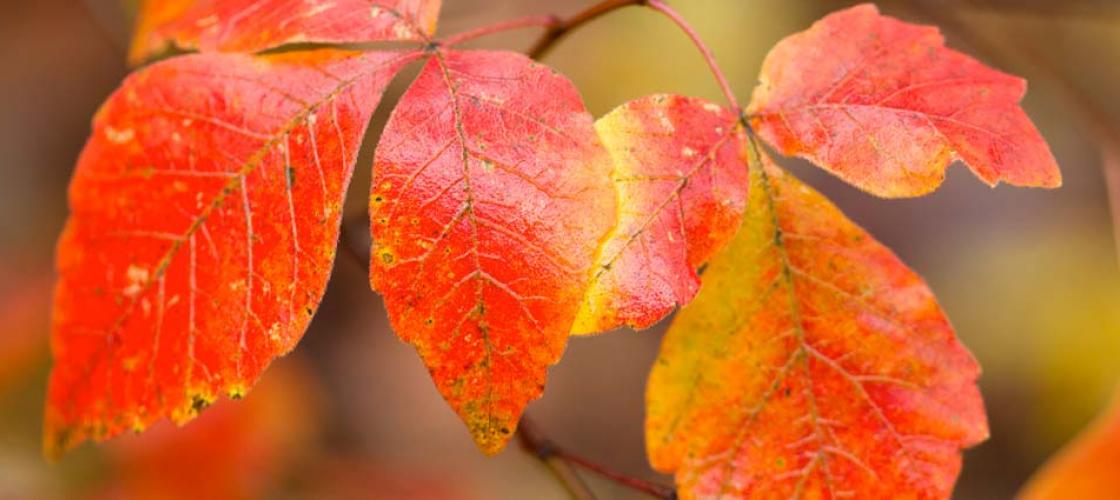
    Everything in the region is still mostly green. However, along roadsides, the sumacs and Virginia creeper are showing hints of red, while the goldenrods are a vibrant yellow. Poison ivy is turning red, orange, and rusty brown in areas that have been in drought conditions for the past two months.

    Understory dogwood trees are starting to turn shades of purple and red. Walnuts, locusts, and sycamores are starting to turn yellow and shed leaves early. Look along roadsides for walnut trees that are already bare. Cottonwoods are turning brown in areas that lack moisture. Ohio buckeye leaves are falling faster than others, with some trees already bare.

    When in urban areas, look for maples starting to turn red and northern catalpa turning lime yellow. If you notice black spots on a maple tree in your yard, that's black tar fungus. It's not harmful to the tree, but this fungus has increased significantly in urban settings. The best way to get rid of the fungus is to rake the leaves and remove them from your yard for several years in a row.

    When you’re out on your fall hike, look for pockets of pawpaw plants; they are producing fruit right now that will only be on the trees for a few days before the critters find them. The forecast doesn't call for much rain, so our fall color may be short-lived this year.

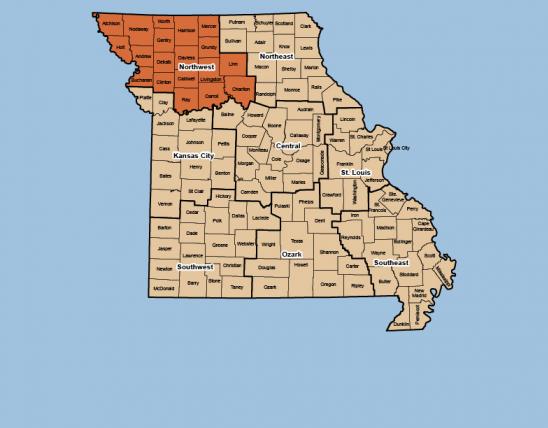
  • MDC regional map with Northwest Region highlighted
    Northwest Region, including St. Joseph and Chillicothe
    Status
    Beginning to turn

    Posted Sept. 17, 2026

    Local vegetation has begun to show some color over the past couple of weeks. Namely, some smooth sumacs across the region have begun to turn vibrant red, and some orange is showing in walnut tops scattered throughout woodland canopies. Most of the change may ultimately occur later this season because of an unseasonably warm summer. Much of the current “color” can be attributed to tree health struggles from these high temperatures, with leaves of various species turning brown and dropping prematurely.

    Fall Color Hot Spots

    Great areas to see color as the season progresses include Bluffwoods Conservation Area, where viewers can easily see the wooded hillsides while driving along U.S. Highway 59 or hiking the trails; Mark Youngdahl Urban Conservation Area, located within the city of St. Joseph; and Riverbreaks Conservation Area.

  • MDC regional map with Ozark Region highlighted
    Ozark Region, including Rolla, West Plains, and Eminence
    Status
    Beginning to turn

    Posted Sept. 17, 2026

    Fall color has come early to the Ozark Region this year due to a flash drought. As a result, some trees will go dormant early as a defense against ongoing poor growing conditions. Wilt occurs most consistently on poorer sites less suited for maximum tree growth and gives way to the sudden, yet familiar, crunchy brown leaves of late fall juxtaposed alongside the still mostly green forest.

    More typically, some of our early color change species have begun the process. Among the most striking and easy to spot is the classic red of the black gum tree. Silver maples and yellow poplars (tulip trees), most common as yard trees, are well into the process and are nearly fully yellow with many leaves dropped. Redbuds, also common as yard trees but plentiful in our woods and along roadsides, are changing to yellow and orange. Black walnuts, found both in the wild and in yards, have been losing leaves and turning yellow for a while. They are often the last to grow leaves in spring and one of the first to lose them. Fall hasn’t technically begun, but colorfully we’re in the swing of things with much more change to come.

    While temperatures are still high, it’s not too late to get a final swim and float in at one of our beautiful Ozark rivers. The national scenic riverway, which encompasses two rivers — the Jacks Fork and the Current — is an unbeatable location for an end-of-summer trip, with many access points and river outfitters to suit your needs. This time of year, the Current River remains cold and clear because it is mostly spring-fed. The Jacks Fork will be warmer and less clear in some places.

  • MDC regional map with Southeast Region highlighted
    Southeast Region, including Cape Girardeau, Farmington, and Poplar Bluff
    Status
    Not Started

    Posted Sept. 17, 2026

    Is it September or July? Fall is certainly coming in hot! El Niño is causing some unusual weather swings this year, including the warmer temperatures we’re seeing now. Rain was falling regularly during summer, providing enough water for trees and helping them grow healthy, full canopies. But trees lose the most water through their leaves in a process called evapotranspiration. The recent lack of rain and extreme heat has forced trees to shut down their leaves to conserve water.

    The veins of sycamores, cottonwoods, tulip trees (yellow poplars), and even some oaks are already starting to go dormant earlier than usual this year. When you see rows of browning trees, they are likely growing in poorer, rockier soils that can’t retain water. This part of the state is not currently in a drought, but lack of rain in the coming weeks might change that. Until then, traditional fall colors from senescence haven’t begun yet. Temperatures can drop by up to 10 degrees in the shade of trees, so go outside and take a walk, but bring plenty of water. Fall colors might take some wild turns; stand by for more reports in the coming weeks!

  • MDC regional map with Southwest Region highlighted
    Southwest Region, including Springfield, Branson, and Joplin
    Status
    Not Started

    Posted Sept. 17, 2026

    Drought has driven fall color changes across the Southwest Region. Areas with shallow soil over rocky outcrops are showing bands of brown and tan as trees struggle to find moisture. The drought also highlights which trees were already unhealthy as weaker trees with compromised root systems are also browning.

    When moisture becomes less available, some species naturally drop leaves. Black walnut, sassafras, some hickories, hackberry, and river birches are exhibiting this behavior. Unfortunately, some trees are dropping leaves early without the color change we would expect.

    A few reports note purple color appearing in black gums near Lead Mine Conservation Area. Sassafras growing in full sun in Stone and Christian counties was showing some red. Overall, anticipate a short, muted fall color in southwest Missouri, which is fairly normal for our part of the state.

  • MDC regional map with St. Louis Region highlighted
    St. Louis Region
    Status
    Not Started

    Posted Sept. 17, 2026

    Fall color, just like fall weather, has yet to arrive in the St. Louis Region. With days still long and temperatures high, it is not surprising that leaves haven’t begun to turn. However, some species, such as tulip tree (yellow poplar), are showing pops of color. This color is likely induced by moisture stress from the dry and hot conditions of the past weeks.

    Luckily, we have had a moist growing season, which promotes strong fall color. For best color, we should hope for more rain in the coming weeks and for temperatures to begin to fall. Leaf change begins largely because of shorter days, but temperature also plays an important role in timing and color intensity. Because seasonal temperature and day length have become uncoupled in recent years due to climate change, long periods of vibrancy are generally becoming less likely.

    Fall Color Hot Spots

    It still feels like summer outside, so you can still enjoy summer activities. This weekend looks ideal for a float or swim in the Meramec River, Huzzah Creek, or Bourbeuse River. With some wildflowers still in bloom and being swarmed by migratory pollinators, try visiting prairies, glades, and other open areas at Cuivre River State Park, Queeny Park, William R. Logan Conservation Area, or Forest Park.