










25. Sleep in the Snow
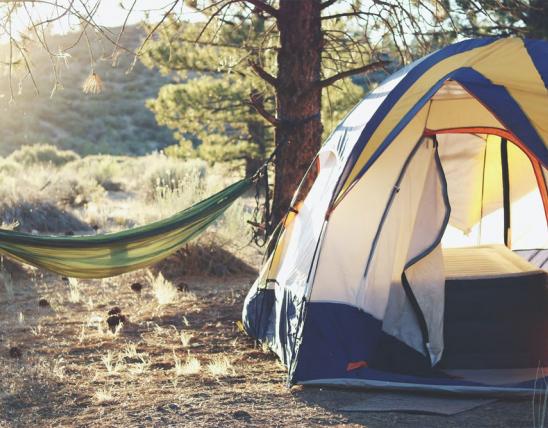
It’s snow much fun to sleep outside in the wintertime! You just need the right gear and a little know-how. For tips on turning a snow day into a snowy sleepover, check out the January/February 2020 issue.
26. Listen for Coyotes
Winter nights are a great time to listen for coyotes calling to each other. The yipping, yapping, and howling usually starts around sunset. Although it sounds spooky, there’s nothing to fear. A coyote howls to tell other coyotes, “I’m lonely,” “Stay away,” or “Let’s find some rabbits to eat.”
November/December 2019
27. Build a Bluebird House
What’s red, white, and blue, eats bugs, and lives in a box? It’s Missouri’s state bird, the eastern bluebird. Build a nestbox this winter so it will be ready when bluebirds look for a place to raise their babies in the spring. For building plans, visit audubon.org/news/how-build-bluebird-nest-box.
February/March 2011
28. What Is It?
Whiskers cover my lip.
To eat, I go for a dip.
I chase fish at quite a fast clip.
I shake off after each trip.
For the answer, go to No. 48.
December 2010/January 2011
29. Join a Stream Team
About 110,000 miles of rivers and streams flow through Missouri. To help keep them healthy and clean, join a Stream Team. For details, flow over to mostreamteam.org.
December 2011/January 2012
30. See How You Size Up
Missouri’s smallest mammal — the least shrew — is only 3 inches long and weighs about as much as a penny. To see how you stack up against everything from burly bears to itty-bitty birds, check out the March/April 2016 issue.
31. Encounter an Eagle
Every winter, thousands of bald eagles follow migrating flocks of waterfowl to Missouri. With binoculars and some searching, you can find eagles perched in trees along rivers, lakes, and wetlands. Most return north in the spring, but several hundred live in Missouri year-round.
December 2012/January 2013
32. Help a Choosy Chipmunk
This chipmunk is a picky eater! It only eats acorns that have a stem, a cap, and no holes. How many acorns can you find that satisfy all three of these requirements? (see illustration of a pile of acorns)
November/December 2022
33. Strange but True
Super snoozer: To conserve energy during winter hibernation, a woodchuck takes a breath once every four minutes, and its heart beats only four or five times a minute.
January/February 2026
34. Play Road Trip Bingo
Visiting family during the holidays is tons of fun. But spending hours in the car can be boring. Road Trip Bingo to the rescue! When you spot an item on your bingo card, put an “X” in the box. When you get five in a row, you win! Print bingo cards from the November/December 2017 issue.
35. Prowl for Owls
In winter, owls call to attract a mate. Barred owls hoot, Who cooks for you? Who cooks for you all? Great horned owls call, Hoo, hoo-oo, hoo-oo. And eastern screech-owls make a high-pitched, horselike whinny. The nocturnal hunters get especially chatty during full moons and before stormy weather.
January/February 2021
36. Listen for Feathered Drummers
In late winter, listen for head-banging birds rocking out in woods and backyards across Missouri. Woodpeckers pick something hollow — such as a dead branch, stove pipe, or rain gutter — and peck loudly and rapidly. The drumming tells other woodpeckers someone is looking for a mate or claiming a patch of trees for a home.
January/February 2015
37. Take a Liking to Lichens
Part plant-like creature, part mushroom-like fungus, over 500 kinds of lichens grow on trees, rocks, and soils throughout Missouri. Grab a magnifying glass and take a micro-hike through your backyard to see how many different kinds you can find.
January/February 2018
38. Build a Fort in the Woods
Everyone needs a secret hideout. It’s easy to build one in the woods or your backyard. Just gather dead branches and lay them over a fallen log. Or weave limbs through upright trees to form walls. Your new hideout will offer peace from pesky little brothers, and animals will soon get used to the structure, allowing you to sit quietly inside and watch them up close.
January/February 2017
39. Explore an Ozark Spring
If winter has you dreaming of spring, maybe it’s time to visit one. Some of the most beautiful springs in the world bubble up in the Ozark hills. Since spring water comes from deep underground, it stays about 58 degrees year-round. This makes it feel warm in the winter and cool in the summer. For a guide to Missouri’s showiest springs and the animals that live there, check out the November/December 2016 issue.
40. Meet a Marsupial
Marsupials (mar-soo-pee-uhls) are mammals that raise their babies in a pouch, like kangaroos and koalas. In America, the only mammal packing a pouch is the opossum. To learn more about how opossums raise their pouch potatoes and their habit of “playing dead” when predators approach, check out the February/March 2013 issue.
41. Spot Some Raptors
On your next holiday road trip, be sure to pack a pair of binoculars. Weedy roadsides offer birds of prey ideal hunting grounds. If you can’t tell a red-tailed hawk from a red-shouldered hawk, don’t despair. Flap over to the January/February 2024 issue and check out our mini field guide.
42. Start a One-Match Fire
Lighting a fire with a single match is a good survival skill to learn. The secret is to collect everything you’ll need before you strike the match.
Tinder is dry, fluffy material that lights easily, like paper, pine needles, or dead grass.
Kindling is bone-dry twigs that burn long enough to catch bigger branches on fire.
Fuel is bigger branches that burn for several minutes or several hours.
1. Place a fist-sized wad of tinder on dry ground.
2. Stack kindling around the tinder to form an upside-down cone. Place matchstick-sized twigs closest to the tinder and pencil-sized twigs farther out.
3. Carefully strike the match and use it to light the tinder. You may need to blow gently on the tinder to coax up a flame.
4. When the kindling is burning brightly, add bigger sticks. Once those catch on fire, add larger logs until the fire is as large as you need it to be.
November/December 2015
43. Avoid a Fabulously Funky Furbearer
Late winter is the most likely time to catch a whiff of skunk funk. This is when striped skunks wake from long winter naps hungry for food and love. Mate-crazed males wander widely to find females, and many waddle across roads. Help your parents keep an eye out for them when driving at night.
January/February 2019
44. Feed Your Feathered Friends
Tie yarn around a pine cone to make a loop. Spread peanut butter over the cone, making sure to fill all the nooks and crannies. Pour birdseed into a cake pan and roll the cone through the seed until the cone is covered. Hang the cone on a branch where you can watch it. In no time, hungry birds will arrive for a feast!
January/February 2016
45. Hook a Rainbow
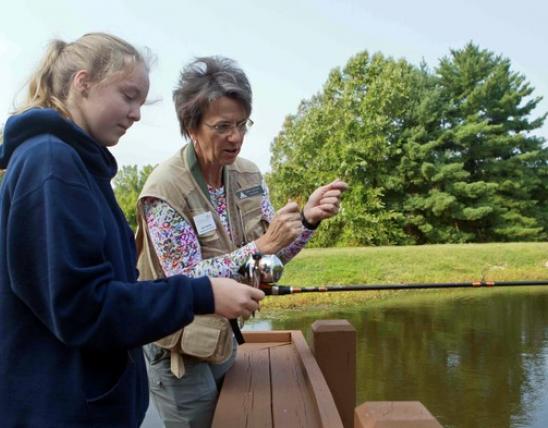
The Show-Me State has lots of lakes that are stocked in winter with rainbow trout. To find one nearby, visit short.mdc.mo.gov/Zd5.
November/December 2018
46. Take a Walk in the Winter Woods
Nature in winter may seem silent and still. But take a hike in the woods and you’ll be amazed at all the life you’ll find. For a guide on what to look for, check out the January/February 2022 issue.
47. Exercise Like an Animal
Wild animals are the world’s best athletes. They have to be strong, fast, and flexible to survive. If you’ve spent the holidays hibernating, maybe it’s time to get fit by hovering like a hummingbird.
Hold your arms straight out at your sides. Quickly rotate your arms, making little circles in the air with your hands. Flap as fast as you can for a full minute. Rest, then do circles in reverse for another minute.
For more animal-inspired exercises, check out the January/February 2023 issue.
48. Meet a Mama Otter
Baby river otters can’t swim. So when they’re about 12 weeks old, mom starts swimming lessons. The pups aren’t enthusiastic students — they’re often scared of water — so mom has to drag them in and teach them how to float, paddle, and dive. To read about a mama otter’s misadventures in raising a round of rowdy pups, dive into the December 2013/January 2014 issue.
49. Play Xplor — The Game!
In our November/December 2024 issue we offered a wild, nature-based take on a fun family board game.


And More...
This Issue's Staff
Photographer – Noppadol Paothong
Photographer – David Stonner
Designer – Marci Porter
Art Director – Ben Nickelson
Editor – Matt Seek
Subscriptions – Marcia Hale
Magazine Manager – Stephanie Thurber