








Missouri is crawling with creatures! With over 3,300 kinds of animals and plants roaming around (or rooted in place), a nature walk can feel like stepping inside a video game. No computer is needed for this game, though. Simply go outside, explore, and gain hearts for each wild character you find. When you’ve collected 100 hearts, you win!
Level 01: Forest
Gray Fox
(4 hearts) This wild dog is wary, active at night, and scurries up trees like a supersized squirrel to hide from people and predators. They’re found statewide but are more common in the Ozarks.
Oak Tree
(1 heart) Oaks provide leaves to munch, acorns to crunch, and shelter for a bunch of critters. About 20 species grow in Missouri. Because they’re easy to find in nearly any forest, they’re worth only one heart.
Wild Turkey
(3 hearts) Chunky turkeys prefer to run from danger rather than fly. Even so, it’s often hard to find these secretive birds. Your best bet is from March through May, when male turkeys gobble to get girlfriends.
Additional Forest Species:
Barred Owl (3 hearts)
Millipede (2 hearts)
Gray Squirrel (1 heart)
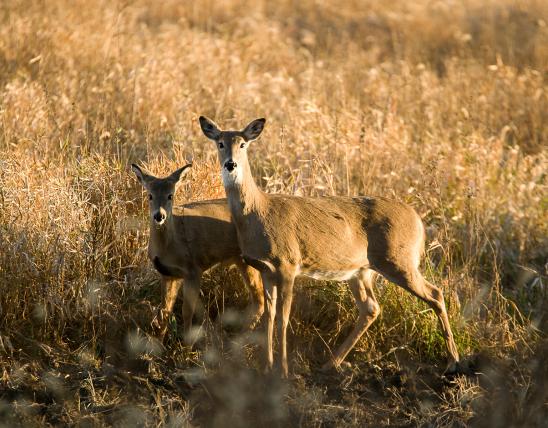
White-Tailed Deer (2 hearts)
Pileated Woodpecker (2 hearts)
Spotted Salamander (5 hearts)
Three-Toed Box Turtle (3 hearts)
Level 02: Prairie
Bumblebee
(2 hearts) Look (or listen) for these fuzzy flower farmers buzzing from blossom to blossom. About six different kinds of bumblebees are commonly found in Missouri. Female bees push pollen into “baskets” on their hind legs.
Purple Coneflower
(1 heart) This wildflower’s drooping purple petals look like a ballerina’s tutu. Its scientific name, Echinacea, means “hedgehog” and refers to the flower’s prickly center cone. Look for it blooming from May through October.
American Badger
(5 hearts) Badgers use sharp, 1-inch-long claws and powerful muscles to dig up a dinner of voles, gophers, and ground squirrels. At full speed, the furry dirt-drills can disappear underground in under a minute.
Additional Prairie Species:
Scissor-Tailed Flycatcher (4 hearts)
Milkweed (2 hearts)
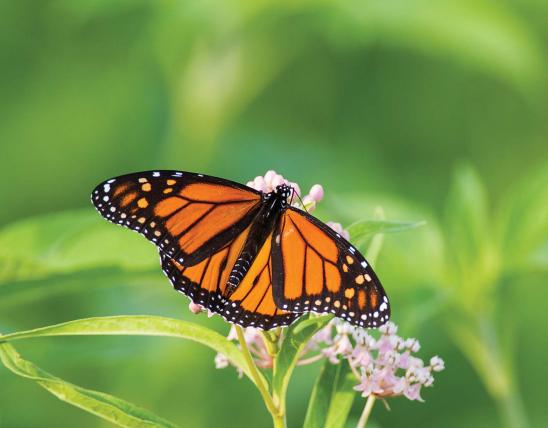
Monarch Butterfly (2 hearts)
Grasshopper (1 heart)
Bullsnake (5 hearts)
Coyote (4 hearts)
Eastern Meadowlark (3 hearts)
Level 03: Glade
Eastern Prickly Pear
(2 hearts) Prickly pears are twice as pokey as other pointy plants. In addition to their long spines, these cute little cactuses are also armed with clusters of tiny, barbed prickles. Watch where you sit!
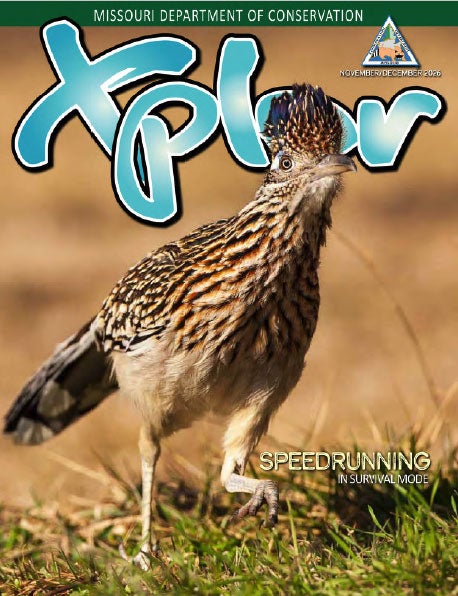
Greater Roadrunner
(5 hearts) Only cartoon roadrunners go beep, beep. Real roadrunners make a cooing call that sounds like a dove or pigeon. The long-legged birds use speed to catch collared lizards, small snakes, and other prey.
Eastern Collared Lizard
(3 hearts) These colorful lizards are Missouri’s fastest reptiles, reaching speeds of 15 miles per hour when chasing prey or escaping predators. To scurry in a hurry, they stand upright and run on their hind legs.
Additional Glade Species:
Prairie Dock (1 heart)
Lichen Grasshopper (1 heart)
Painted Bunting (4 hearts)
Texas Brown Tarantula (4 hearts)
Eastern Hog-Nosed Snake (3 hearts)
Eastern Milksnake (5 hearts)
Striped Bark Scorpion (3 hearts)
Level 04: Stream
Wood Duck
(2 hearts) Missouri’s most dazzling duck nests in hollow trees, woodpecker holes, and human-made nestboxes. If you surprise a female wood duck, listen for her shrill call — ooh-eek, ooh-eek — as she flies away.
Red-Eared Slider
(1 heart) Look for this common turtle stretched out on a log, soaking up sunshine. But look fast! Sliders are named for their talent of sliding quickly into the water when approached. Plop!
Longear Sunfish
(2 hearts) Named for the long black flap covering its gills, this colorful fish is found in clear, rocky streams south of the Missouri River. They avoid strong currents, so look for them in deeper, slower pools.
Additional Stream Species:
River Otter (3 hearts)
Fishing Spider (3 hearts)
Rainbow Darter (4 hearts)
Dragonfly (1 heart)
Northern Crayfish (1 heart)
Hellbender (5 hearts)
Freshwater Mussel (3 hearts)
Level 05: Wetland
Bald Cypress
(2 hearts) These trees breathe with their knees. Bumpy stumps called “knees” stick out of the water around a cypress tree’s trunk. The knees act like snorkels to carry air down to the tree’s waterlogged roots.
Great Egret
(2 hearts) This large white heron has long black legs and a bright yellow beak. It wades silently through the water, hunting for fish, frogs, and other small prey that it — SPLASH! — jabs with its dagger-shaped beak.
Diving Beetle
(3 hearts) To breathe underwater, diving beetles trap air bubbles under their wing covers. Fierce predators, these inch-long insects often attack small fish and tadpoles. When swimming, they kick both hind legs at the same time.
Additional Wetland Species:
Red-Winged Blackbird (1 heart)
Central Newt (4 hearts)
Mallard (2 hearts)
North American Bullfrog (1 heart)
North American Snapping Turtle (5 hearts)
Water Lilies (1 heart)
Muskrat (3 hearts)
Level 06: Urban
Big Brown Bat
(3 hearts) This bat is well-named. It’s one of Missouri’s biggest bats, and it’s covered with brown fur. Big browns hunt bugs at night, so look for them fluttering around leafy backyards or near streetlights at dusk.
Raccoon
(2 hearts) Highly adaptable and super smart, these masked mammals live nearly everywhere and eat nearly anything. They sometimes make people mad by rummaging in trash cans and eating pet food that’s left outside.
Eastern Gartersnake
(2 hearts) Although they live in a variety of habitats — including backyards — this splendidly striped serpent is often found near water. They can grow over 50 inches, but most stretch only 2 feet long.
Additional Urban Species:
Eastern Bluebird (2 hearts)
Pillbug (1 heart)
Peregrine Falcon (5 hearts)
Rosy Maple Moth (3 hearts)
Striped Skunk (2 hearts)
Eastern Mole (1 heart)
Red Maple (1 heart)


Also In This Issue

Even after death, trees contain lots of life.
And More...
This Issue's Staff
Photographer – Noppadol Paothong
Photographer – David Stonner
Designer – Marci Porter
Art Director – Ben Nickelson
Editor – Matt Seek
Subscriptions – Marcia Hale
Magazine Manager – Stephanie Thurber