


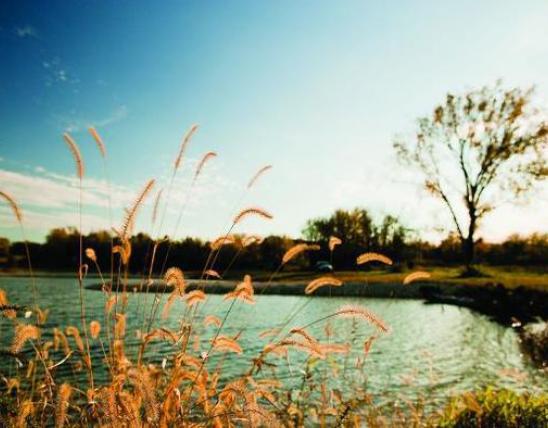





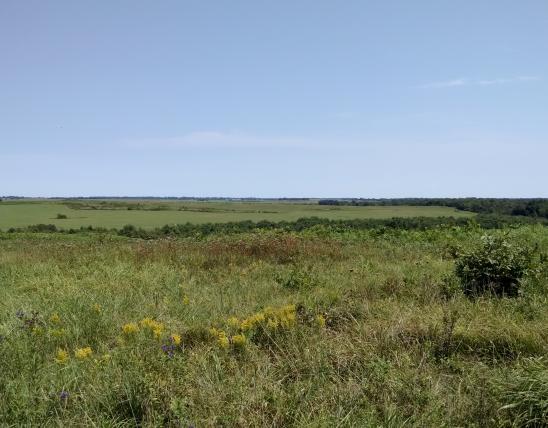
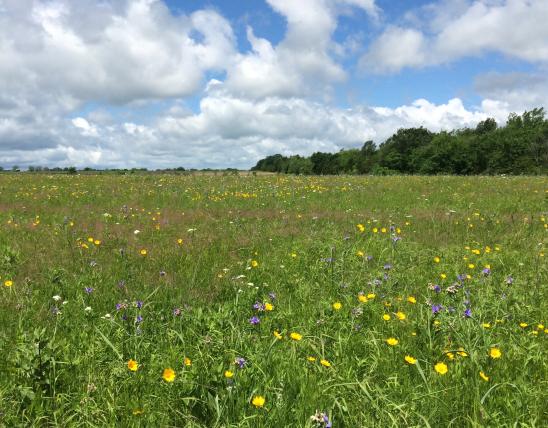
Taberville Prairie is a remnant of the prairie ecosystem that once covered more than one-quarter of Missouri.
Media
Status
Name
Species of Conservation Concern
Scientific Name
Speyeria idalia
Family
Nymphalidae (brushfooted butterflies)
Description
The regal fritillary is a large, beautiful, and distinctive butterfly that is now almost completely confined to high-quality native tallgrass prairie habitats.
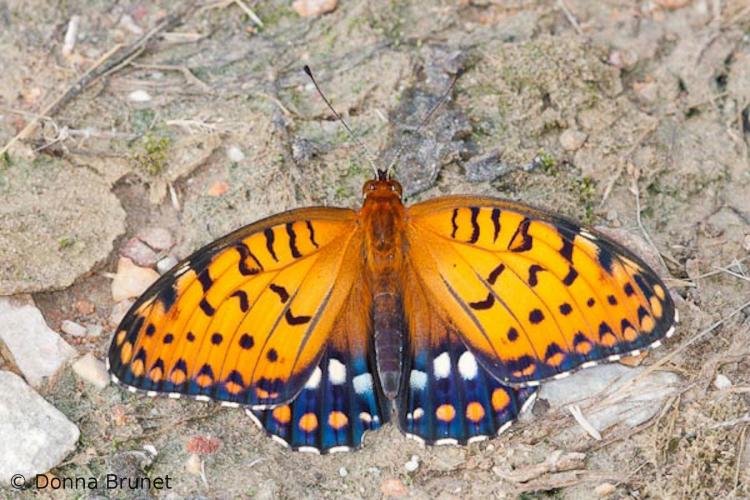
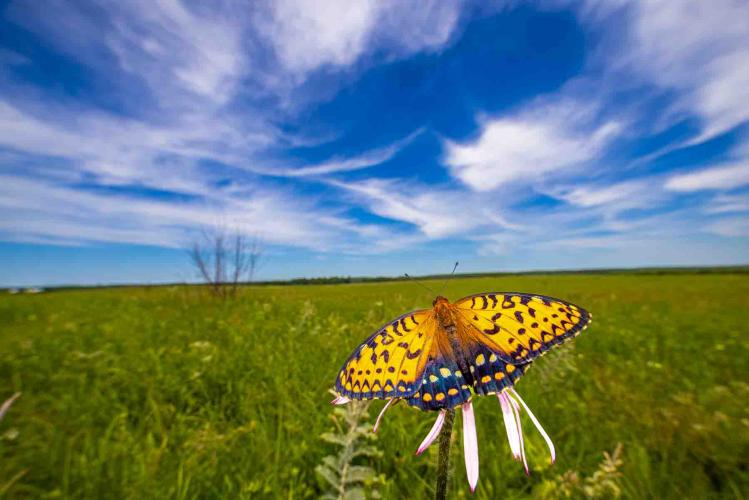
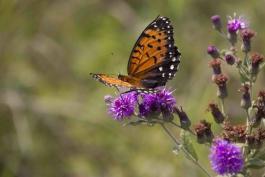
The upperside of the forewings is bright rusty orange with black markings. The upperside of the hindwings is mostly black, with a row of white spots curving across the middle of the wing (a postmedian row). Another row of spots runs closer to the outer margin (a submarginal row); these submarginal spots are white in females and orange in males. Females also tend to be larger, and the tip of the forewing is dark with small white spots along the edge.
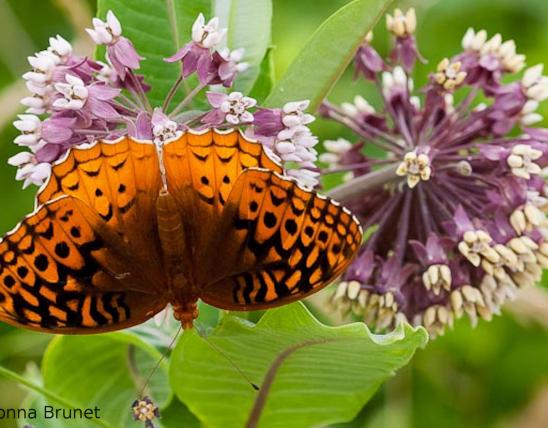
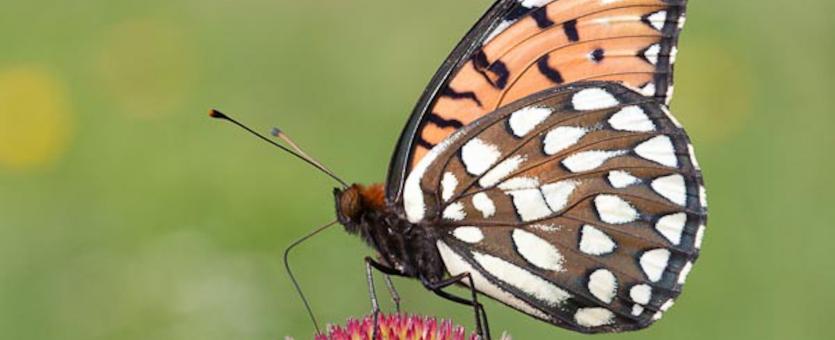
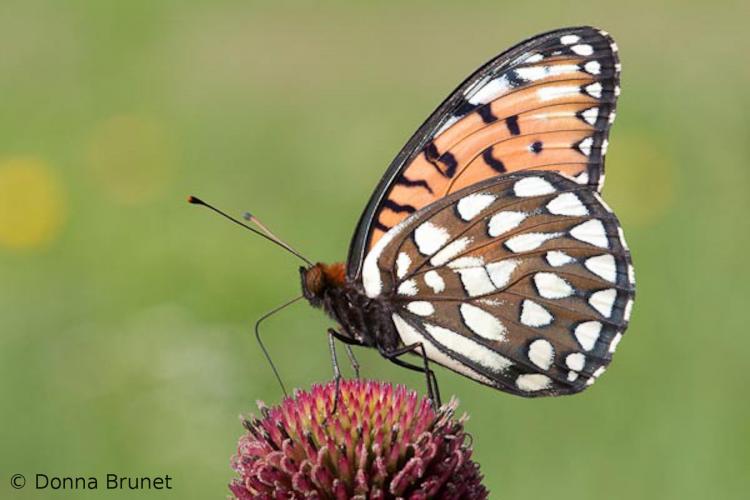
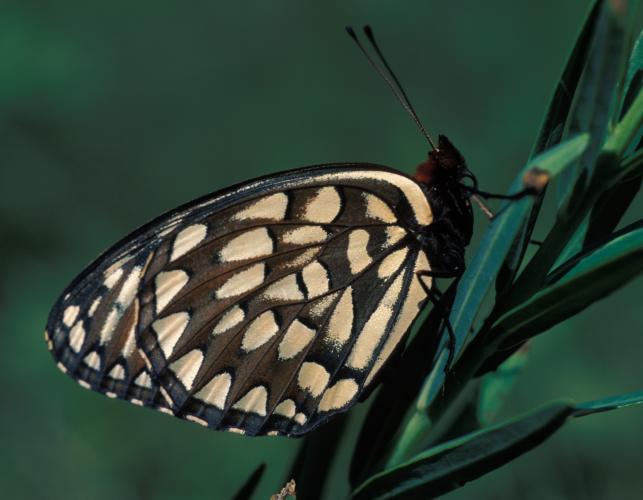
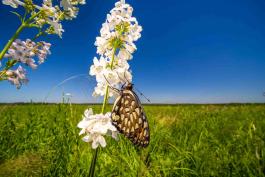
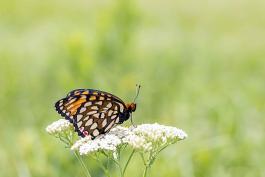
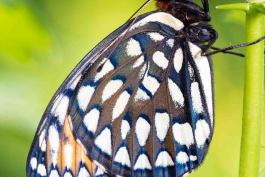
Seen from below, the hindwings are distinctively blackish gray and covered with silvery white spots.
The caterpillars are velvety black to yellowish or deep orange, with orange or reddish stripes, and with yellowish-white, branching spines with black tips.
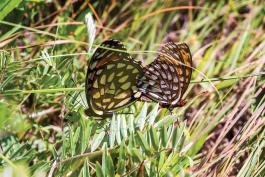
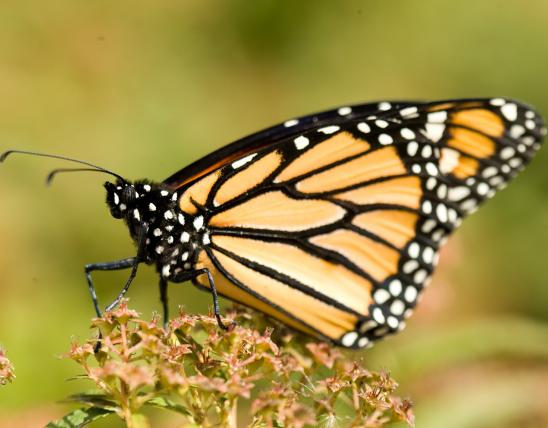
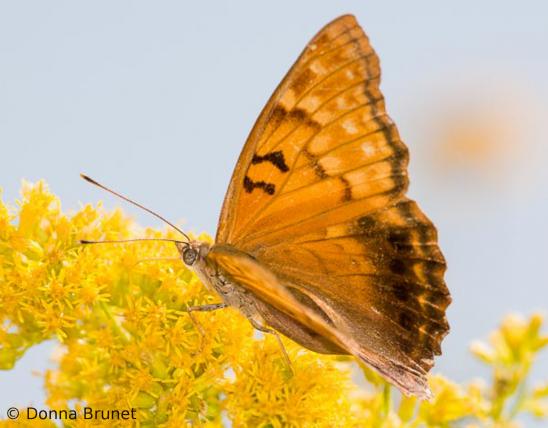
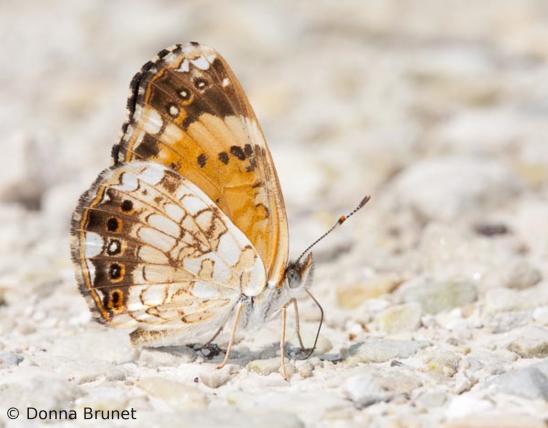
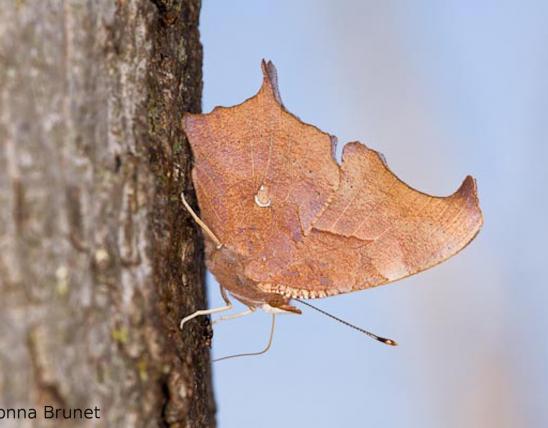
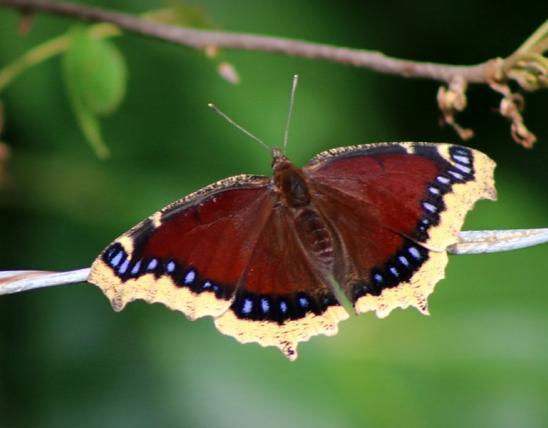
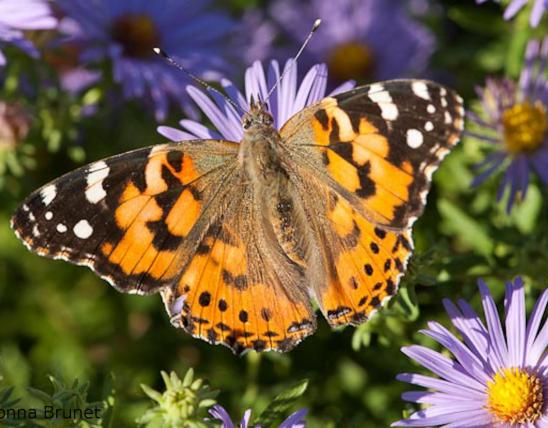
Similar species: The great spangled fritillary (Speyeria cybele), a close relative, is much more common and widely distributed in our state. At a glance, it lacks the blackish gray cast of the regal fritillary and looks more tawny and brown.
There are a few other fritillaries recorded from Missouri, but they are rare, showing up in our state only occasionally, when they migrate here from other regions.
Size
Wingspan: 3–4 inches. Caterpillars can grow up to 1¾ inches long.
Where To Find

Formerly nearly statewide. Now confined to our few remaining tallgrass prairie remnants, located mostly in western and northern parts of the state.
Habitat and Conservation
Restricted to tallgrass prairies. Locally common in prairies in western Missouri, and less common in northeastern Missouri. Practically absent from the eastern Ozarks and Mississippi Lowlands.
The regal fritillary formerly occurred in a variety of open habitats, including pastures and roadsides. Populations are declining because their prairie habitat is disappearing.
Their life cycle, single generation per year, egg-laying behavior, slow caterpillar growth, and need for correct food plants at a critical time, makes them vulnerable to habitat disturbance.
Food
The caterpillars eat the tender young leaves of violets (plants in the genus Viola).
- Apparently, in our region, they prefer the prairie violet, V. pedatifida, a small blue violet with deeply lobed "bird's foot" leaves that grows in tallgrass prairies. In Missouri, the range of this violet species is almost identical to the range of the regal fritillary.
- In some parts of Missouri, arrow-leaved violet (V. sagittata), another prairie species, is the food plant.
- Elsewhere, regal fritillary caterpillars are also reported to eat bird's-foot violet, V. pedata, common on Missouri glades as well as upland prairies, but in our state that plant is mostly known from the Ozarks, a region where the regal fritillary does not occur. A few other types of violets have been noted as food plants elsewhere in the United States.
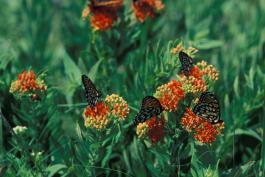
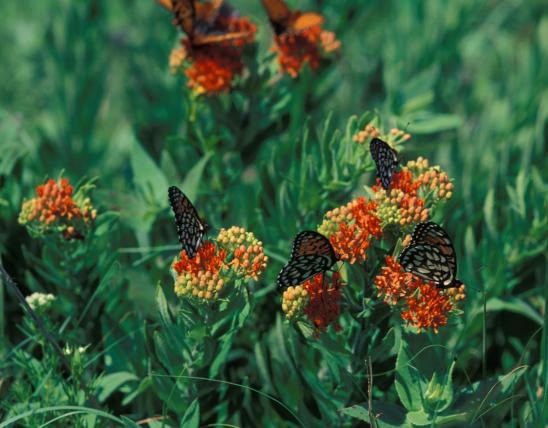
Adults sustain themselves by drinking the nectar of flowers, especially those of butterfly weed and other milkweeds, pale purple coneflower and other coneflowers, thistles, mountain mints, blazing stars, ironweeds, and clovers.
Biologists have pointed out that gravid (egg-bearing) females need a succession of high-quality nectar sources from May through September or October. Thus they require late-spring and early summer wildflowers, midsummer wildflowers, and late summer and fall wildflowers.
Status
Native resident species restricted to native prairie habitats. Vulnerable to extirpation from our state and extinction across its entire North American range. It is a Missouri species of conservation concern and has been proposed for listing as a federally threatened species.
Populations are declining in North America and in Missouri. Destruction of high-quality tallgrass prairies is the main reason for the decline.
- The overall range of this species has been contracting, and Missouri, Kansas, Nebraska, South Dakota, and Iowa seem to be the core remaining territory of what used to be a much larger range.
Not that long ago, the regal fritillary's overall range used to extend all the way to New England and the east coast, north to North Dakota and Minnesota, south to Arkansas and Oklahoma, and west to Colorado, eastern Wyoming, and Montana.
- Now, east of Indiana, there are only a few populations in Pennsylvania and Virginia and/or North Carolina, with the butterfly being extirpated from all other eastern states.
- The range seems to be shrinking from all directions. Populations are rapidly declining in Illinois, Iowa, and Wisconsin, and this butterfly is also critically imperiled in Colorado, Oklahoma, and Arkansas.
Life Cycle
Life Cycle
The reproductive biology explains much about why this butterfly is facing extirpation and possibly extinction.
First, it is single-brooded, with only one opportunity for reproduction a year. If something destroys eggs, caterpillars, or pupae, there are no more chances that year for further breeding.
Males begin emerging from pupation in early June, and females start to emerge 1–2 weeks later. Males perch on plants and wait for females to fly near. Often, they fly slowly back and forth across prairies in search of emerging females. Most males probably die in July.
Though regal fritillaries mate in early summer, the eggs develop slowly within the female. Regal fritillary mothers do not lay their eggs until late summer or early fall. They lay low through most of the summer, and they require high-quality nectar sources from May through October to sustain them.
When it's time to lay eggs in late summer or fall, females walk through the thick prairie vegetation and deposit eggs singly on various plants, even when the host violets are not especially near. Studies suggest that they will lay eggs on violet leaves, if they can find them.
The eggs hatch in the late summer or fall, but the early-stage caterpillars do not eat; instead, they overwinter in leaf litter.
In spring, the caterpillars come out of hibernation and feed on the tender new leaves of early-spring violets. At this point in the year, the tall, warm-season prairie grasses have not yet grown high enough to shade out the little violet plants.
- Thus the timing of caterpillar feeding and of their wildflower food plants coincides with the growth cycles of native tallgrass prairies.
- The violets need to be in large enough densities that the hungry larvae can find them.
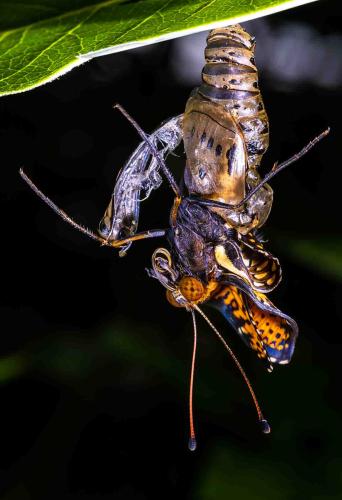
The caterpillars grow relatively slowly and enter the chrysalis stage in late spring. The adult males emerge in early summer, then the females, and the cycle begins again.
The unusual timing of egg-laying, hatching, and metamorphosis perfectly fits the cycle of prairie violets, which are only abundant in springtime.
Human Connections
Understanding the regal fritillary's life history explains why prairie management is so critical to the survival of that species.
- They need native prairie to survive, but that habitat has nearly disappeared from our continent.
- Meanwhile, it's widely understood that native prairie habitats require occasional fire to stay healthy, but ill-timed burns can easily destroy the eggs, overwintering caterpillars, or young, growing caterpillars of this species.
The regal fritillary is a unique and disappearing part of our native heritage.
If you own grassland, manage it so that many kinds of prairie wildlife — including this species — can benefit, and use pesticides sparingly. Finally, don’t let collectors capture them.
Ecosystem Connections
The life cycle of the regal fritillary is a beautiful example of how interconnected nature and its timing can be.
- First, to have the growth and development of this butterfly match the time of year when its small wildflower food plants are flourishing.
- Then, to have the prairie violet's heyday fit perfectly before the overall growth and maturation of the tallgrass prairie landscape.
- The adult butterflies emerge, fly, and mate at a time when big prairie wildflowers like coneflowers, thistles, mountain mint, and milkweeds are exploding into bloom, offering them plentiful nectar.
- Then, picture the mature female fritillary walking anxiously around the thick plant growth deep within a mature grassland, depositing her eggs in relative safety amid the multitudes of mature tallgrass plants.
- Finally, many of the adult butterflies finish their career as food for birds, or for the mature argiope garden spiders that have finally grown large enough to handle their large bodies.
Title
Media Gallery
Image
Caption
The regal fritillary is a large, silver-spotted, orange and blackish-gray butterfly of our native tallgrass prairies. Because of its dwindling habitat and steeply declining numbers, it is a species of conservation concern in Missouri and nationally.
Credit
Donna Brunet
Right to Use
Use of this image is restricted to MDC only on this page
Image
Caption
From above, a regal fritillary's hindwings are mostly black, with a row of white spots in the middle of the wing, and another row of spots closer to the margin. In males, the submarginal spots are orange.
Credit
Donna Brunet
Right to Use
Use of this image is restricted to MDC only on this page
Image

Caption
Regal fritillaries take nectar from butterfly weed and other milkweeds in native tallgrass prairies.
Credit
MDC Staff
Right to Use
Photo by MDC Staff, courtesy Missouri Department of Conservation
Image
Caption
Seen from below, the hindwings of a regal fritillary are distinctively blackish gray and covered with silvery white spots.
Credit
MDC Staff
Right to Use
Photo by MDC Staff, courtesy Missouri Department of Conservation
Image

Caption
Regal Fritillary on Pale Purple Coneflower
Right to Use
Photo by MDC Staff, courtesy Missouri Department of Conservation
Image

Right to Use
Photo by MDC Staff, courtesy Missouri Department of Conservation
Image

Credit
Noppadol Paothong
Right to Use
Photo by Noppadol Paothong, courtesy Missouri Department of Conservation
Image
Credit
Noppadol Paothong
Right to Use
Photo by Noppadol Paothong, courtesy Missouri Department of Conservation
Image
Credit
Noppadol Paothong
Right to Use
Photo by Noppadol Paothong, courtesy Missouri Department of Conservation
Image

Credit
Noppadol Paothong
Right to Use
Photo by Noppadol Paothong, courtesy Missouri Department of Conservation
Image

Credit
Noppadol Paothong
Right to Use
Photo by Noppadol Paothong, courtesy Missouri Department of Conservation
Image

Credit
Noppadol Paothong
Right to Use
Photo by Noppadol Paothong, courtesy Missouri Department of Conservation
Image

Credit
Noppadol Paothong
Right to Use
Photo by Noppadol Paothong, courtesy Missouri Department of Conservation
Image

Credit
David Stonner
Right to Use
Photo by David Stonner, courtesy Missouri Department of Conservation
Image

Credit
Noppadol Paothong
Right to Use
Photo by Noppadol Paothong, courtesy Missouri Department of Conservation
Image
Credit
Noppadol Paothong
Right to Use
Photo by Noppadol Paothong, courtesy Missouri Department of Conservation
Image

Credit
MDC
Right to Use
Photo by MDC, courtesy Missouri Department of Conservation
Image

Image

Image
Image

Image

Image
Image

Image

Image

Image
Image

Image
Image
Image
Image

Image

Image

Title
Similar Species
Similar Species
Media
Media

Media
Media

Media
Media
Media
Media
Media

Media
Media
Where to See Species
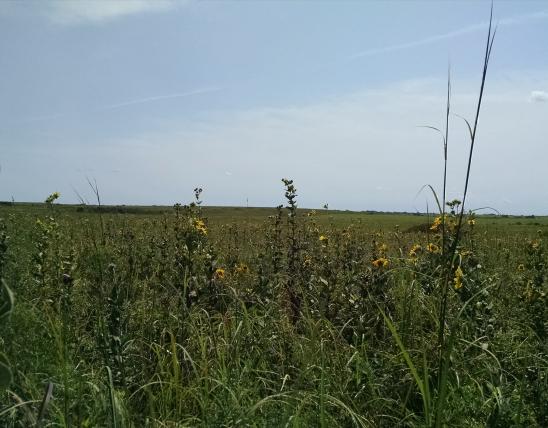
Osage Prairie is a remnant of the prairie ecosystem that once covered more than a quarter of Missouri. It is also home to plants and animals that are specially adapted for life on the open prairie.

This 116 acre native prairie is jointly owned by the Missouri Prairie Foundation (76 acres) and the Missouri Conservation Department (40 acres). The area is managed by the Conservation Departmen
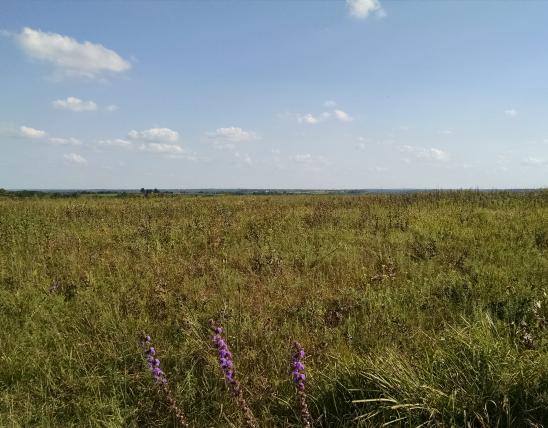
Monegaw Prairie is a remnant of the tallgrass prairie ecosystem that once covered more than one-quarter of Missouri.
The once vast prairies that covered as much as 15,000,000 acres of Missouri had diminished to just a few hundred thousand acres by the mid-1970’s. The prairies inherited by the earl
About Butterflies and Moths in Missouri
Butterflies, skippers, and moths belong to an insect order called the Lepidoptera — the "scale-winged" insects. These living jewels have tiny, overlapping scales that cover their wings like shingles. The scales, whether muted or colorful, seem dusty if they rub off on your fingers. Many butterflies and moths are associated with particular types of food plants, which their caterpillars must eat in order to survive.
Reviewed On